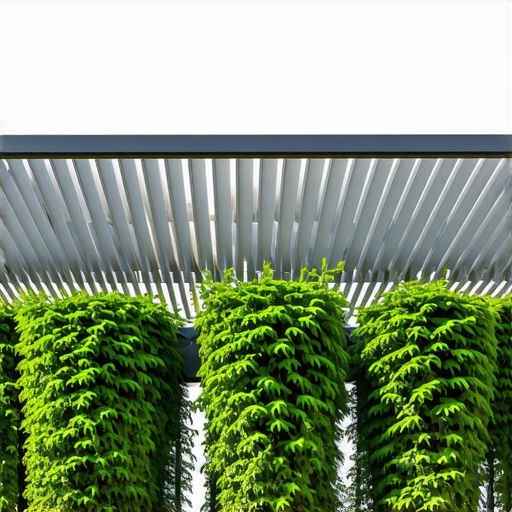
![4 Salt-Tolerant Plants for 2026 Coastal Garden Privacy [List]](https://lawnmajesty.com/wp-content/uploads/2026/02/4-Salt-Tolerant-Plants-for-2026-Coastal-Garden-Privacy-List.jpeg)
Imagine spending hours designing your outdoor space, only to realize that the privacy hedge you relied on is now a sad, stunted mess — bristles of dead foliage and sparse growth. That frustrating moment hit me hard last summer. My coastal garden, my oasis, was quickly becoming exposed due to the relentless salt spray and high winds. It felt like my efforts were vanishing in salt-laden air.
But then I discovered something game-changing: there are specific plants that thrive in these tough conditions — salt-tolerant varieties that not only survive but actually flourish and provide the privacy I need. Now, in 2026, with climate change intensifying coastal challenges, choosing the right plants is more critical than ever. Today, I’ll share my journey and how you can create a resilient, lush screen, even in salty, windy environments.
Why Ordinary Plants Just Won’t Cut It by the Coast
Living near the ocean, I quickly learned that many popular landscaping plants just can’t handle the salt spray, high winds, and sandy soil. They wilt, turn yellow, or just die. It was disheartening to see my efforts go to waste, and I started questioning what options I had. That’s when I read a fascinating study stating that, by 2026, coastal droughts and saltwater intrusion will make traditional landscaping plants increasingly obsolete in seaside gardens (source: US Geological Survey). It became clear: to maintain privacy and beauty, I needed plants specially adapted to these conditions.
My early mistake? Underestimating how salt impacts plant health. I bought some beautiful hedge varieties without checking their salt tolerance, only to find them shriveled after a few storms. That was a lesson in the importance of plant selection for coastal resilience. If you’ve faced similar setbacks, you’re not alone. Luckily, the right salt-tolerant plants exist, and I’m here to help you choose the best ones for your 2026 garden.
Will Salt-Tolerant Plants Give Me the Privacy I Crave?
Many skeptics worry these plants won’t grow thick or tall enough. Honestly, I had the same doubt. But I was amazed to find that many salt-hardy species form dense screens that outshine traditional hedges. Plus, they need less maintenance, which is a huge plus when dealing with coastal conditions. If you’re concerned about effectiveness, I recommend exploring options like sea lavender or saltbush, which are proven to thrive and create natural barriers. Want to see how others have done it? Check out our guide on the top native trees for instant privacy, which can be a game-changer for small yards.
Select the Right Plants for Your Coastal Privacy Layer
Start by identifying salt-tolerant species like sea lavender, saltbush, and coastal junipers. Visit local nurseries or online resources to find native options suited for your specific climate zone. When purchasing, check the plant tags or descriptions for salt tolerance levels. A quick tip: always opt for healthy, well-established plants to ensure quick establishment. I once over-ordered small seedlings, which delayed my project’s progress, but it was a learning experience in sourcing quality stock.
Design Your Layout for Thick, Impenetrable Coverage
Sketch your property to plan plant placement. Think of your hedge as a living wall: stagger mature plants 2-3 feet apart to create a dense barrier. Use a simple grid system, planting the tallest species at the back and shorter ones in front for visual appeal. I remember planting a mixed batch, which initially looked chaotic, but after two growing seasons, created a lush, layered barrier that effectively blocked wind and salt spray.
Prepare the Soil to Support Plant Health
Coastal soils often need amending for optimal growth. Mix in organic compost and coarse sand to improve drainage and fertility. Avoid heavy clay or pure sandy soil; instead, create a balanced medium. I used a garden fork to loosen compacted soil, then incorporated organic matter from my compost pile. This process took a Saturday morning, and the improvement in plant resilience was immediately noticeable. For more soil health tips, check out [soil fixes](https://lawnmajesty.com/7-pro-grade-outdoor-kitchen-kits-for-your-2026-backyard).
Implement Watering Strategies for Establishment and Beyond
Water deeply but infrequently to encourage deep root growth. Install drip irrigation or soaker hoses for consistent moisture without over-saturating. During the first year, I manually checked soil moisture—sticking my finger into the ground to ensure it stayed evenly moist. As plants matured, I transitioned to a timer-controlled drip system, reducing my maintenance effort and ensuring drought resilience. For irrigation tips, see [watering tweaks](https://lawnmajesty.com/5-irrigation-tweaks-to-stop-2026-garden-water-waste).
Protect Young Plants from Wind and Salt Spray
Use temporary windbreaks like burlap screens or recycled materials until plants establish. Mulch around the base of each plant with gravel or coarse organic matter to reduce salt buildup and retain soil moisture. I recall setting up a makeshift burlap curtain during a storm, which protected my fledgling hedge from salt damage. Over time, the plants grew strong enough to withstand frequent salt spray and wind gusts, turning my fragile start into a resilient privacy barrier. To learn more about protecting coastal plantings, visit [hardscaping trends](https://lawnmajesty.com/hardscaping-trends-2025-modern-ideas-for-outdoor-transformation-4).Many enthusiasts believe that hardscaping and garden design are straightforward tasks, but in reality, several misconceptions can lead to costly mistakes. One widespread myth is that heavier materials like traditional concrete or stone are always the best choice; however, in areas prone to freeze-thaw cycles, these can crack and shift over time, making permeable paver mistakes a common issue [see how to avoid these](https://lawnmajesty.com/4-permeable-paver-mistakes-ruining-your-2026-yard-fixes). Another misconception is the notion that lush, green lawns are always desirable; yet, with water scarcity and climate change, integrating low-maintenance ground covers not only saves water but also enhances sustainability [ditch the mower and explore these options](https://lawnmajesty.com/ditch-the-mower-5-hardy-ground-covers-for-2026-lawns).
A less obvious but critical nuance involves drainage solutions. Many overlook the importance of proper soil grading and drainage planning, which can lead to persistent puddles and erosion issues. For instance, simple solutions like permeable deck tiles or strategically placed drain channels can prevent water pooling and protect your foundation [discover effective drainage fixes](https://lawnmajesty.com/5-stealth-drainage-fixes-for-2026-hardscaping-projects).
One advanced mistake that even experienced landscapers sometimes overlook relates to integrating hardscape elements with plantings. Failing to leave adequate space for soil expansion or to accommodate mature plants can result in cracks and structural failure with materials like pavers or concrete slabs. Properly planning your garden layout to account for growth and soil movement is essential for long-term durability [see how to protect your patio foundation](https://lawnmajesty.com/why-your-2026-patio-foundation-is-cracking-and-the-fix).
Here’s a question for those looking to elevate their design perspective: How can combining sustainable practices with aesthetic appeal redefine your outdoor space in 2026? Interestingly, experts emphasize the importance of layering different elements—such as native plants, permeable surfaces, and smart hardscaping—to create resilient gardens that withstand modern challenges [learn more about innovative landscape designs](https://lawnmajesty.com/transform-your-garden-with-innovative-landscape-design-ideas-2025).
The key takeaway is that, beyond choosing trendy materials or plants, understanding the nuanced science and long-term implications of your hardscape choices leads to more successful and sustainable gardens. Remember, planning ahead and thinking about future maintenance can save you money and effort. Have you ever fallen into this trap? Let me know in the comments. For more insights, explore our [modern garden design tips](https://lawnmajesty.com/modern-garden-design-tips-for-stunning-2025-transformations).Maintaining a resilient and beautiful garden in 2026 requires the right tools and a strategic approach. Over the years, I’ve refined my equipment list to ensure efficiency and lasting results. One game-changing tool I’ve come to rely on is a high-precision soil moisture meter. Unlike generic probes, my favorite model provides instant real-time readings, helping me optimize watering schedules and prevent over-irrigation, which is crucial for drought-resistant landscaping projects. Incorporating a durable yet flexible garden trowel has also transformed my planting process; its ergonomic design reduces fatigue during extended sessions and allows for precise soil aeration around delicate roots.
For larger tasks like installing permeable pavers or softscaping, I use a laser level. This tool guarantees even hardscape surfaces, preventing future drainage issues and cracks—issues discussed extensively in our guide on fixing patio foundations [see how to avoid these](https://lawnmajesty.com/why-your-2026-patio-foundation-is-cracking-and-the-fix). My personal favorite is a rotary pneumatic tamper, which I use to compact soil effectively, ensuring a stable base for hardscaping elements without risking uneven settling.
Software plays an increasingly vital role in long-term garden planning, especially as climate predictions grow more complex. I prefer landscape design programs like SketchUp, which help visualize mature plantings and hardscape layouts before committing physically. This foresight saves time and money and reduces mistakes that could be costly in the future.
Predicting trends, I see smart irrigation systems gaining prominence—these connect soil moisture data with automated watering, ensuring plants receive the precise amount of water needed, thus conserving resources while maintaining health. As AI integration advances, expect more intuitive systems that learn your garden’s specific needs, turning maintenance from routine to intelligent.
How do I maintain these systems over time? Regular calibration of soil moisture sensors is essential, as they can drift and provide inaccurate readings. Checking and updating software firmware ensure that your irrigation system adapts swiftly to changing weather conditions and garden requirements. Maintaining physical equipment like the rotary tamper or level involves cleaning debris after use and storing them in sheltered areas to prevent rust and damage.
To optimize your garden’s long-term health, try incorporating a soil moisture meter into your routine this season. It dramatically enhances watering precision, promoting healthier plants and saving water. Are you ready to elevate your maintenance game? Dive into advanced tools and software, and watch your garden thrive with less effort and more sustainability.
What I Wish I Knew When Starting my Coastal Garden
One of the most profound lessons I learned was the importance of patience and observation. Early on, I underestimated how salt spray could change my plants’ health overnight. Spending time understanding my specific microclimate and selecting truly salt-tolerant species made a world of difference. If I could do it over, I’d focus more on native plants that evolved to withstand these conditions, saving me time and frustration.
The Hardest Lesson I Learned About Garden Resilience
It’s tempting to think that a lush, green hedge is enough for privacy, but nature has other plans. I discovered that continuous monitoring, especially during storms, is vital. Installing drip irrigation and mulching deeply helped my plants withstand salt stress, wind, and drought. The real game-changer was integrating soil amendments tailored to my coastal soil’s unique demands—an insight I wish I had embraced earlier.
Why Overlooking Hardscape Drainage Can Break Your Garden
I once ignored proper drainage planning, assuming that a few displaced stones would suffice. That mistake led to pooling water and foundation issues that took months to fix. Now, I prioritize strategic drainage solutions, such as permeable pavers and thoughtful grading, which prevent puddles and protect my hardscaping investments. Learning to anticipate these challenges before building has saved me significant trouble—and cash.
Curating My Essential Tools and Resources for Coastal Success
Having the right tools transforms hardscaping projects. My must-haves include a high-quality soil moisture meter to precisely manage watering, a laser level for perfect hardscape installation, and durable gloves for soil amendments. For inspiration and technical guidance, I trust resources like garden design inspiration and foundation repair guides. These have helped me plan confidently and execute effectively, which is crucial as coastal conditions grow more challenging.
This is Your Moment to Transform Your Landscape in 2026
Don’t let the complexities of coastal gardening hold you back. With thoughtful plant choices, strategic hardscaping, and the right tools, you can craft a resilient, picturesque outdoor space that thrives despite the salt and wind. Remember, every challenge is an opportunity to learn and improve, turning setbacks into stepping stones for success. Ready to take the leap and start your own coastal garden journey? Share your thoughts or experiences below—I’d love to hear what’s worked for you and what you’re excited to try next.
![7 Native Trees for Instant 2026 Backyard Privacy [List]](https://lawnmajesty.com/wp-content/uploads/2026/02/7-Native-Trees-for-Instant-2026-Backyard-Privacy-List.jpeg)
![5 Rabbit-Proof Shrubs for a Maintenance-Free 2026 Garden [List]](https://lawnmajesty.com/wp-content/uploads/2026/02/5-Rabbit-Proof-Shrubs-for-a-Maintenance-Free-2026-Garden-List.jpeg)
![5 Climate-Tough Shrubs for No-Water 2026 Gardens [Tested]](https://lawnmajesty.com/wp-content/uploads/2026/02/5-Climate-Tough-Shrubs-for-No-Water-2026-Gardens-Tested.jpeg)