5 2026 Best Perennials for High Sun Privacy Screens
Why Site Engineering Dictates Privacy Success
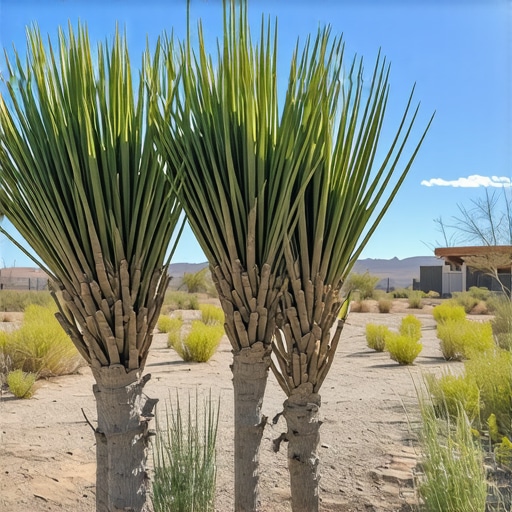
The 2026 best perennials for high sun privacy screens include species like Panicum virgatum ‘Northwind’, Eupatorium maculatum ‘Gateway’, and Baptisia australis, selected for their 6-8 foot verticality, drought tolerance, and resistance to high-heat stress in USDA zones 4-9. I always drill into my new crew members: if you don’t fix the soil grading first, every plant you put in the ground is just expensive compost. Most homeowners want an instant wall, but they ignore the civil engineering of the yard. If you have standing water or a 3 percent grade sloping toward your foundation, planting a row of tall perennials won’t just fail to provide privacy; it will rot the root systems and exacerbate your drainage issues. You have to think about the hydrostatic pressure in the soil and how these root masses will interact with the local water table. It is not about buying the biggest pot at the nursery. It is about the rhizosphere. If you do not have a healthy Cation Exchange Capacity (CEC) in your soil, those plants will sit there and starve, regardless of how much 10-10-10 you throw at them.
“A retaining wall doesn’t fail because of the stone; it fails because of the water trapped behind it.” – Hardscape Engineering Axiom
1. Panicum virgatum ‘Northwind’ (Tall Switchgrass)
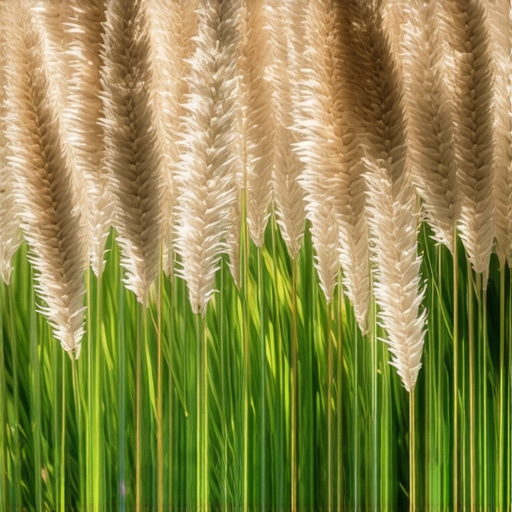
Panicum virgatum ‘Northwind’ is the gold standard for structural privacy in the 2026 landscape due to its strictly columnar growth habit and ability to withstand 40 mph wind gusts without lodging. This grass reaches 5-6 feet with a narrow footprint of only 2 feet. It thrives in full sun and is indifferent to soil type, provided it is not sitting in a swamp. The steel-blue foliage turns a tan color in winter, providing a functional screen even when dormant. We use this in hardscaping transitions because its vertical lines mimic the geometry of modern stone walls. It requires a pH between 5.5 and 7.0. If your soil is too alkaline, you will see chlorosis in the blades. Check your soil chemistry before you dig.
2. Eupatorium maculatum ‘Gateway’ (Joe Pye Weed)
Eupatorium maculatum ‘Gateway’ provides a massive, 7-foot-tall herbaceous barrier that is essential for garden design projects requiring height and pollinator support. Unlike the wild species, ‘Gateway’ has tighter internodes, meaning it is denser and better for screening. It needs a lot of fuel. If your soil is depleted of organic matter, this plant will stunted at 4 feet. We recommend a 2-inch layer of leaf compost tilled into the top 6 inches of the planting trench. It is a heavy drinker. If you do not have a drip irrigation line or a consistent 1 inch of rain per week, the bottom leaves will crisp up and drop, ruining your privacy screen from the ground up.
3. Hibiscus moscheutos (Hardy Hibiscus)
Hibiscus moscheutos, specifically the newer 2026 cultivars with dark, near-black foliage, creates a dense, hedge-like wall that can reach 4-5 feet in width and 6 feet in height. These are not your tropical grocery store plants. These are cold-hardy monsters that can survive a Michigan winter. The key here is the root flare. I see hacks burying these 4 inches too deep every day. If the root flare is not visible at the soil line, the crown will rot by year two. These plants require high phosphorus levels during the bud-set phase. Use a 10-30-10 fertilizer in early June to ensure the canopy fills in completely.
4. Baptisia australis (False Indigo)
Baptisia australis is the long-game choice for privacy, forming a 4-foot by 4-foot shrub-like mound that stays dense for decades. Once this plant is established, do not move it. It develops a deep taproot that can extend 3 feet down, making it nearly impossible to transplant but incredibly drought-resistant. For a privacy screen, space them 36 inches on center. By year three, the canopies will knit together to form a solid green wall. The blue-green foliage is toxic to deer, which is a major win in suburban lawn care environments where browsing is a constant threat.
5. Sorghastrum nutans ‘Indian Steel’ (Indiangrass)
Sorghastrum nutans ‘Indian Steel’ is an underutilized native grass that hits 6 feet and offers a unique metallic blue color. It is a warm-season grass, meaning it doesn’t even start moving until the soil temp hits 60 degrees Fahrenheit. This is where most DIYers fail. They think it’s dead in May and rip it out. Be patient. By August, it is a formidable screen. It handles heavy clay better than almost any other perennial. If you are dealing with the red clay of the Piedmont or the heavy greys of the Midwest, this is your plant. Just ensure you don’t over-fertilize it. Too much nitrogen makes the stalks weak, and the whole screen will flop over after the first heavy rain.
| Plant Name | Max Height | Sun Requirement | Soil Preference |
|---|---|---|---|
| Panicum ‘Northwind’ | 6 ft | Full Sun | Any/Well-drained |
| Eupatorium ‘Gateway’ | 7 ft | Full Sun/Part Shade | Moist/Organic |
| Hibiscus moscheutos | 6 ft | Full Sun | Wet/Moist |
| Baptisia australis | 4 ft | Full Sun | Deep/Well-drained |
| Sorghastrum ‘Indian Steel’ | 6 ft | Full Sun | Clay/Loam |
“Soil compaction is the silent killer of urban landscapes, reducing pore space and suffocating the aerobic bacteria necessary for nutrient cycling.” – Penn State Agricultural Extension
How much modified gravel do I need for a patio base?
Calculating base material is simple math but often botched. For a standard 10×10 patio, you need a 6-inch compacted base of 2A modified gravel, which equals approximately 2.5 cubic yards or 3.5 tons of stone. Do not skip the plate compactor. Hand-tamping is for amateurs and will lead to pavers settling within twelve months.
Installation Checklist for Perennial Screens
- Test soil pH and Cation Exchange Capacity (CEC) before purchase.
- Call 811 to mark underground utility lines.
- Excavate a trench twice as wide as the root ball.
- Check root flare depth: the flare must be at or slightly above grade.
- Install a 1/2-inch drip irrigation line with pressure-compensating emitters.
- Apply 3 inches of double-shredded hardwood mulch, keeping it 2 inches away from plant stems.
How fast do these perennials grow?
Most 2026 perennial cultivars follow the “Sleep, Creep, Leap” rule. In year one, they establish roots with minimal top growth. In year two, they reach 50 percent of their height. By year three, they hit full maturity and provide the total privacy screen you are looking for. High-nitrogen starters can speed this up, but often at the cost of structural integrity. Stick to the slow-release organics.