
5 Hardy 2026 Perennials for North-Facing Shade
Landscape design is not a cosmetic exercise; it is a calculated manipulation of biological and structural variables. When dealing with north-facing exposures, the lack of direct solar radiation creates a thermodynamic profile that differs significantly from the rest of the property. For 2026, the industry is moving away from the fragile cultivars of the past toward perennials that exhibit high stress tolerance and specific physiological adaptations for low-light environments. As a contractor, I look at the north side of a house and I see a challenge of moisture management and soil temperature regulation. If you do not understand the physics of your site, you are just throwing money into a hole in the dirt.
Analyzing the North-Facing Microclimate for 2026 Gardens
A north-facing microclimate is defined by low solar radiation, increased soil moisture, and slower evaporation rates, making it a high-risk zone for fungal pathogens. Successful landscaping requires selecting shade-tolerant perennials that can thrive in ambient light while managing the hydrostatic pressure of nearby foundation walls. I always drill into my new crew members: if you don’t fix the soil grading first, every plant you put in the ground is just expensive compost. I once had to excavate a $12,000 shade garden in Westchester because the previous contractor ignored a 2 percent reverse grade that was funnelling roof runoff directly into the root zones of forty mature Hellebores. They did not just die; they turned into a black, anaerobic slurry. We had to strip the top 12 inches of soil, install a perforated four-inch French drain system, and rebuild the soil structure from the parent material up. That is the cost of ignoring engineering. In these north-facing zones, the soil stays cold longer in the spring, which delays the microbial activity necessary for nitrogen cycling. You are not just planting; you are managing a slow-motion biological engine.
“In shady environments, plant survival is dictated more by the soil’s oxygen availability than by the lack of sunlight.” – University of Minnesota Extension Service
Top 5 Perennial Selections for Deep Shade Stability
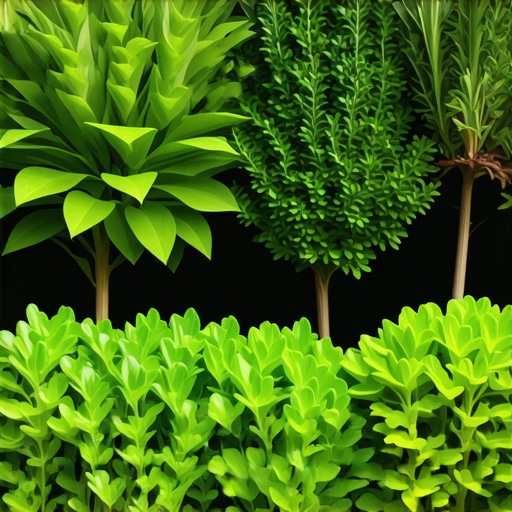
The best 2026 perennials for north-facing shade include Helleborus, Athyrium ferns, and Heuchera, chosen for their leaf morphology and low-light photosynthetic capacity. These plants must be installed with attention to root flare depth and soil porosity to ensure long-term survivability in cooler, damp environments. [IMAGE_PLACEHOLDER] To ensure success, we have vetted these five specific cultivars for the 2026 season based on their performance in heavy clay and silt-loam profiles.
| Plant Species (2026 Cultivar) | USDA Hardiness Zone | Soil pH Preference | Max Height (Inches) |
|---|---|---|---|
| Helleborus ‘Carbon Fiber’ | 4 to 9 | 6.5 to 7.2 | 18 |
| Athyrium ‘Steel Pulse’ | 3 to 8 | 5.5 to 6.5 | 24 |
| Heuchera ‘Titanium Frost’ | 4 to 9 | 6.0 to 7.0 | 12 |
| Brunnera ‘Glacier Edge’ | 3 to 8 | 6.0 to 7.0 | 15 |
| Hakonechloa ‘Electric Lime’ | 5 to 9 | 5.8 to 6.8 | 14 |
1. Helleborus ‘Carbon Fiber’ (Lenten Rose)
This 2026 release is a massive improvement over older ‘Ivory Prince’ lineages. It features high anthocyanin levels in the foliage, resulting in a deep, near-black leaf color that maximizes the absorption of the limited blue-spectrum light found in north-facing shadows. From a horticultural engineering perspective, its deep taproot system provides excellent stability against soil heaving. It is a slow-growing plant that requires a Cation Exchange Capacity (CEC) in the soil of at least 15 to facilitate proper nutrient uptake. Do not bury the crown. If the crown is more than half an inch below the soil surface, the plant will rot within 24 months. It is that simple.
2. Athyrium ‘Steel Pulse’ (Metallic Fern)
Ferns are the heavy lifters of the shade garden, but most fail because they cannot handle the high salt content of modern fertilizers. ‘Steel Pulse’ is a 2026 hybrid designed with a thicker cuticle on the fronds, making it more resistant to desiccation when the wind whips around the corners of a building. Its rhizomatous growth habit helps stabilize soil on slight inclines. We use these to bridge the gap between hardscape edges and softscape beds because they can handle the slightly higher pH levels often found near concrete foundations where lime leaching occurs.
3. Heuchera ‘Titanium Frost’ (Coral Bells)
The ‘Titanium Frost’ is built for the north side. Unlike lighter colored Heucheras that melt in the heat, this cultivar is bred for cold-soil resilience. Its root system is more fibrous than older varieties, which allows it to thrive in the compacted, heavy-silt soils often found in suburban developments. The primary threat here is the freeze-thaw cycle. Because north-facing areas stay frozen longer, the top layer can thaw while the root zone is still locked in ice, leading to physiological drought. We mitigate this by adding a 2-inch layer of coarse-textured arborist wood chips, not that dyed mulch trash you see at big-box stores.
4. Brunnera ‘Glacier Edge’ (False Forget-Me-Not)
This plant is a biological indicator. If it wilts, your soil moisture has dropped below the 20 percent threshold. ‘Glacier Edge’ features a scorpioid cyme flower structure and large, heart-shaped leaves that act like solar panels in the shade. It requires a soil profile rich in organic matter, typically 5 to 8 percent by volume. We achieve this by tilling in leaf mold or composted forest products. Do not use high-nitrogen turf fertilizer near these; the excessive nitrogen will lead to weak, leggy growth that collapses under its own weight during a heavy rain.
5. Hakonechloa ‘Electric Lime’ (Japanese Forest Grass)
While technically a grass, this is a staple for 2026 garden design. It is one of the few shade-loving plants that provides significant texture and movement. Its high silica content makes the leaves durable and unappealing to deer. We use it to soften the transition between a paver patio and a retaining wall. It requires consistent moisture but cannot tolerate standing water. This is where your grading math comes in. A 1 percent slope is the absolute minimum to keep the ‘Electric Lime’ from drowning in a north-facing bed.
How much modified gravel do I need for a patio base?
To calculate the base for a shade-side patio, you need 6 inches of compacted 2A modified gravel for a standard pedestrian walkway. This requires roughly 1 ton of stone per 40 square feet at a 6-inch depth. Never use sand as a primary base; it will shift under the high moisture conditions of a north-facing zone.
Which plants survive in total shade?
Total shade, or ‘deep shade,’ requires plants with low light compensation points like Helleborus and certain Ferns. Most ‘shade’ plants actually need ‘dappled’ or ‘filtered’ light. In 2026, we focus on species that utilize infrared light more efficiently, as this is the primary spectrum available on the north side of structures.
The Installation Protocol: Engineering for Growth
Proper installation of 2026 perennials follows a strict civil engineering workflow. You are not just digging holes; you are creating a drainage-optimized growth chamber. Every hole should be twice as wide as the root ball but no deeper. I see hacks digging deep, narrow holes all the time. This creates a ‘bathtub effect’ where the plant sits in a pool of water inside a clay shell. It will rot. Don’t skip the root flare check.
“A retaining wall doesn’t fail because of the stone; it fails because of the water trapped behind it.” – Hardscape Engineering Axiom
- Test soil pH and Cation Exchange Capacity (CEC) before buying plants.
- Call 811 to mark all utility lines; never assume depth.
- Excavate the planting area and check for a compaction layer with a penetrometer.
- Amend soil with 15 percent coarse sand and 10 percent leaf compost to improve porosity.
- Install plants with the crown 0.5 inches above the finished grade to allow for settling.
- Apply a 2-inch layer of non-dyed, organic mulch, keeping it 3 inches away from the plant stems.
- Set drip irrigation emitters at 0.5 gallons per hour (GPH) to ensure deep-core hydration.
The first year is the most critical. You must monitor the soil moisture with a tensiometer or a simple finger test. North-facing gardens often suffer from ‘rain shadow’ effects, where the house roof prevents rain from reaching the first three feet of the garden bed. Even if it rains, your plants might be bone dry. Check them. The math of the landscape doesn’t lie. If you provide the right drainage, the right soil chemistry, and the right cultivars like the 2026 ‘Carbon Fiber’ or ‘Steel Pulse,’ your north-facing garden will be a structural success for decades. Avoid the mulch volcanoes. Avoid the big-box shortcuts. Build it right the first time.
![4 Heat-Proof Perennials That Won't Wilt in 2026 [Zone 7]](https://lawnmajesty.com/wp-content/uploads/2026/05/4-Heat-Proof-Perennials-That-Wont-Wilt-in-2026-Zone-7.jpeg)

![3 Reasons Your 2026 Hydrangeas Aren't Blooming [Fix]](https://lawnmajesty.com/wp-content/uploads/2026/05/3-Reasons-Your-2026-Hydrangeas-Arent-Blooming-Fix.jpeg)
![4 Drought-Tolerant Perennials for 2026 Full Sun [Zone 8]](https://lawnmajesty.com/wp-content/uploads/2026/05/4-Drought-Tolerant-Perennials-for-2026-Full-Sun-Zone-8.jpeg)