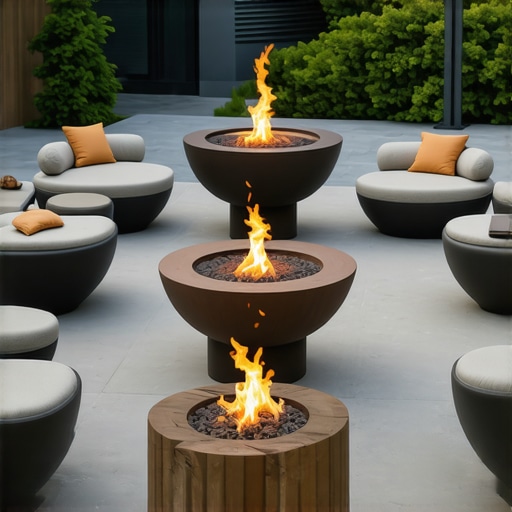
7 Modern 2026 Fire Pit Ideas for Under $400
The Engineering of a $400 Fire Pit: Why Most DIY Installs Fail by Year Two
Modern 2026 fire pit design focuses on integrated thermodynamics and soil stability, ensuring that a $400 investment doesn’t result in a cracked, sinking eyesore after one winter. Successful fire pit installation requires understanding base-layer compaction, heat dissipation, and hydrostatic drainage to prevent the structure from shifting during freeze-thaw cycles. I recently got called out to tear up a $30,000 patio that was sinking because the previous contractor failed to account for drainage under the fire pit area. The water trapped in the base layer turned the subsoil into a slurry, causing the entire hardscape to heave three inches. Don’t let this happen to your yard. If you don’t fix the soil grading and base first, you are just throwing money into a hole. It will fail.
“A retaining wall doesn’t fail because of the stone; it fails because of the water trapped behind it.” – Hardscape Engineering Axiom
How much modified gravel do I need for a fire pit base?
For a standard 4-foot diameter fire pit area, you need approximately 0.5 to 0.75 cubic yards of 2A modified gravel to create a stable 6-inch compacted base. This depth ensures that the compaction force is distributed evenly, preventing the heavy fire pit materials from settling into the native subgrade soil over time. 80% of your work happens before the first block is set. Use a plate compactor. Manual hand tamping is rarely sufficient for 2026 standards.
1. The Raw Steel Geometric Rim with Decomposed Granite
The Raw Steel Geometric Rim utilizes heavy-gauge 1/4-inch carbon steel to provide a minimalist aesthetic while resisting warping from high thermal loads. This design relies on a decomposed granite (DG) surround which provides excellent permeability and a stable walking surface that doesn’t migrate like traditional pea gravel. Steel expands when hot. Leave a 1/2-inch gap between the steel and any masonry. This prevents the metal from cracking your stones. In 2026, we see a shift toward these ‘raw’ industrial looks that patina over time, creating a protective layer of iron oxide.
| Material | Quantity | Estimated Cost | Function |
|---|---|---|---|
| 1/4″ Steel Rim | 1 Unit | $180 | Heat Containment |
| Decomposed Granite | 10 Bags | $90 | Permeable Base |
| #2B Clean Stone | 0.5 Yards | $45 | Drainage Sump |
| Steel Edging | 20 Linear Ft | $60 | Containment |
2. The Sunken Paver Pit with Drainage Sump
A Sunken Paver Pit creates a low-profile, modern look by excavating the fire zone 8 inches below the surrounding grade and installing a hydrostatic drainage sump. This design prevents water from pooling in the pit, which is the primary cause of ‘exploding rocks’ where moisture trapped inside stones turns to steam and shatters the masonry. Use only refractory fire bricks for the interior lining. Standard pavers cannot handle 1,200-degree Fahrenheit temperatures. They will crack. Or worse, they will pop and send shards flying. Safety isn’t optional.
3. Concrete Masonry Unit (CMU) Linear Burner
The CMU Linear Burner uses standard 8x8x16 concrete blocks arranged in a clean, rectangular format and finished with a high-heat masonry stucco. This modern 2026 approach offers a high-end architectural look for under $300 in materials, provided the lintel support is engineered correctly to prevent sagging over the burner opening. Check your local municipal codes. Many cities now require a 10-foot clearance from any combustible structures. Don’t ignore the 811 call. One hit on a gas line and your $400 project becomes a $10,000 liability.
“Soil pH and moisture content directly affect the longevity of concrete-based hardscapes by accelerating the carbonation process.” – Agronomy Installation Manual
What is the best base material for a DIY fire pit?
The best base material is compacted 2A modified limestone topped with a 2-inch layer of #57 clean stone for drainage. This combination provides the structural PSI (pounds per square inch) needed to support the weight of the pit while allowing water to move away from the heat zone quickly. Do not use sand. Sand washes away. It creates voids. Voids lead to collapse.
4. The Dry-Stacked Flagstone Cavern
For a more organic garden design, the Dry-Stacked Flagstone Cavern uses heavy, flat-faced fieldstone without mortar, allowing the structure to ‘breathe’ and shift slightly with the soil. This gravity-wall technique relies on the weight of the stone and a slight batter (inward tilt) of 1 inch per foot of height to maintain structural integrity. This is pure civil engineering on a micro-scale. No mortar means no cracking. It is the most durable low-cost option for 2026. Use a 4-inch perforated pipe as a vent. Fire needs oxygen. Without a vent, you just have a smoky mess.
- Excavate 10 inches deep.
- Lay 6 inches of compacted 2A gravel.
- Set the first course of stone below grade.
- Check level on every single stone.
- Backfill the exterior with clean drainage stone.
5. The Bio-Ethanol Conversion Table
For urban dwellers with small patios, the Bio-Ethanol Conversion turns a standard metal or stone garden table into a clean-burning fire feature using a stainless steel drop-in tray. This setup eliminates the need for wood storage and smoke management while staying well under the $400 price point for 2026 modern aesthetics. Bio-ethanol is predictable. It doesn’t throw sparks. This is the only safe option for wooden decks, provided you use a non-combustible heat shield underneath the unit.
6. The Industrial Wash-Tub Rebirth
Repurposed Industrial Wash-Tubs or tractor tire rims are being used in 2026 as high-durability fire inserts when paired with a modernist gravel apron. The key to making this look professional rather than ‘junkyard’ is the architectural edging—using black aluminum or heavy steel to create a perfect circle or square around the unit. The air holes in a wash-tub provide perfect secondary combustion, reducing smoke significantly. It’s a poor man’s smokeless pit. It works surprisingly well. Just ensure you paint it with 2000-degree rated header paint to prevent rust streaks on your gravel.
7. The Gabion Cage Fire Column
The Gabion Cage Fire Column uses galvanized steel mesh baskets filled with river rock or basalt to create a thermal mass that radiates heat long after the fire dies down. In 2026, we use these as focal points in garden design because they are virtually indestructible and cost less than $250 in raw materials. Fill the center with a steel fire tube. The rocks act as an insulator. It’s a smart use of thermodynamic principles. Keep the rocks clean. Organic debris in the gaps can catch fire and smell terrible. Cleanliness is part of maintenance.
Maintenance and the ‘Settling In’ Period
Every hardscape project undergoes a settling period in its first twelve months. You will see minor shifts as the soil pore space collapses and the gravel base reaches maximum compaction. This is normal. What isn’t normal is a fire pit that leans more than 1/2 inch. If it leans, your base was too thin. For lawn care longevity, keep the fire pit at least 15 feet away from your turf grass drip lines. The heat will desiccate the roots of your Kentucky Bluegrass or Fescue, creating a dead ‘halo’ around your beautiful new feature. Water the surrounding grass deeply after each burn to mitigate soil temperature spikes. Your yard is a living system. Treat it like one.
![Build a $250 Flagstone Fire Pit Circle [Weekend Fix]](https://lawnmajesty.com/wp-content/uploads/2026/06/Build-a-250-Flagstone-Fire-Pit-Circle-Weekend-Fix.jpeg)