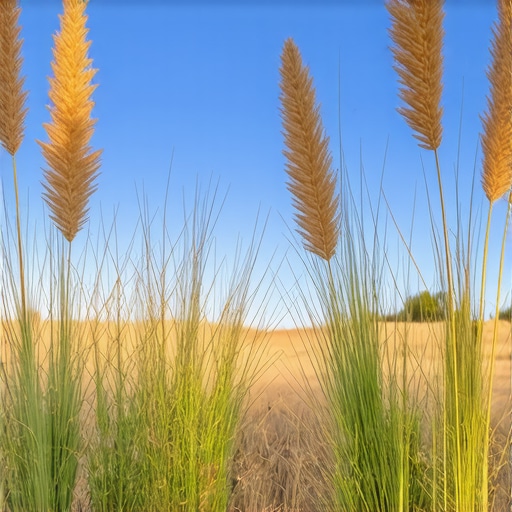
4 Heat-Resistant Native Grasses for 2026 Water Conservation
Why Native Grasses are the Foundation of 2026 Water-Wise Landscaping
The primary benefit of heat-resistant native grasses is their evolutionary adaptation to C4 photosynthetic pathways, which allow plants to close their stomata during peak heat to prevent evapotranspiration losses while continuing to fix carbon. By 2026, municipal water restrictions will make traditional Kentucky Bluegrass nearly impossible to maintain in most southern and western zones. I always drill into my new crew members: if you don’t fix the soil grading first, every plant you put in the ground is just expensive compost. You can have the most drought-tolerant grass on the planet, but if your soil bulk density is too high or your grading sends 100% of the runoff into the street, those roots will never establish. We spent three weeks on a site last July just remediating subsoil compaction from a previous contractor who thought a half-inch of topsoil was enough for a lawn. It isn’t. You need at least six inches of uncompacted, aerated soil to allow native root systems to reach their three-to-five-foot depth potential.
“A lawn is a biological system, not a carpet. Successful establishment requires an understanding of the soil-water-plant relationship, where soil porosity dictates the survival of the root architecture during thermal peaks.” – Agronomy Extension Manual
How much water do native grasses actually save?
Switching to native turf alternatives like Buffalograss or Blue Grama can reduce supplemental irrigation requirements by 50% to 70% compared to non-native species. These grasses are genetically programmed to go dormant during extreme drought cycles rather than dying, a biological defense mechanism that preserves the crown and rhizomes. In my 20 years of landscaping, I’ve seen homeowners spend thousands on irrigation systems when they should have spent hundreds on the right seed. The engineering of your yard starts with the biology of the blade.
1. Buffalograss (Bouteloua dactyloides): The King of Low-Input Turf
Buffalograss is a dioecious, warm-season perennial native to the Great Plains that provides a fine-textured turf while requiring less than 1 inch of water per month once established. This is the ultimate tool for water conservation in modern garden design. It spreads via stolons (above-ground runners), creating a dense mat that naturally suppresses weeds without the need for heavy pre-emergent herbicides. Do not over-water it. If you keep Buffalograss too wet, you are just inviting Bermudagrass encroachment and root rot. I tell my clients: if the ground is squishy, you’ve already failed the grass. It needs to breathe. Its root system can penetrate up to 5 feet into the soil profile, mining for moisture that other grasses can’t reach.
| Feature | Buffalograss | Standard Fescue |
|---|---|---|
| Water Needs | Low (0.5-1″/mo) | High (3-4″/mo) |
| Mowing Frequency | 2x per year | Weekly |
| Root Depth | Up to 5 feet | 6-10 inches |
| Nitrogen Req. | Low (1lb/1000sqft) | High (3-5lb/1000sqft) |
2. Blue Grama (Bouteloua gracilis): The High-Altitude Specialist
Blue Grama is a clump-forming native grass known for its distinctive horizontal seed heads that resemble eyelashes, making it a favorite for naturalistic garden design. When used in a lawn care context, it is often mixed with Buffalograss to create a polyculture that is more resilient to varying microclimates within a single yard. It thrives in alkaline soils (pH 7.0 to 8.5) and is exceptionally tolerant of foot traffic and compaction. For 2026, we are looking at Blue Grama as the ‘utility player’ for hardscaping borders where heat reflection from stone patios can cook less hardy species. It handles the reflected heat like a pro. Don’t bag the clippings. Let the biomass return to the soil to improve the organic matter content.
3. Curly Mesquite (Hilaria belangeri): The Southern Heat Engine
Curly Mesquite is a stoloniferous grass that is often mistaken for Buffalograss but offers superior performance in the heavy clay soils of the Southwest. If you are dealing with shrink-swell clay, this is your solution. It provides a consistent gray-green hue and survives on ambient rainfall in regions getting as little as 10 inches per year. In landscaping, we use this for erosion control on sloped areas because the stolons knit the soil together with incredible tensile strength. Avoid high-nitrogen fertilizers. Native grasses like Curly Mesquite have adapted to low-nutrient environments; hitting them with a 20-20-20 synthetic blend will just cause leggy growth and weak cell walls, making them susceptible to fungal pathogens.
4. Seashore Paspalum (Paspalum vaginatum): The Salt-Tolerant Powerhouse
Seashore Paspalum is a warm-season grass that excels in coastal environments and areas with poor water quality, such as reclaimed water or high-salinity wells. While not a traditional prairie grass, it is a native-adjacent solution for water conservation in salt-spray zones. It has a high silica content, which makes the blades stiff and resistant to wear and tear.
“Effective turf management in arid regions requires moving away from aesthetic perfection toward ecological functionality, prioritizing species with high salinity tolerance and low nitrogen demand.” – Texas A&M AgriLife Extension
This grass is a heavy feeder of potassium but needs very little nitrogen. If you use it, ensure your hardscaping includes proper drainage channels; while it likes salt, it hates hydrostatic pressure buildup around the roots.
How do I prepare soil for native grass?
To prepare soil for native grass installation, you must first remove all existing invasive vegetation and then scarify the top 4 inches of soil to break up surface tension. Do not use a rototiller if you can avoid it; it destroys the soil aggregates. Use a power rake or a harrow. You want the soil to be firm enough that your boots leave a print but don’t sink.
- Test soil pH and adjust for native requirements (usually 6.0-7.5).
- Eliminate perennial weeds via solarization or occlusion.
- Apply a thin layer of compost tea to kickstart microbial activity.
- Ensure finish grading slopes away from foundations at a 2% minimum.
How much modified gravel do I need for a patio base?
For a standard hardscaping project like a patio adjacent to your native lawn, you need a minimum of 4 to 6 inches of compacted modified gravel (2A or ¾-minus) to ensure structural stability. You calculate this by multiplying the total square footage by the depth in feet (e.g., 0.5 ft for 6 inches) and dividing by 27 to get cubic yards. Compaction is non-negotiable. Use a vibratory plate compactor until the tamper literally bounces off the surface. If the base isn’t solid, your pavers will shift, and your polymeric sand will fail within the first season.
The Long-Term Maintenance Cycle
Year one is about establishment irrigation. You water frequently but lightly to keep the seedbed moist. By year two, you flip the script: deep, infrequent watering. You want those roots to chase the moisture down into the subsoil. If you keep the surface wet, the roots stay shallow. Shallow roots die in the 2026 heatwaves. It is that simple. Don’t be a mow-and-blow hack. Set your blade height to 3 inches or higher. Scalping a native lawn is the fastest way to kill the meristematic tissue and invite crabgrass. Treat your lawn like an ecosystem, not a chore. The result is a yard that survives while your neighbors’ lawns turn to dust.