How to Prune Your Boxwoods Without Leaving Brown Patches
The Forensic Autopsy of a Dying Shrub
I always drill into my new crew members: if you don’t fix the soil grading first, every plant you put in the ground is just expensive compost. Last week, I stood over a row of English Boxwoods that looked like they had been hit by a blowtorch. The homeowner was convinced it was a disease. It wasn’t. It was ‘hack-job’ pruning. The previous guy had taken a pair of dull power shears to the exterior in mid-July, essentially creating a solar oven out of the plant’s own foliage. When you shear a boxwood into a tight, green orb without thinning the interior, you are effectively suffocating the plant. The interior leaves die off due to lack of light, leaving a thin ‘shell’ of greenery. One bad cut or a blast of winter wind, and that shell cracks, revealing the dead, brown skeleton beneath. It is a structural failure of horticulture.
How to prune boxwoods to prevent browning
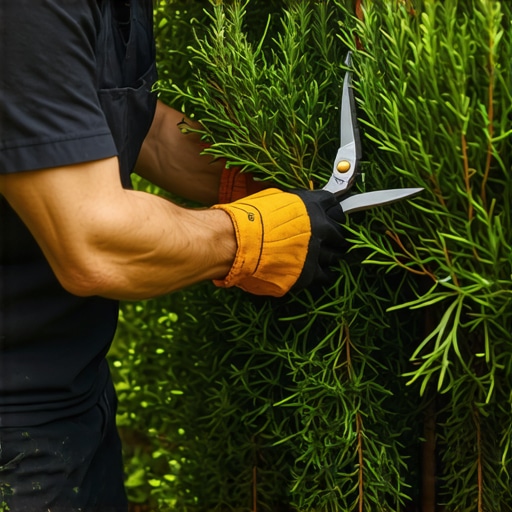
To prune boxwoods without causing brown patches, you must use bypass pruners to selectively thin 10 percent of the outer canopy. This allows airflow and sunlight to reach the inner latent buds, preventing fungal pathogens like Volutella buxi and winter bronzing from destroying the shrub’s structural integrity. Avoid pruning in late summer to prevent frost damage on new growth.
“Light must reach the interior of the plant to prevent the hollow shell effect, where the center of the shrub becomes a dead zone of leafless twigs.” – Virginia Cooperative Extension
The Micro-Biology of the Cut
When you make a pruning cut, you are performing surgery. A jagged tear from a dull blade increases the surface area of the wound, providing a landing strip for fungal spores. Boxwoods are particularly susceptible to Calonectria pseudonaviculata (Boxwood Blight). This pathogen thrives in the humid micro-climate created by dense, un-thinned canopies. If you prune when the foliage is wet, you are essentially injecting the fungus into the plant’s vascular system. Stop doing it. Wait for a dry day with low humidity. Use 70 percent isopropyl alcohol to sanitize your blades between every single shrub. It sounds tedious. It is. But it is cheaper than replacing a twenty-year-old hedge.
The Soil Connection: Why Drainage Matters
Brown patches aren’t always about the shears; sometimes they are about the feet. Boxwoods hate ‘wet feet.’ If your soil pH is off—anything outside the 6.5 to 7.2 range—the plant cannot uptake the nutrients required to heal from pruning stress. I have seen countless ‘hardscaping’ projects where the contractor didn’t account for hydrostatic pressure or drainage near a boxwood bed. Water pools, the roots suffocate (anaerobic conditions), and the leaves turn a tell-tale orange-brown. Check your grade. If the water doesn’t move, the plant won’t live.
| Pruning Method | Tool Used | Impact on Interior Growth | Best For |
|---|---|---|---|
| Shearing | Power Trimmers | Negative – Causes ‘Shelling’ | Formal Topiary Only |
| Thinning | Bypass Pruners | Positive – Stimulates Growth | Health & Longevity |
| Heading Back | Hand Shears | Neutral – Controls Size | Size Maintenance |
How much can you safely prune off a boxwood?
Never remove more than one-third of the total foliage in a single season. Removing more disrupts the plant’s ability to photosynthesize, leading to a massive root-dieback. Think of the leaves as the plant’s engine; if you shrink the engine too much, it cannot pull water from the ground. For older, overgrown boxwoods, use a three-year renewal plan. Thin out the thickest branches first to let the light in. Year two, address the height. Year three, refine the shape. Patience is a tool, just like your pruners.
Will brown spots on boxwoods grow back?
Brown spots caused by winter burn or improper pruning will only grow back if there are viable latent buds on the remaining stems. If the branch is brittle and the cambium layer (the area under the bark) is brown instead of green, that section is dead and must be removed to the main trunk to prevent the spread of decay fungi. You cannot wish a dead branch back to life. Cut it out.
“Boxwood blight is often spread by contaminated pruning tools and the movement of infected plant debris; sanitation is the primary defense.” – Connecticut Agricultural Experiment Station
The Pruning Checklist
- Check the weather: Ensure 48 hours of dry conditions.
- Sanitize tools: Use alcohol or a 10 percent bleach solution.
- Inspect the interior: Look for scale insects or spider mites before cutting.
- Thinning cuts: Reach 6 inches into the canopy and remove small ‘plugs’ of growth.
- Clean up: Remove all clippings from the center of the bush. Do not leave them to rot.
Seasonal Logic and Timing
Timing is everything. If you prune in late August or September, you trigger a flush of new growth. That growth is tender. It hasn’t lignified (hardened off) before the first frost hits. When the temperature drops to 28 degrees Fahrenheit, those new cells rupture. By March, your boxwood looks like it has a disease, but it’s just frostbite. Prune in late winter or very early spring before the first flush of growth. This allows the plant to use its spring energy surge to heal the wounds. Don’t fight the plant’s natural rhythm. You will lose. Every time.
![Why Your 2026 Drip Line is Leaking [Seal Fix]](https://lawnmajesty.com/wp-content/uploads/2026/07/Why-Your-2026-Drip-Line-is-Leaking-Seal-Fix.jpeg)