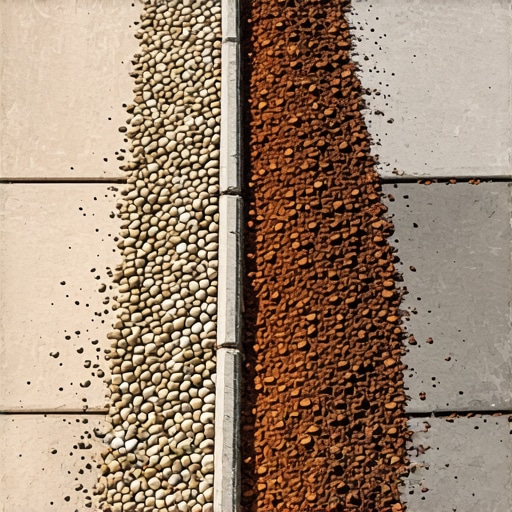
Why Crushed Stone Beats Wood Mulch for Driveway Edging
The Failure of Wood Mulch in High-Traffic Transit Zones
Choosing crushed stone for driveway edging provides superior structural stability, permanent drainage solutions, and eliminates the nitrogen depletion and decomposition cycles common with wood mulch. While wood mulch rots within 12 to 18 months, stone serves as a functional hardscaping barrier that protects the driveway subbase from moisture intrusion and prevents soil erosion near high-traffic garden design areas.
The Hardscape Autopsy: Why Your Edges Are Sinking
I recently got called out to tear up a driveway border that was a total disaster because the previous contractor thought wood mulch was a suitable transition material. The homeowner had spent a fortune on a custom asphalt drive, but the edges were crumbling. Why? Because wood mulch is a sponge. It holds water right against the edge of the pavement. In this case, the moisture had seeped under the asphalt, saturated the subgrade, and caused the whole edge to heave and crack during the first freeze-thaw cycle. We had to excavate 12 inches down, haul away three tons of rotten, stinking wood chips, and rebuild the structural shoulder with #57 clean stone. If they had used stone from the start, that asphalt would have lasted thirty years. Instead, it was failing in three. This is what happens when you prioritize aesthetics over civil engineering. You cannot put organic, decomposing matter next to a load-bearing surface and expect it to hold. It is basic physics. Water must move away from the driveway, not be invited to sit there in a bed of mulch.
“A retaining wall doesn’t fail because of the stone; it fails because of the water trapped behind it.” – Hardscape Engineering Axiom
Engineering Advantages of Crushed Stone Over Organic Matter
The primary reason professionals choose crushed stone is its angular interlocking properties. When you dump a bag of wood mulch, it just sits there, waiting to float away in the first heavy rain. When you install crushed stone—specifically something like a 3/4 inch clean limestone—the sharp edges of the stones lock together under compaction. This creates a stable landscaping surface that can actually support the weight of a vehicle tire if someone accidentally drives off the edge. Wood mulch, by contrast, offers zero structural integrity. Furthermore, wood mulch introduces a biological variable into your lawn care routine that you do not want near your driveway. As it breaks down, it pulls nitrogen from the surrounding soil to fuel the decomposition process. This often leaves a “yellow zone” of dying grass right at the edge of the mulch bed. Stone is inert. It does not steal nutrients, it does not rot, and it does not provide a home for artillery fungi that can spray sticky black spores all over your cars and siding.
| Feature | Crushed Stone (Angular) | Wood Mulch (Hardwood) |
|---|---|---|
| Life Expectancy | 20+ Years | 1-2 Years |
| Drainage Capacity | Excellent (90+ Gallons/Min) | Poor (Water Retention) |
| Structural Support | High (Interlocking) | None (Compressible) |
| Maintenance Level | Low (Occasional Weeding) | High (Annual Top-dressing) |
| Cost per 10 Years | Lower (One-time Install) | Higher (Cumulative Material) |
How much modified gravel do I need for a driveway border?
To calculate the required modified gravel or stone for a driveway border, multiply the total length of the edging by the width and depth in feet, then divide by 27 to get cubic yards. For most residential hardscaping projects, a 4-inch depth is the minimum requirement for stability.
What is the best stone for driveway drainage?
The best stone for driveway drainage is #57 clean crushed stone, which consists of stones between 1/2 and 1 inch in size. Because it lacks “fines” or dust, it maintains large void spaces that allow water to move vertically into the subsoil rather than pooling on the surface.
“Proper site grading and the use of permeable aggregates are the most critical factors in preventing pavement edge failure and subgrade saturation.” – Texas A&M Agrilife Extension
The Ground-Up Build: Installing a Permanent Stone Edge
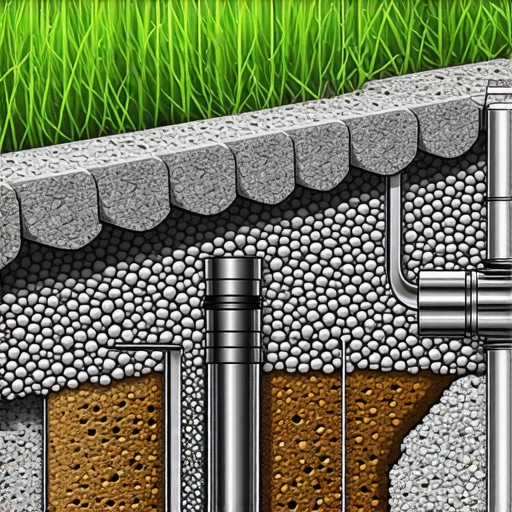
Building a stone edge isn’t just about throwing rocks in a trench. It starts with subgrade preparation. You need to excavate a trench at least 6 inches deep and 12 inches wide. Once the soil is exposed, use a hand tamper or a plate compactor. The soil should be so hard that the tamper bounces off it. If it feels soft, you have high organic content, and you need to dig deeper. Next, lay down a heavy-duty non-woven geotextile fabric. Do not use the cheap plastic weed barrier from a big-box store. You need a fabric that allows water through but keeps the stone from mixing with the dirt. This is called separation. Without it, your stone will eventually sink into the mud, and you will be left with a messy slurry. Fill the trench with 2 inches of 21A or CR-6 crusher run for a base, compact it, and then top it with your decorative crushed stone. This layered approach ensures that the edge remains level and functional for decades.
- Mark the edge with a string line to ensure a straight hardscaping run.
- Excavate to a depth of 6 inches, removing all grass and root mass.
- Install 4-ounce non-woven geotextile fabric across the entire trench.
- Backfill with 4 inches of #57 stone for maximum drainage.
- Hand-tamp the stone to lock the angular pieces together.
Remember, the stone is your first line of defense against the hydrostatic pressure of heavy rain. While the internet tells you to water every day, turf grass actually needs deep, infrequent watering—exactly 1 inch per week—to force roots to chase the water down. By using stone instead of mulch, you ensure that any excess water from your lawn care irrigation doesn’t sit and rot your driveway’s foundation. It will stay dry. It will stay stable. Don’t skip the fabric. If you do, you’re just making a stone-flavored mud pie. In year one, expect the stone to settle slightly. Simply rake it level. After that, your maintenance is essentially zero, aside from a quick spray of vinegar or herbicide if a stray seed finds its way into the crevices. This is how you build for the long haul.