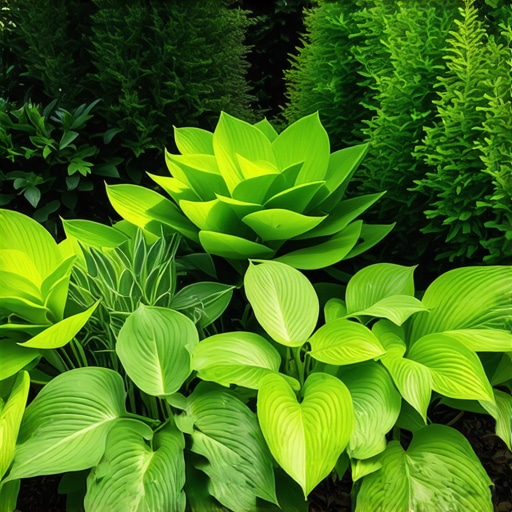
Best 2026 Low-Maintenance Shrubs for Shade
Designing for the Dark: Why Success Begins Below the Surface
Choosing the best 2026 low-maintenance shrubs for shade requires prioritizing genetics, soil pH compatibility, and drainage capacity. Species like Taxus x media, Sarcococca, and improved Pieris cultivars offer the highest survival rates and lowest labor overhead for modern garden design and landscaping. Most homeowners and amateur contractors fail because they ignore the fundamental physics of a shaded site. In shade, evapotranspiration rates are significantly lower. This means water stays in the soil profile longer, leading to anaerobic conditions and root rot if your soil texture isn’t perfect. I always drill into my new crew members: if you don’t fix the soil grading first, every plant you put in the ground is just expensive compost. You can buy the most expensive nursery stock in the world, but if it sits in a bowl of compacted clay with no oxygen, it will die. This is the reality of professional lawn care and landscaping. We don’t just dig holes; we engineer biological systems. Before you even look at a plant catalog, you must understand your site’s specific drainage patterns. I have seen more $50,000 garden design projects fail because of a 2 inch deviation in grade than for any other reason. Roots need oxygen just as much as they need water. In a shaded environment, the balance is delicate. High-quality hardscaping often complicates this by redirecting runoff into planting beds. If you have a patio, you must account for the hydrostatic pressure and the water shedding off that surface. [IMAGE_PLACEHOLDER]
The Horticultural Science of 2026 Shade Selections
The best 2026 low-maintenance shrubs for shade are selected based on their ability to thrive at or near their light compensation point while resisting the fungal pathogens common in high-humidity, low-airflow environments. We are looking for plants that have evolved in the understory. These aren’t just ‘shade tolerant’; they are shade adapted.
“A retaining wall doesn’t fail because of the stone; it fails because of the water trapped behind it.” – Hardscape Engineering Axiom
This same logic applies to your planting beds. If the water can’t move, the plants can’t breathe. When we talk about 2026 standards, we are moving away from the over-used, disease-prone varieties of the past decade. We are looking for genetic resilience. For example, the newer cultivars of Pieris japonica, like ‘Katsura’, offer incredible disease resistance compared to older stock. They handle the pH swings of urban soil better and don’t require the constant pruning that turns a ‘low-maintenance’ yard into a part-time job.
How much modified gravel do I need for a patio base?
To calculate the required modified gravel for a stable hardscaping base, multiply the square footage by the depth (typically 4 to 6 inches for walkways, 8 to 12 inches for driveways) and divide by 27 to get cubic yards. Proper compaction of this base is non-negotiable for site stability. Don’t skip the plate compactor. If the base isn’t solid, the grade will shift, and your shade garden will become a swamp. This is where landscaping meets civil engineering. You need a minimum of 95 percent Proctor density to ensure that your garden design doesn’t settle and drown your shrubs over time.
What are the best low-maintenance shrubs for full shade?
The most reliable low-maintenance shrubs for full shade in 2026 include Taxus x media ‘Densiformis’ for structural hedging, Sarcococca hookeriana for fragrance and groundcover, and Microbiota decussata for extreme cold hardiness. These plants require minimal supplemental nitrogen and have low water requirements once established. These aren’t the soft, needy plants sold at big-box retailers. These are the workhorses of the industry. Taxus, or Yews, are often maligned by hacks who don’t know how to prune them, but they are the backbone of high-end landscaping. They can handle deep shade and can be rejuvenated even if they are neglected for years. The trick is drainage. Yews hate ‘wet feet’. If your soil stays saturated, the roots will succumb to Phytophthora in weeks. It is that simple.
The 2026 Shade Shrub Comparison Matrix
| Shrub Species | USDA Hardiness Zones | Mature Height/Width | Soil Preference | Primary Maintenance Task |
|---|---|---|---|---|
| Taxus x media ‘Densiformis’ | 4 to 7 | 3 to 4 ft / 4 to 6 ft | Well-drained, neutral pH | Annual structural pruning |
| Sarcococca hookeriana var. humilis | 6 to 9 | 1 to 2 ft / 2 to 3 ft | Organic-rich, acidic to neutral | Minimal thinning every 3 years |
| Pieris japonica ‘Katsura’ | 5 to 8 | 3 to 5 ft / 3 to 4 ft | Acidic, well-drained | Spent flower removal (optional) |
| Microbiota decussata | 2 to 7 | 1 ft / 3 to 4 ft | Adaptable, prefers drainage | None |
Notice the common thread in that table: drainage. As a pro, I don’t care how pretty the foliage is if the plant is going to rot. Most lawn care companies will try to sell you a seasonal color package that includes annuals for shade. That is a waste of money. You want woody shrubs that provide structure year-round. Microbiota decussata, the Russian Cypress, is an engineering marvel. It looks like a juniper but loves the shade. In the winter, it turns a bronze-purple color that adds depth to a winter landscape when everything else is gray. It is virtually bulletproof if you don’t overwater it.
“Soil compaction is the single most overlooked factor in urban plant mortality, often exceeding the impact of drought or pests.” – Penn State Agricultural Extension
This is why I tell my clients to stay off the beds. Walking through your garden packs the soil, destroys the pore space, and kills the mycorrhizal fungi that your shrubs depend on for nutrient uptake.
Step-by-Step Installation Protocol for Shade Success
- Step 1: Percolation Test. Dig a 12-inch hole, fill it with water, and see how long it takes to drain. If it takes more than 4 hours, you have a drainage problem that needs a French drain or soil amendment.
- Step 2: Soil Analysis. Don’t guess the pH. Get a lab test. If you are planting Pieris or Azaleas, you need a pH between 4.5 and 5.5. If your soil is alkaline, you are fighting a losing battle.
- Step 3: Excavation. Dig the hole twice as wide as the root ball but no deeper. The root flare must be visible at the soil surface. Planting too deep is a death sentence.
- Step 4: Backfilling. Use the native soil. Don’t fill the hole with pure compost. You want the roots to habituate to the local soil texture, not stay trapped in a ‘pot’ of rich soil.
- Step 5: Mulching. Use 2 inches of aged arborist wood chips. Do not use ‘mulch volcanoes’ around the trunk. This traps moisture against the bark and invites Boring insects and rot.
The 2026 approach to garden design is about efficiency. We are moving away from the high-input models of the 1990s. We want plants that work for us, not the other way around. This means selecting species that are resistant to the local pest pressure. In many regions, deer are the biggest threat. Taxus is like candy to deer, so if you have a high deer population, you need to pivot to Cephalotaxus harringtonia (Japanese Plum Yew). It looks almost identical to the standard Yew but is significantly more deer-resistant. This is the kind of specific, tactical knowledge that separates a professional landscaping firm from a guy with a truck and a shovel. We look at the whole ecosystem. We look at the light, the soil, the water, and the local wildlife before we ever specify a plant list. It is about longevity. It is about building something that looks better in five years than it does the day it is installed. That is the mark of a master. Your lawn care routine should also adapt. In shaded areas, grass is often a mistake. It competes with the shrubs for nutrients and rarely gets enough light to maintain a dense enough habit to crowd out weeds. Replace failing shade turf with the low-maintenance shrubs mentioned here to reduce your labor and improve your property value. Stop fighting nature. Work with the biology of your site. It is cheaper, easier, and more sustainable in the long run.