How to build a smokeless fire pit for under $200
The Physics of the Secondary Burn
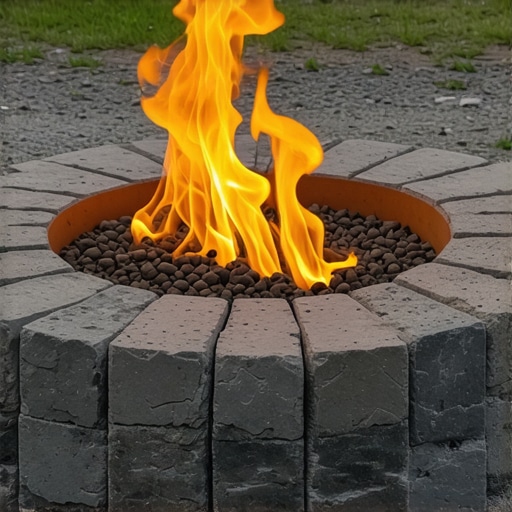
A smokeless fire pit works through secondary combustion, where preheated air is reintroduced to the top of the flames to burn off smoke particles before they escape the pit. By utilizing a steel ring insert and specific airflow vents in the masonry, you can achieve this high-efficiency burn for under $200 while maintaining structural integrity for years of service.
I recently got called out to tear up a $30,000 patio that was sinking because the previous contractor didn’t understand the first thing about base compaction or thermal expansion. They had built a massive stone fire pit directly on top of a thin layer of sand. Within two seasons, the heat from the pit had desiccated the subsoil, and the weight of the stones caused the entire center of the patio to bowl. It was a structural nightmare that could have been avoided with $50 worth of modified gravel and a bit of engineering common sense. Don’t be that guy. When you are building a fire pit, even a budget-friendly one, you are building a thermal reactor. You need to account for oxygen intake, heat dissipation, and the inevitable movement of the earth. If you ignore the foundation, you are just throwing money into a hole. It will fail. Do it right the first time.
“A retaining wall doesn’t fail because of the stone; it fails because of the water trapped behind it.” – Hardscape Engineering Axiom
The Materials Breakdown: Staying Under a $200 Budget
Building a smokeless system on a budget requires savvy procurement. You aren’t buying high-end flagstone here; you are buying utility. The core of the system is the Venturi effect. To get that, you need an inner chamber and an outer wall with an air gap. Here is how the costs break down for a standard 36-inch diameter pit.
| Material | Quantity | Estimated Cost |
|---|---|---|
| Concrete Wall Blocks (Trapezoidal) | 48-54 units | $85.00 |
| 30-inch Steel Fire Ring | 1 unit | $65.00 |
| 3/4-inch Modified Gravel (CR617) | 3 bags | $15.00 |
| Lava Rocks (for drainage/base) | 2 bags | $20.00 |
| High-Heat Construction Adhesive | 1 tube | $12.00 |
| Total | – | $197.00 |
Site Preparation and the 811 Protocol
Before you even touch a shovel, you call 811. I have seen guys hit gas lines digging for a simple fire pit. It is a quick way to turn a $200 project into a $10,000 disaster. Once cleared, you need to select a location at least 15 feet away from any structures or low-hanging trees. In the world of landscaping and garden design, people often prioritize aesthetics over fire safety. Do not put this under a pergola. The heat output of a smokeless pit is significantly higher than a traditional one because you are essentially creating a forge.
How much modified gravel do I need for a fire pit base?
For a standard 36-inch fire pit, you need approximately 2 to 3 cubic feet of 3/4-inch modified gravel to create a stable, 4-inch deep foundation. This base prevents heaving during freeze-thaw cycles and ensures that hydrostatic pressure doesn’t displace your bottom course of blocks over time.
The Step-by-Step Build: Engineering the Airflow
Start by excavating a circle 6 inches wider than your intended pit diameter. Go down 6 inches. Fill with 4 inches of modified gravel and tamp it until the tamper literally bounces off the surface. If the base isn’t solid, the blocks will shift. This is the foundation of all hardscaping. Use a level. If you are off by a quarter inch at the base, your top ring will look like a roller coaster.
Lay your first course of blocks. Crucial step: Leave two or three 1-inch gaps in this bottom course. These are your primary air intakes. Without these, the ‘smokeless’ feature won’t work. The air enters here, travels upward through the gap between the blocks and the steel ring, gets superheated, and then exits through holes in the top of the ring to ignite the smoke.
How do you keep a fire pit from smoking?
To keep a fire pit from smoking, you must ensure the secondary combustion air holes are never blocked and use seasoned hardwood with a moisture content below 20%. The convection current created between the inner steel liner and the outer masonry wall is what provides the necessary oxygen to burn the carbon particulates.
The Steel Ring and Secondary Combustion
Place your steel fire ring inside the block circle. There should be a 1-to-2-inch gap between the steel and the stone. This gap is the ‘chimney’ where air preheats. If you bought a ring without pre-drilled holes at the top rim, you will need to drill 1-inch holes every 4 inches around the top inside edge of the ring. This is where the magic happens. As the fire burns, the air in the gap becomes incredibly hot and buoyant. It shoots out of these top holes, mixing with the smoke (unburnt fuel) and creating those ‘flame jets’ characteristic of a smokeless burn.
“Oxygen is the most critical component of combustion efficiency; without proper induction, you are simply smoldering organic matter.” – Agronomy and Thermal Dynamics Manual
Finish the pit by stacking the remaining courses of blocks. Use high-heat adhesive on the top two courses to prevent them from being knocked loose by a heavy log. Do not use standard liquid nails; it will melt and fail. Use a product rated for at least 500 degrees Fahrenheit.
The Maintenance Protocol
Ash is the enemy of airflow. In a smokeless pit, ash accumulates at the bottom and can quickly block your intake vents. You must shovel it out after every three or four fires. Check your intake gaps for spider webs or debris. Lawn care equipment like leaf blowers can often kick dust into these gaps, clogging the system. Keep it clean. Keep it dry. [IMAGE_PLACEHOLDER]
- Verify Clearance: Ensure 15+ feet from any combustible structure.
- Level the Base: Use a 4-foot level to check the gravel pad in multiple directions.
- Airflow Check: Ensure the bottom intake gaps are clear of dirt and mulch.
- Seasoned Wood: Only burn wood that has been dried for at least 6 months.
- Ash Management: Clear the pit floor regularly to maintain the Venturi effect.
![Build a $400 Flagstone Fire Pit [2026 Guide]](https://lawnmajesty.com/wp-content/uploads/2026/06/Build-a-400-Flagstone-Fire-Pit-2026-Guide.jpeg)