
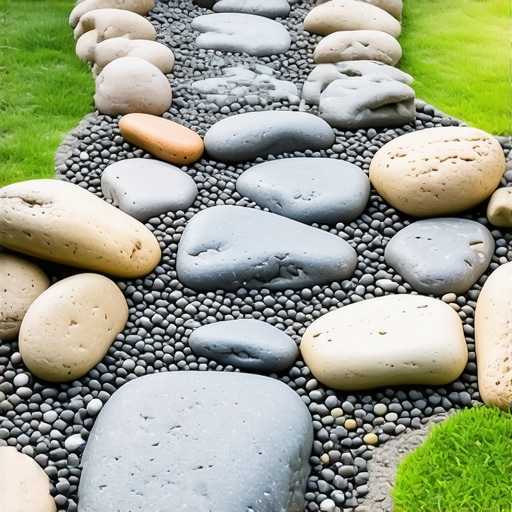
How to build a dry stream bed for drainage
The Anatomy of a Failed Drainage Solution
I recently got called out to tear up a $30,000 patio that was sinking because the previous contractor thought they could just dump some river rock in a trench and call it a dry stream bed. Within two seasons, the silt from the surrounding heavy clay soil had completely clogged the voids between the stones. The water had nowhere to go but under the patio sub-base, turning the expensive pavers into a floating mess. It was a textbook case of ignoring hydrostatic pressure. Real drainage isn’t about aesthetics; it’s about civil engineering. If you don’t manage the velocity and volume of runoff, gravity will eventually destroy your hardscaping. A dry stream bed is a functional hydraulic tool designed to intercept surface runoff and move it safely away from structures using calculated pitch and non-biodegradable filtration layers. This is not a weekend DIY project where you just scatter some pebbles; it is a structural intervention for your landscape.
Understanding Site Hydrology and Slope
To build a dry stream bed, you must first calculate the peak flow volume of your yard and establish a minimum 2 percent grade to ensure water moves toward the discharge point. Without a consistent downward pitch, you aren’t building a stream; you’re building a linear pond that will breed mosquitoes and saturate your soil. Stop guessing where the water goes. Wait for a heavy rain and mark the flow with flags. You need to see exactly where the hydrostatic pressure builds up against your foundation or garden walls.
“A retaining wall doesn’t fail because of the stone; it fails because of the water trapped behind it.” – Hardscape Engineering Axiom
How deep should a dry stream bed trench be?
For most residential applications, a dry stream bed trench should be excavated to a depth of 12 to 18 inches. This allows for a 4-inch base of compacted sub-grade, a layer of heavy-duty non-woven geotextile fabric, and enough stone volume to handle surge events without overtopping the banks. If your soil is heavy clay, you may need to go deeper to include a perforated pipe at the bottom. This creates a hybrid French drain system that manages both surface and subsurface moisture simultaneously. Don’t cut corners here. A shallow trench is useless.
The Engineering of Material Selection
The biggest mistake homeowners make is buying stone based on color. You need to buy stone based on its specific gravity and fractured faces. Smooth river rock looks nice, but it slides. You need a mix of sizes to create a locked structure. Use large ‘anchor’ boulders to break the water’s velocity at points where the stream bends. If the water moves too fast, it will scour the soil right from under your liner. This is basic fluid dynamics. You want a varied gradation to fill the gaps and prevent the fabric from being exposed to UV light, which will degrade it over time.
| Material Type | Primary Function | Recommended Size |
|---|---|---|
| River Jack / Cobble | Visual Surface Layer | 3 to 6 inches |
| #57 Clean Stone | Structural Bedding | 0.75 to 1 inch |
| Anchor Boulders | Velocity Reduction | 12 to 24 inches |
| Non-Woven Geotextile | Soil Separation | 8oz to 12oz weight |
The Step-by-Step Installation Protocol
First, clear the path. Remove all turf and organic debris. If you leave grass roots under your stream, they will rot, cause settling, and eventually create voids where the stones will sink. Use a sod cutter for clean edges. Second, excavate the trench. Ensure the bottom is flat and sloped correctly. Check it with a transit or a line level. If you’re off by half an inch over ten feet, water will pool. It will smell. It will fail. Don’t skip the compaction. Use a plate compactor or a hand tamper to firm up the sub-soil. Loose dirt is your enemy.
What is the best fabric for a dry stream bed?
You must use non-woven needle-punched geotextile fabric, not the cheap plastic weed barrier sold at big-box stores. The non-woven fabric allows water to pass through the microscopic pores while keeping the soil fines out of your stone. This prevents the ‘clogging’ that leads to failure. Overlap your seams by at least 12 inches and pin them down with 6-inch steel sod staples. If the fabric floats, the rocks will shift. Secure it tightly. This is the skin of your system.
- Surveying: Identify the high and low points of the property.
- Excavation: Dig a wide, shallow ‘V’ or ‘U’ shape to mimic a natural swale.
- Fabric Lining: Lay the geotextile, ensuring it climbs up the sides of the trench.
- Boutique Boulders: Place your largest stones first at the bends and ‘falls’.
- In-fill: Add the medium and small cobble to cover the remaining fabric.
Managing Local Soil Challenges
In regions with heavy red clay or silty loam, the drainage requirements are even more stringent. Clay expands when wet and shrinks when dry, which can heave your stream bed if the base isn’t properly prepared. In freeze-thaw cycles, you must ensure the discharge point is clear of debris. If the end of your stream freezes shut, the water will back up and potentially flood your crawlspace or basement. It happens fast. Be ready. Check your municipal codes regarding where you can discharge this water. You cannot simply dump it onto your neighbor’s property or into a protected wetland without a permit. Utility marking is also mandatory. Call 811 before you put a shovel in the ground. Hitting a gas line will turn a landscaping project into a disaster real quick.
“Surface drainage systems must be designed to accommodate the 10-year, 24-hour storm event to prevent localized flooding in residential landscapes.” – Agricultural Extension Drainage Manual
While the internet tells you to water every day, turf grass actually needs deep, infrequent watering—exactly 1 inch per week—to force roots to chase the water down. The same logic applies to your plants near the stream bed. Choose native species that can handle ‘wet feet’ during the rainy season but are drought-tolerant once the stream dries up. Think Muhly grass, Blue Flag Iris, or Red-Osier Dogwood. Avoid planting anything with invasive root systems directly over the fabric, as they will punch through and destroy the integrity of the drainage layer. Root flares must be visible. Don’t bury the trunk. Mulch volcanoes near a dry stream bed will just wash away and clog your rocks. Use shredded hardwood that ‘knits’ together, or better yet, use more small gravel as a mulch substitute in those high-flow areas. It won’t move. It won’t rot. It works.

![Why Your 2026 Pond Pump is Making Noise [Easy Fix]](https://lawnmajesty.com/wp-content/uploads/2026/05/Why-Your-2026-Pond-Pump-is-Making-Noise-Easy-Fix.jpeg)