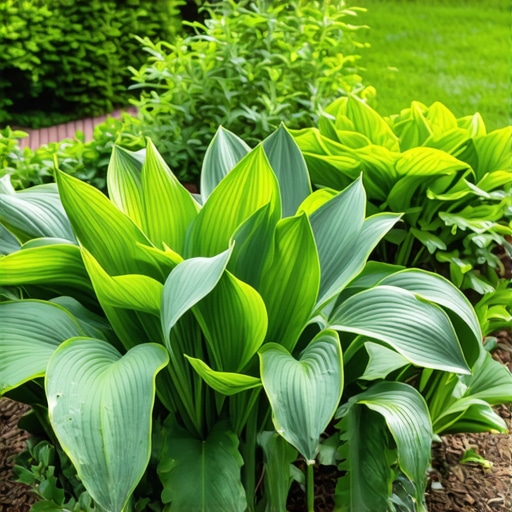
How to Keep Deer Out of Your Hosta Beds for $10
The Biological Buffet: Why Deer Target Your Hostas
Hostas are essentially deer candy because of their high moisture content and soft, turgid foliage. To protect them for under $10, you must disrupt the deer’s visual and olfactory navigation using monofilament fishing line and homemade scent barriers like sulfurous egg mixtures or tallow-based soaps. This approach targets the ruminant’s natural fear of the unseen and its sensitive nasal epithelium.
I have spent twenty years in the dirt, and I can tell you that a deer is a 150-pound biological browsing machine. They do not care about your garden aesthetic. They care about caloric intake versus effort. Most homeowners think they need expensive motion-activated sprinklers or $50 jugs of commercial spray. They are wrong. You can beat a deer with physics and basic chemistry. Stop looking for a magic bullet and start understanding the browsing habits of the Odocoileus virginianus.
The Apprentice Lesson: Soil Grading and Technical Wisdom
I always drill into my new crew members: if you don’t fix the soil grading first, every plant you put in the ground is just expensive compost. I remember an apprentice named Mike who thought he could hide a 2% grade slope by just piling extra mulch around a hosta crown. I made him dig the whole bed out. We aren’t just planting; we are managing hydrostatic pressure and oxygen exchange in the rhizosphere. If your hostas are sitting in a basin of water, the root flare will rot, and the plant will be stressed. Stressed plants emit different chemical signatures that deer can actually detect. A healthy hosta in properly graded, well-draining soil has a better chance of recovering from a browse than one struggling in a mud pit.
“Hostas require well-drained soil with a pH between 6.5 and 7.5 to ensure optimal nutrient uptake and cellular structure strength.” – Agronomy Manual for Ornamental Perennials
The $10 Tactical Breakdown: Materials and Mechanics
The core of this strategy involves two layers of defense: the Invisible Fence and the Olfactory Wall. For under $10, you can purchase a spool of 30lb-test monofilament fishing line and a pack of high-intensity tallow-based soap.
The Invisible Barrier (Fishing Line)
Deer have poor depth perception but are highly sensitive to tactile feedback they cannot see. By stringing fishing line at 12 inches and 24 inches above the ground around your hosta bed, you create a physical obstacle they can feel but not visualize. When the deer walks into the line, it panics. It doesn’t know what is touching it. This creates a psychological ‘no-go’ zone. Use sturdy wooden stakes—scrap wood works best—to maintain tension. If the line is slack, it fails. It must be taut enough to vibrate.
The Olfactory Assault (Scent Deterrents)
The remaining $5 of your budget goes toward a gallon of water, two eggs, and a tablespoon of dish soap. Let this mixture sit in the sun for 48 hours. The putrescent egg solids mimic the scent of decaying proteins, which triggers a predator-avoidance response in herbivores. Spray this on the perimeter, not directly on the leaves if you plan on touching them. It stinks. It is supposed to.
| Method | Cost | Duration | Mechanism |
|---|---|---|---|
| Fishing Line (30lb) | $4.50 | Full Season | Tactile Disruption |
| Homemade Egg Spray | $1.50 | 14 Days/Rain | Olfactory Repulsion |
| Soap Bars (Tallow) | $3.00 | 30 Days | Scent Masking |
How do I protect my hostas from deer without a fence?
You can protect hostas without a full perimeter fence by using invisible monofilament line and biological deterrents. These methods create a psychological barrier that causes the deer to associate your garden with uncertainty and foul scents, effectively training them to avoid the area without obstructing your view.
What is the best homemade deer repellent for hostas?
The most effective homemade repellent is a mixture of putrescent egg solids and water. Research from agricultural extensions suggests that the sulfurous compounds in decaying eggs are one of the few scents that consistently deter deer by mimicking the smell of predator activity or rotting meat.
Engineering the Hosta Bed for Long-Term Resilience
Don’t just stick a hosta in a hole. Use a spade to edge the bed at a 90-degree angle to prevent turf grass from encroaching. This also creates a small ‘moat’ that helps catch your scent sprays. Ensure your mulch layer is no more than 2 inches deep. More than that and you’re inviting voles, which will eat the hosta rhizomes from the bottom up while you’re busy worrying about the deer at the top. It is a two-front war.
“Monofilament line fences are effective because deer cannot discern the boundary, leading to an avoidance behavior rooted in the animal’s survival instinct.” – Penn State Agricultural Extension
- Check line tension weekly; a loose line is a useless line.
- Reapply egg spray after any rainfall exceeding 0.5 inches.
- Clear leaf litter from the base of hostas to prevent fungal pathogens.
- Rotate scent types every three weeks to prevent habituation.
- Monitor for slug damage, which often mimics deer browsing but leaves a slime trail.
Landscaping is about persistence. You cannot spray once and expect a miracle. You are the foreman of your property. If you skip the maintenance cycle, the biology of the deer will win every time. Use the fishing line. Use the spray. Keep your hands in the dirt and your eyes on the grade.