Stop 2026 Nitrogen Burn on Your New Lawn
Stop 2026 Nitrogen Burn on Your New Lawn: The Professional Guide to Soil Recovery
I spent three hours last August staring at a $15,000 sod installation that looked like a crime scene. The homeowner, a DIY enthusiast with good intentions, had applied a high-nitrogen ‘turf-builder’ during a drought spike. Within 48 hours, the Kentucky Bluegrass had turned into brittle, orange straw. It wasn’t just dead; the soil was chemically cauterized. This is the reality of nitrogen burn. It is not a simple yellowing of the leaf. It is a fundamental chemical failure of the plant’s ability to process moisture. If you are planning your 2026 lawn care schedule, you need to understand the molecular reality of what you are putting on your soil. Cheap big-box fertilizers are loaded with fast-release urea that acts like salt on an open wound when the timing is wrong.
What is Nitrogen Burn in Residential Turf?
Nitrogen burn occurs when excess mineral salts from synthetic fertilizers accumulate in the soil, creating a high osmotic potential that pulls moisture out of the grass roots. This leads to desiccation, cellular collapse, and visible yellowing or browning of the turf blades within 48 to 72 hours. It is essentially a man-made drought. When the salt concentration outside the root is higher than inside the root, the water flows backward. The plant cannot fight physics. It wilts and dies because it is being dehydrated from the inside out despite any surface water you might provide.
“Excess nitrogen in the form of soluble salts creates a high osmotic pressure in the soil solution, which prevents the roots from absorbing water, even if the soil is moist.” – University of Missouri Extension
The Forensic Autopsy: Identifying the Damage
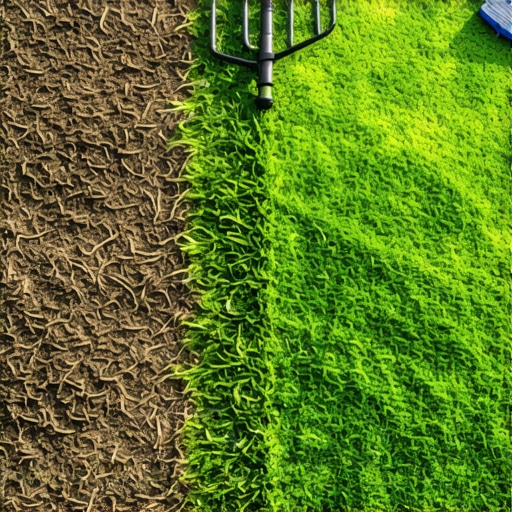
Diagnosis begins with pattern recognition. If you see stripes of brown grass that follow the exact path of your spreader, you have a calibration issue. If the whole yard looks bleached, you have an over-application issue. I look for the ‘ghost footprint’ where a spill occurred. The turf will be dark, crunchy, and eventually turn a necrotic tan. You need to pull a soil core. A 6-inch plug will reveal if the roots are shriveled or if the damage is limited to the foliage. If the roots are white, you have a chance. If they are brown and slimy, the plant is gone. This is where most homeowners fail. They see brown and add more water, which can sometimes help, but if the soil drainage is poor, they just end up rotting the already stressed root system.
How long does it take for grass to recover from nitrogen burn?
Recovery depends on the severity of the chemical application and the soil type. Minor foliage tip burn can recover in 2 to 3 weeks with aggressive flushing. However, if the root crowns are damaged by high salt concentrations, you may need to wait 4 to 6 weeks to see if new growth emerges or prepare for full re-seeding or sod replacement in the fall.
The Chemistry of Prevention: Fertilizer Selection
Not all nitrogen is equal. You have fast-release urea, which is basically a hit of adrenaline for the grass, and then you have slow-release, polymer-coated, or organic-based nutrients. The latter requires microbes to break them down. This is safer. If the soil temperature is over 85 degrees Fahrenheit, fast-release nitrogen is a death sentence. The ammonia volatilizes, and the salts sit right on the crown. I tell my crew to check the NPK ratio. That first number, the Nitrogen, shouldn’t be a massive 40-0-0 unless you have an irrigation system that can handle the flushing. For 2026, move toward a 20-0-10 with at least 50% slow-release nitrogen (SRN).
| Fertilizer Type | Burn Risk | Release Profile | Soil Impact |
|---|---|---|---|
| Urea (46-0-0) | Extreme | Immediate | High salt accumulation |
| Ammonium Sulfate | High | Rapid | Lowers pH significantly |
| Sulfur-Coated Urea | Moderate | 30-60 Days | Lower salt index |
| Milorganite/Organic | Low | Microbial Dependent | Improves soil structure |
The Professional Remediation Protocol
If you realize you’ve over-applied, you have a 24-hour window to save the turf. Flush the soil. This does not mean a light sprinkle. You need to apply 1 inch of water to the affected area to move the salts past the root zone. Repeat this for three days. You are effectively diluting the chemical concentration. Check your drainage. If the water is pooling, you are creating a secondary problem: hydrostatic pressure that suffocates the roots. I’ve seen ‘mow-and-blow’ guys dump fertilizer on a Friday and by Monday the yard is toast. Don’t be that guy. Use a soil moisture meter. If the soil is already saturated, adding more water to flush salts will cause root rot. It is a delicate balance.
Can I fix nitrogen burn without digging up the grass?
Yes, if the root crowns remain viable, you can remediate by applying liquid carbon or humic acid to help buffer the soil salts. These organic compounds increase the Cation Exchange Capacity (CEC), allowing the soil to hold and process the excess nutrients more effectively without the grass plant absorbing the full toxic load at once.
“Standard calibration of rotary spreaders is the most overlooked safety measure in residential turf management, leading to 60 percent of preventable chemical burn incidents.” – Professional Landcare Network Standards
The Hardcore Landscaper’s Pre-Fertilization Checklist
- Calibrate the Spreader: Perform a catch-pan test to ensure the gate is dropping the exact poundage per 1,000 square feet.
- Check the Forecast: Never apply before a torrential downpour (runoff) or during a heatwave (burn).
- Soil Moisture Test: Ensure the soil is moist but not saturated before application.
- Granular Cleanup: Blow all fertilizer off hardscapes like patios and walkways back into the grass to prevent staining and runoff into storm drains.
- Verify USDA Hardiness Zone: Ensure your grass type (Cool season vs Warm season) is actually in its growth phase.
Forward Planning for 2026
The goal is a resilient lawn, not just a green one. This means focusing on soil microbiology. Instead of heavy synthetic loads, use compost top-dressing. It provides a slow trickle of nutrients and improves the water-holding capacity of the soil. If your yard has heavy clay, your burn risk is higher because the salts can’t leach away. If you have sandy soil, the burn happens faster but flushes easier. Know your dirt. Stop guessing. Get a professional soil test from your local extension office before you buy a single bag of product. If the pH is off, that nitrogen isn’t even being used by the plant; it’s just sitting there waiting to burn the roots. Fix the soil first. The grass will follow. Skip the big-box marketing. Focus on the biology. That is how you win the 2026 season.
![Stop 2026 Grass Growth in Your Paver Patios [Fix]](https://lawnmajesty.com/wp-content/uploads/2026/07/Stop-2026-Grass-Growth-in-Your-Paver-Patios-Fix.jpeg)