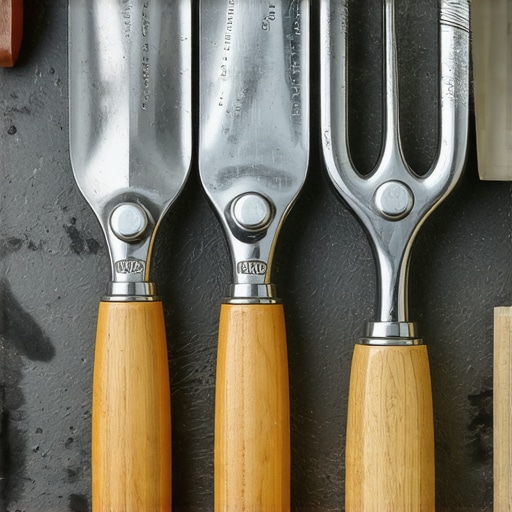
The $15 Solution for Dull Garden Tools
I always drill into my new crew members: if you don’t fix the soil grading first, every plant you put in the ground is just expensive compost. This lesson extends beyond the dirt and directly into the steel we carry. I once saw an apprentice trying to prune a $5,000 Japanese Maple with a pair of bypass pruners so dull they looked like they’d been used to chew through rebar. He wasn’t cutting the branch; he was crushing the vascular tissue. That is how you kill a specimen tree. In the high-end landscape world, your tools are not just metal implements; they are surgical instruments. When they are dull, they are dangerous to both the operator and the biological systems of the property.
The $15 Solution: Why Sharpness is a Biological Necessity
The $15 solution for dull garden tools is the strategic acquisition of a 10-inch mill bastard file and a medium-grit honing stone, which restores the cutting bevel to its original factory specifications. This prevents tissue necrosis and pathogen entry caused by jagged, crushed plant fibers. It is the cheapest insurance policy for any landscape design. A clean cut allows the plant to engage its natural CODIT (Compartmentalization of Decay in Trees) process, sealing the wound before fungal spores or borers can infest the cambium layer. When you use a dull blade, you are effectively using a hammer to perform surgery. The result is a ragged edge with a massive surface area that loses moisture rapidly and invites disease.
“Proper pruning requires a sharp blade to ensure rapid compartmentalization of the wound, reducing the window of opportunity for opportunistic pathogens to colonize the plant tissue.” – Agricultural Extension Agronomy Manual
The Metallurgy of Landscape Engineering
Most big-box store tools are made of soft, stamped steel that loses its edge after ten minutes of real work. Professional-grade tools utilize high-carbon steel or forged alloys. These materials have a higher Rockwell hardness rating, meaning they can hold a 22.5-degree angle under the stress of cutting through lignified wood. When we talk about the physics of the cut, we are looking at the PSI (pounds per square inch) exerted at the edge. A sharp blade concentrates all your physical force into a microscopic line. A dull blade spreads that force across a wide, flat surface. This doesn’t just hurt the plant; it destroys your wrists and elbows. Professional landscaping is an engineering discipline, and friction is the enemy of efficiency.
How do I know if my garden shears are sharp enough?
You can verify tool sharpness by performing a paper shear test or checking for light reflection on the blade edge. If the blade reflects light when viewed head-on, the edge is flat and needs honing. A truly sharp edge is invisible to the eye. On a biological level, a sharp tool will leave a smooth, almost glossy surface on the cut wood, indicating that the xylem and phloem have been sliced cleanly rather than shredded. If the cut looks “fuzzy,” your tool is failing. Stop immediately. Fix the edge. Your plant’s life depends on that vascular integrity.
| Tool Type | Required Bevel Angle | Abrasive Material | Maintenance Interval | ||||
|---|---|---|---|---|---|---|---|
| Bypass Pruners | 20-22.5 Degrees | Diamond Honing Stone | Every 100 Cuts | ||||
| Digging Spade | 45 Degrees | 10-inch Mill Bastard File | After every 8 hours of use | Lawn Mower Blades | 30 Degrees | Bench Grinder / Mill File | Every 25 Mowing Hours |
| Hedge Trimmers | 20 Degrees | Tapered Slip Stone | Monthly (Heavy Use) |
The Anatomy of the Sharpening Protocol
Follow this 6-step checklist to ensure your tools meet professional engineering standards. Don’t skip the cleaning phase. Soil is an abrasive that will ruin your files faster than the steel will.
- Decontamination: Scrub the tool with a wire brush and 90% isopropyl alcohol to remove sap, pitch, and potential pathogens like Fire Blight.
- Primary Edge Reset: Use the mill bastard file at the factory-set angle. Only push the file in one direction. Never “saw” back and forth.
- Burr Removal: Flip the tool over and lightly pass a fine stone over the flat side to remove the “wire edge” created during filing.
- Micro-Honing: Use a 1000-grit diamond stone to polish the bevel. This reduces friction during the cut.
- Lubrication: Apply a thin layer of 3-in-1 oil or lanolin to prevent oxidation. Rust is a chemical reaction that eats your edge.
- Operational Check: Test the tool on a scrap piece of hardwood. The cut should be effortless.
What is the best file for sharpening lawn mower blades?
For mower blade maintenance, a 10-inch mill bastard file is the industry standard because it removes a significant amount of material while leaving a smooth enough finish for turfgrass health. Dull mower blades do not cut; they tear the grass. This results in brown tipping, which is actually a localized die-back of the leaf blade. This stress forces the grass to divert energy from root development to tissue repair. If your lawn looks grey or white 24 hours after mowing, your blades are dull. You are literally scalping the plant’s ability to photosynthesize. Sharp blades are the difference between a high-performing turf system and a weed-infested mess.
“A retaining wall doesn’t fail because of the stone; it fails because of the water trapped behind it, just as a garden tool doesn’t fail because of the steel, but because of the lack of maintenance on the edge.” – Hardscape Engineering Axiom
Hardscape Tools and the Reality of Friction
Even your shovels and spades need this $15 solution. A dull shovel is a blunt force instrument. When you are digging through compacted clay or modified gravel, a sharpened spade edge acts as a wedge, slicing through roots and soil with 50% less physical effort. I’ve seen guys break fiberglass handles because they were trying to force a dull spade into a B-horizon soil layer. Sharpen the leading edge of your spade to a 45-degree bevel. It won’t be razor-sharp, but it will be an engineering asset rather than a liability. In hardscaping, precision saves time, and time is the only thing we can’t buy more of on a job site. Don’t be the guy with the dull shovel. It’s embarrassing and inefficient.
The Maintenance Cycle: Year One and Beyond
Once you’ve implemented the $15 solution, the “settling in” period involves a shift in mindset. You don’t wait for a tool to be dull to sharpen it. You strop the edge every time you take a break. This proactive maintenance means you are only ever removing microscopic amounts of metal to maintain the geometry of the edge. If you wait until the tool is visibly dull, you have to grind away significant portions of the tool’s lifespan to find the edge again. Professional landscaping is about consistency. Whether it’s the pH of the soil or the PSI of the hydraulics, we manage variables. The sharpness of your steel is the most controllable variable in your entire arsenal. Manage it. Respect the biology of the plants you work with. Stop being a hack and buy a file. Your landscape—and your joints—will thank you.