Why Your Lawn is Turning Brown in Circular Patches
Why Your Lawn is Turning Brown in Circular Patches
Circular brown patches in turf are typically caused by fungal pathogens like Rhizoctonia solani (Brown Patch) or Magnaporthiopsis maydis (Summer Patch), triggered by high humidity, poor drainage, and excessive nitrogen. These fungi spread radially from a central infection point, creating distinct rings as they consume grass blades.
A homeowner called me in a panic last August after they completely torched their front lawn by applying a high-nitrogen ‘triple-action’ fertilizer in the middle of a 90-degree heatwave. They thought they were feeding the grass; instead, they were feeding a massive outbreak of Rhizoctonia solani. Within forty-eight hours, their $15,000 fescue lawn looked like a moth-eaten rug. The salt index in cheap fertilizers can dehydrate the plant’s crown, but more dangerously, the nitrogen surge creates a ‘flush’ of soft, succulent growth that is essentially a buffet for fungal mycelium. I spent three weeks remediating that soil biology. It was a chemical nightmare that could have been avoided with a simple soil test. Stop guessing with your lawn care. Most people are loving their grass to death with the wrong inputs.
The Pathology of the Circle
Why a circle? It is not random. When a fungal spore germinates in the thatch layer, it grows outward in every direction at an equal rate, seeking organic matter. This radial expansion is the hallmark of landscaping diseases. In the early morning, if you get down on your hands and knees, you will see ‘smoke rings’—the cobweb-like mycelium active on the edges of the patch. If you see this, the fungus is currently eating. If the center of the patch is green while the edges are brown, you are likely looking at ‘Necrotic Ring Spot’ or ‘Fairy Ring.’ This happens because the fungus releases nitrogen as it breaks down organic matter in the center, temporarily fertilizing the grass it just tried to kill.
“Brown patch (Rhizoctonia solani) is the most common and costly disease of cool-season turfgrasses, particularly in areas where high temperature and high humidity prevail during the summer months.” – Penn State Center for Turfgrass Science
Forensic Comparison: Disease vs. Pests
Before you dump a gallon of fungicide on your yard, you need to know if the problem is biological or entomological. A garden design that lacks proper airflow often mimics pest damage because both thrive in stagnant, humid pockets. Use this table to differentiate the symptoms.
| Symptom | Fungal Pathogen (Disease) | Grubs/Cinch Bugs (Pests) | Drought/Heat Stress |
|---|---|---|---|
| Pattern | Perfect circles or rings | Irregular, jagged patches | Large, sweeping areas |
| Leaf Appearance | Lesions with dark borders | Chewed or skeletonized | Folded, grayish-blue tint |
| Pull Test | Grass stays rooted | Grass pulls up like a carpet | Grass stays rooted |
| Timing | High humidity (70°F+ nights) | Late summer (August-Sept) | Peak afternoon heat |
How do I fix brown patches in my lawn without chemicals?
Non-chemical remediation of circular brown patches requires mechanical aeration to reduce soil bulk density and improving drainage to lower the moisture levels in the thatch layer. Adjusting irrigation to occur only between 3:00 AM and 6:00 AM ensures the leaf blade dries quickly in the sun.
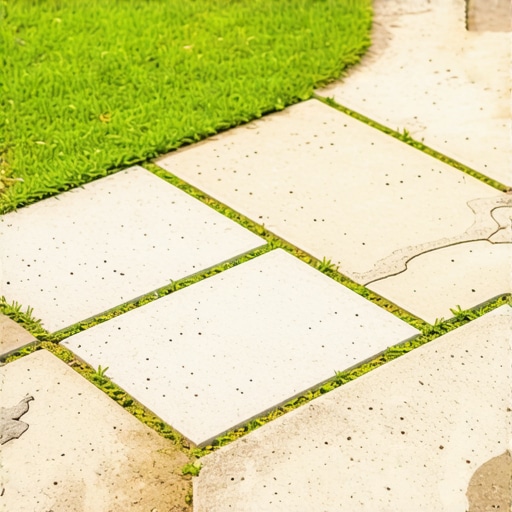
Chemicals are often a Band-Aid. If your soil is compacted, no amount of fungicide will save you long-term. You need to look at the ‘bulk density’ of your soil. If you cannot push a screwdriver six inches into the ground with one hand, your roots are suffocating. This is where hardscaping and landscaping engineering intersect. If your patio or walkway is shedding water directly onto the turf without a French drain or a 2% grade, you are creating a petri dish for disease. I see this constantly with new builds. The contractors leave a ‘bathtub effect’ in the yard where water sits. The fungus doesn’t need an invitation; it just needs a puddle.
How much modified gravel do I need for a patio base?
A standard paver patio requires a base of 4 to 6 inches of compacted #21A or ¾-inch modified gravel, plus 1 inch of bedding sand. To calculate, multiply the square footage by the depth in feet (e.g., 0.5 ft for 6 inches) and divide by 27 to get cubic yards.
The Engineering of Recovery: A 5-Step Protocol
Don’t just throw seed at the problem. If the soil is still infected or the conditions haven’t changed, that new seed is just expensive bird food. Follow this veteran protocol:
- Stop the Nitrogen: If you see brown patches, stop fertilizing. Nitrogen is rocket fuel for fungus.
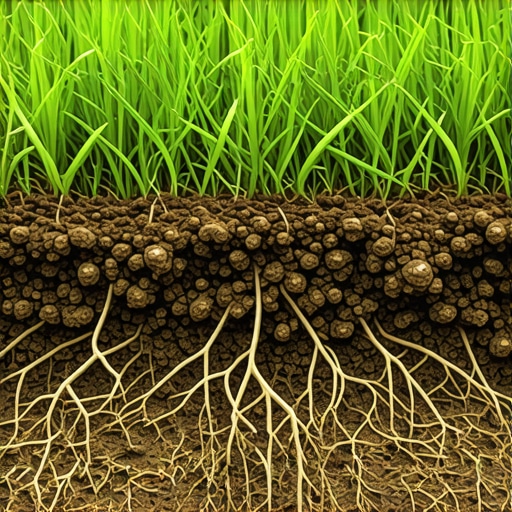
- Core Aeration: Pull 3-inch plugs to let oxygen into the root zone. Oxygen is toxic to many soil-borne pathogens.
- Calibrate Irrigation: Measure your output. You need 1 inch of water per week, delivered in two deep sessions. Shallow daily watering is a death sentence.
- Mow High: Set your deck to 4 inches. Tall grass shades the soil, keeping the root zone cool and reducing the stress that allows Summer Patch to take hold.
- Sanitize Blades: If you mow through a diseased patch, you are spreading spores across the rest of the yard. Wash your mower deck with a 10% bleach solution after cutting an infected area.
“Soil compaction reduces the pore space available for air and water, leading to anaerobic conditions that favor root-rotting pathogens over beneficial soil microbes.” – Texas A&M AgriLife Extension
Landscape Design and Airflow
Sometimes the problem is your garden design. If you have a dense perimeter of Leyland Cypresses or a solid privacy fence, you’ve created a ‘dead air’ zone. Without a 5-mph breeze to dry the dew off the grass, the ‘leaf wetness period’ extends too long. I often tell clients to thin out their ornamental trees or switch to a fence with gaps (like a shadowbox style) to allow for transpiration. It’s physics. If the water can’t evaporate, the plant will rot. Don’t skip the site analysis. Every yard has a micro-climate. You must manage it or the fungi will do it for you.