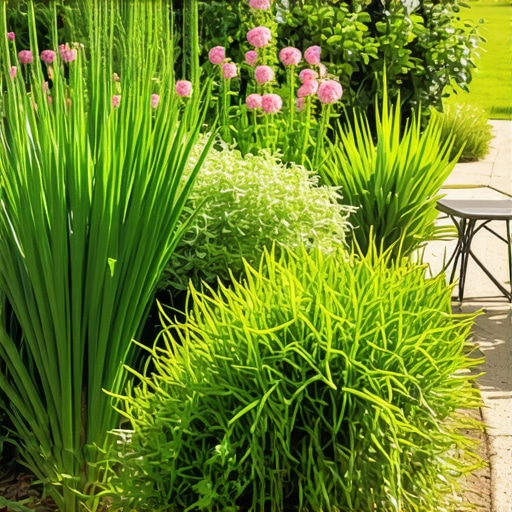
5 2026 Best Perennials for Low-Water Garden Edge DIY
The Engineering of a Resilient Garden Edge
Planning a garden edge for 2026 requires a shift from aesthetic fluff to biological and structural engineering. Most homeowners fail because they pick plants based on a photo in a catalog rather than the site’s hydraulic conductivity and soil oxygen levels. 80 percent of the work happens before a single perennial touches the dirt. If the grading is off, you are just creating a high-end swamp or a parched graveyard. I always drill into my new crew members: if you don’t fix the soil grading first, every plant you put in the ground is just expensive compost. You have to understand that the edge of a garden bed is a high-stress transition zone. It deals with foot traffic, mower blades, and rapid moisture evaporation. To build a low-water edge that lasts through the 2026 growing season and beyond, we look at the soil structure and the physiological adaptations of the plants themselves. This is not about being pretty; it is about botanical survival and resource efficiency.
[IMAGE_PLACEHOLDER]
What are the best low-water perennials for garden edges in 2026?
The best 2026 low-water perennials for garden edges include Lavandula x intermedia, Schizachyrium scoparium, and Hylotelephium spectabile, which utilize xeromorphic adaptations to survive drought. These species are selected for their root architecture, ability to withstand alkaline soil, and resistance to thermal stress at the bed boundary.
The Physics of the V-Cut Edge
Before selecting plants, we have to talk about the physical barrier. A proper garden edge is not a plastic strip from a big-box store. Those things heave during the first freeze-thaw cycle and look like garbage in six months. We use a professional V-cut trench, at least 4 inches deep. This creates a physical air gap that stops turf grass rhizomes from migrating into your perennial bed. It also serves as a micro-catchment for what little water we get, directing it toward the root zones rather than letting it runoff into the driveway.
“Soil compaction is the primary enemy of root development in urban landscapes; a bulk density above 1.6 g/cm3 will physically impede root penetration.” – Penn State Agricultural Extension
We use a spade to create a 90-degree vertical wall on the grass side and a 45-degree slope on the bed side. This is engineering 101. It handles hydrostatic pressure and prevents the mulch from washing out during a heavy rain. If you skip this, your low-water perennials will be choked out by invasive turf within one season.
1. Lavandula x intermedia ‘Phenomenal’
This is not your grandmother’s lavender. ‘Phenomenal’ is a workhorse specifically bred to handle the humidity spikes that often accompany modern drought cycles. It features a high concentration of essential oils in its foliage, which acts as a natural desiccation barrier. It requires a soil pH between 6.5 and 7.5. If your soil is acidic, you need to amend with dolomitic lime at a rate of 5 pounds per 100 square feet. Do not over-water. Lavender hates wet feet more than a cat. The root flare must be exactly level with the soil surface. Planting it an inch too deep is a death sentence from crown rot. In 2026, we are seeing more volatile weather, and this cultivar’s fungal resistance makes it the only lavender I will still put my name on.
2. Perovskia atriplicifolia ‘Denim n Lace’
Russian Sage is the king of the neglected edge. It thrives in poor, rocky soil where most plants would shrivel. The silvery foliage is a biological trick: the light color reflects solar radiation, keeping the internal temperature of the plant lower. ‘Denim n Lace’ is a more compact variety that won’t flop over into your lawn. It stays upright and structural. You need to prune this back to 6 inches in late winter to force new, strong growth. The woody base can handle the salt spray if your garden edge is near a sidewalk or road. It is a bulletproof choice for the 2026 climate reality.
3. Hylotelephium ‘Autumn Joy’ (Sedum)
Sedums are the tanks of the hardscaping world. They utilize CAM (Crassulacean Acid Metabolism) photosynthesis, meaning they keep their stomata closed during the heat of the day to prevent water loss and open them at night to breathe. This is pure engineering efficiency. ‘Autumn Joy’ provides a massive structural presence. Its thick, succulent leaves store water for weeks. It is also an essential nectar source for pollinators during the late summer lean months. I have seen these survive in cracks in a retaining wall with zero supplemental irrigation. Just make sure your soil isn’t too rich. High nitrogen fertilizers will make them leggy and weak. They prefer a lean, mean environment.
How much modified gravel do I need for a patio base?
While we are discussing edges, many DIYers try to border their plants with stone. If you are building a hardscape edge, you need a minimum of 4 to 6 inches of compacted 21A or 3/4-inch modified gravel base. You calculate this by multiplying the length by width by depth (in feet) and dividing by 27 to get the cubic yardage.
“A retaining wall or stone edge doesn’t fail because of the stone; it fails because of the water trapped behind it or an insufficient compacted base.” – Hardscape Engineering Axiom
Without this base, your stone edge will sink, and your perennials will be crushed by shifting pavers.
4. Echinacea ‘Cheyenne Spirit’
The Coneflower is a North American native with a taproot that can reach depths of 5 feet. This is why they stay green when the lawn is turning brown. ‘Cheyenne Spirit’ offers a range of colors on a sturdy, drought-hardy frame. The key here is the crown. You must leave the spent seed heads through the winter. This protects the plant’s center and provides food for birds. In the spring, you cut it back. Do not use wood mulch right up against the stems; use a thin layer of pea gravel or coarse sand at the base to prevent moisture from sitting against the crown and causing rot.
5. Schizachyrium scoparium ‘The Blues’
Little Bluestem is a native grass that brings a vertical element to the garden edge. In 2026, garden design is moving away from flat, boring beds toward tiered, ecological structures. This grass has a deep, fibrous root system that holds the soil in place, preventing erosion at the edge of your property. It turns a stunning bronze-orange in the fall. It requires zero fertilizer. In fact, if you fertilize it, the plant will fall over. It likes to struggle. That struggle is what makes it strong. It is the perfect partner for the flowering perennials mentioned above.
Technical Material Comparison for Low-Water Edging
| Plant Species | Root Type | Drought Rating | Soil pH Preference | Maintenance Level |
|---|---|---|---|---|
| Lavender ‘Phenomenal’ | Fibrous/Woody | Extreme | 6.5 – 7.5 | Moderate (Pruning) |
| Russian Sage | Woody Base | Extreme | 6.0 – 8.0 | Low (Late Cutback) |
| Sedum ‘Autumn Joy’ | Succulent/Rhizome | High | 5.5 – 7.0 | Very Low |
| Coneflower | Taproot | High | 6.0 – 7.0 | Low (Deadheading) |
| Little Bluestem | Deep Fibrous | Extreme | 5.0 – 8.0 | Very Low |
When is the best time to plant perennials for a dry edge?
Timing is everything in landscaping. You should plant these perennials in either early autumn or early spring. Autumn is actually superior because the soil temperature is high, which encourages rapid root growth, while the air temperature is cooling, reducing the transpirational demand on the plant. This allows the root system to establish before the ground freezes, giving the plant a massive head start on the 2026 summer heat. If you plant in July, you are fighting a losing battle against the sun.
The Master Landscaper’s Installation Checklist
- Test soil pH and drainage capacity (in/hr) before buying plants.
- Excavate a 4-inch deep V-trench to separate turf from the bed.
- Amend soil with 10% high-quality compost—do not over-enrich.
- Check each plant for root-girdling; if roots are circling the pot, score them vertically.
- Set the root flare at or slightly above the grade to avoid crown rot.
- Apply 2 inches of aged arborist wood chips, keeping mulch 3 inches away from plant stems.
- Water deeply once at installation, then taper off to force roots to grow deep.
Avoid the amateur mistake of daily light watering. This keeps the roots at the surface where they will fry in the sun. You want to water deeply and infrequently—about one inch of water once a week if there is no rain. This forces the roots to chase the moisture down into the subsoil. That is how you build a landscape that survives the neglect of a busy life or the harshness of a dry summer. Don’t listen to the guys at the big-box stores. They want you to buy new plants every year. Follow the biology, respect the engineering, and your 2026 garden edge will be the only thing on the block that isn’t dead by August.