
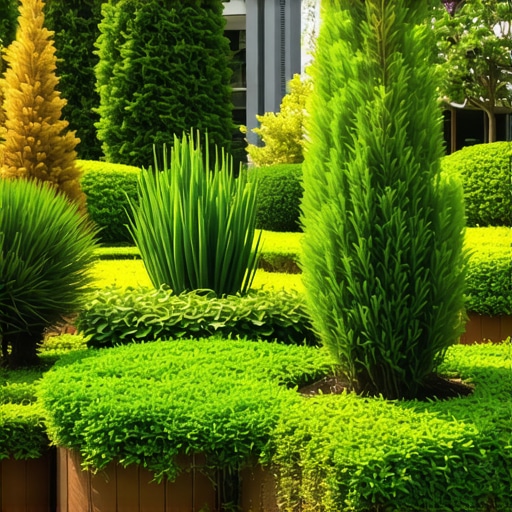
5 2026 Best Shrubs for Modern Foundation Planting
The Foundation of Engineering: Why Most Plantings Fail Before the First Shovel Hit
The 2026 landscape design shift focuses on structural resilience and architectural geometry, utilizing specific cultivars like Little Quick Fire Fab Hydrangea and Sprinter Boxwood to create clean lines that satisfy modern aesthetic requirements while maintaining biological health. Success starts with site grading and soil compaction. I always drill into my new crew members: if you don’t fix the soil grading first, every plant you put in the ground is just expensive compost. I have seen million-dollar homes with rotting sills because a ‘mow-and-blow’ crew piled 6 inches of mulch against the siding. We do not do that here. We build from the soil up. If your grade doesn’t slope away from the foundation at a minimum of 2 percent, you aren’t landscaping; you are creating a slow-motion flood. Most homeowners think the shrub is the star, but the root zone is the engine. If that engine is submerged in heavy clay or suffocated by a ‘mulch volcano,’ the plant will die. Period.
“A landscape’s longevity is inversely proportional to the amount of organic material buried against the masonry; proper drainage must be engineered before the first root ball is set.” – Hardscape Engineering Axiom
The Physics of the Modern Foundation
Modern homes often feature slab-on-grade or deep basements that create unique micro-climates. The soil near a foundation is often ‘fill dirt’—compacted, nutrient-deficient, and high in alkaline concrete runoff. You must test your pH. If you’re at an 8.0 and you try to plant an acid-loving species without remediation, you are wasting money. We look for shrubs that can handle the hydrostatic pressure of high-clay soils while providing the clean silhouettes required by contemporary architecture. Do not skip the percolation test. Dig a hole, fill it with water, and if it’s still there in 4 hours, you have a drainage crisis that no fancy shrub will solve.
Top 5 Shrub Selections for 2026 Modern Landscapes
Choosing the best 2026 foundation shrubs requires balancing growth rate, mature spread, and pest resistance to ensure the landscape remains low-maintenance and visually cohesive with modern hardscaping. We prioritize cultivars that require minimal pruning to maintain their form. Use the following data to select the right biological assets for your specific zone.
| Shrub Variety | Mature Size (H x W) | USDA Zone | Primary Modern Benefit |
|---|---|---|---|
| Little Quick Fire Fab® Hydrangea | 3-5′ x 3-5′ | 3-8 | Early bloom, sturdy upright stems |
| Sprinter® Boxwood | 2-4′ x 2-4′ | 5-8 | Fast fill-in for geometric hedging |
| Fine Line® Buckthorn | 5-7′ x 2′ | 2-7 | Vertical architectural accent |
| Kodiak® Orange Diervilla | 3-4′ x 3-4′ | 4-7 | Drought-tolerant native performance |
| Nightfall™ Snowberry | 2-3′ x 2-3′ | 3-7 | Deep purple foliage contrast |
1. Little Quick Fire Fab® Hydrangea (Hydrangea paniculata)
The Little Quick Fire Fab Hydrangea provides an architectural flowering shrub option that avoids the flopping associated with older cultivars, making it ideal for the structured beds of modern garden design. Its panicles emerge white and transition to a deep pink-red. It is a workhorse. It doesn’t need pampered. The stems are woody enough to withstand heavy snow loads without snapping. For foundation planting, this is critical. You don’t want a bush that collapses and looks like a pile of laundry after a summer storm. Plant these at 48-inch centers to allow for airflow. Airflow prevents powdery mildew. Simple as that.
2. Sprinter® Boxwood (Buxus microphylla)
The Sprinter Boxwood is the engineered solution for homeowners who want the classic boxwood hedge look without waiting a decade for the plants to reach a functional size. It grows faster than ‘Winter Gem’ or ‘Green Velvet.’ We use it to frame modern paver walkways and define the hardscape edge. In the professional world, we call this ‘green architecture.’ Because it’s a microphylla, it’s generally more resistant to the boxwood blight that has been ravaging East Coast landscapes. It’s a tough, dependable evergreen. Don’t shear it into a ball. Use hand pruners to maintain a soft, natural box shape that allows light to penetrate the interior. This prevents the ‘hollow center’ syndrome.
3. Fine Line® Buckthorn (Rhamnus frangula)
For tight spaces or to break up the horizontal lines of a long foundation wall, Fine Line Buckthorn offers a narrow, vertical profile that replaces the invasive Italian Cypress in colder climates. It is non-invasive. It stays exactly where you put it. The foliage is fern-like, providing a texture contrast against smooth concrete or large-format pavers. It’s a landscaping cheat code for narrow side yards. It needs sun. Put it in the shade and it will go ‘leggy’ and thin. In full sun, it’s a tight, green pillar. I use it to flank entryways or to hide utility meters without encroaching on the walkway.
4. Kodiak® Orange Diervilla (Diervilla rivularis)
Kodiak Orange Diervilla is a native deciduous shrub that delivers high-impact orange foliage in the spring and fall while thriving in the ‘death zone’ near foundations where heat and drought are common. It is not a true honeysuckle, so it isn’t invasive. It’s tough. It handles salt spray. It handles poor soil. If you have a modern home with a lot of metal or stone, the orange tones provide a necessary warmth. It spreads slightly via suckers, which makes it an excellent choice for mass planting on a slope to control erosion. It’s a problem-solver.
5. Nightfall™ Snowberry (Symphoricarpos)
The Nightfall Snowberry introduces a dark, moody foliage element to the 2026 palette, contrasting perfectly against light-colored modern stone or white stucco foundations. Most snowberries are messy. This one is compact. It stays under 3 feet. The purple-black leaves are the draw here. In late summer, it produces white berries that pop against the dark leaves. It’s a biological high-contrast play. We use it in the foreground of taller evergreens. It handles part-shade better than most dark-leafed plants, which often turn green if they don’t get 8 hours of sun.
The Professional Installation Protocol
Properly installing these shrubs involves excavating a hole twice the width of the root ball and ensuring the root flare is positioned exactly at or slightly above the finished soil grade to prevent stem rot. If you bury that flare, you’re killing the plant. It might take three years to die, but it’s a death sentence the second you kick the dirt over it. Use a transplanter fertilizer with mycorrhizae. This isn’t ‘magic dust.’ It’s biology. It helps the roots establish a symbiotic relationship with the soil fungi, increasing water uptake by up to 30 percent.
- Step 1: Locate all underground utilities (Call 811). Don’t hit a gas line for a $50 shrub.
- Step 2: Dig the hole shallow and wide. The sides should be sloped, not vertical.
- Step 3: Score the root ball. If it’s pot-bound, cut those circling roots. If you don’t, they will eventually girdle and strangle the plant.
- Step 4: Backfill with native soil. Do not fill the hole with ‘garden soil’ from a bag. You create a ‘bathtub effect’ where the water stays in the hole and rots the roots.
- Step 5: Water deeply immediately. This settles the air pockets.
“Research indicates that 80% of urban tree and shrub failure is attributed to improper planting depth and soil compaction around the root zone.” – Penn State Extension
How much modified gravel do I need for a patio base?
Calculating modified gravel for a patio base requires multiplying the total square footage by the desired depth (usually 4 to 6 inches) and then dividing by 27 to find the cubic yardage needed. For a standard 200-square-foot patio with a 6-inch base, you’ll need approximately 3.7 cubic yards. Don’t forget to account for a 20 percent compaction factor. If you don’t over-order, you’ll end up short once you run the plate compactor. Compaction is the difference between a patio that stays flat and one that looks like a roller coaster after the first freeze-thaw cycle.
How deep should I prune foundation shrubs?
Determining pruning depth depends on whether the shrub blooms on ‘old wood’ or ‘new wood,’ but as a rule, never remove more than one-third of the plant’s total mass in a single season. For modern foundation shrubs like the Hydrangea paniculata, you can prune back hard in late winter to encourage large blooms. For boxwoods, light thinning is better than heavy shearing. If you shear too often, you create a thick outer shell that blocks light, causing the interior of the plant to die and become a playground for pests and fungal pathogens. Keep it clean. Keep it open.
The Critical First Year Maintenance
Your new 2026 foundation shrubs are not ‘set and forget.’ They need water. Not a sprinkle every day. That’s for amateurs. You need deep, infrequent watering. Exactly 1 inch per week. This forces the roots to chase the moisture deep into the soil profile. Shallow watering creates shallow roots. Shallow roots die in a heatwave. Use a soaker hose or drip irrigation. Avoid overhead sprinklers; they just invite leaf spot and fungal issues. Mulch with a high-quality triple-shredded hardwood. Keep it 3 inches thick, but keep it away from the stems. You want a donut, not a volcano. It will rot if you don’t. That is the reality of the dirt. If you follow the engineering, the biology will follow.
![5 Best Trees for 2026 Heat Waves [Zone 8]](https://lawnmajesty.com/wp-content/uploads/2026/09/5-Best-Trees-for-2026-Heat-Waves-Zone-8.jpeg)
![4 Shade-Tolerant Groundcovers for 2026 Clay Soil [No Grass]](https://lawnmajesty.com/wp-content/uploads/2026/05/4-Shade-Tolerant-Groundcovers-for-2026-Clay-Soil-No-Grass.jpeg)