5 2026 Edible Landscaping Ideas for Tiny Backyards
5 2026 Edible Landscaping Ideas for Tiny Backyards
I always drill into my new crew members: if you don’t fix the soil grading first, every plant you put in the ground is just expensive compost. I have watched too many rookies drop a $200 fruit tree into a hole that has the drainage capacity of a concrete bucket. In a tiny backyard, you do not have the luxury of space to hide mistakes. If your soil pH is off by one point or your hardscape base is shy an inch of compacted gravel, the whole system collapses within three seasons. We are not just planting gardens; we are building biological machines that must perform in tight tolerances. In 2026, the trend is moving away from purely ornamental shrubs and toward high-density, calorie-producing systems that require precise engineering and horticultural discipline.
The Engineering of High-Yield Raised Masonry Beds
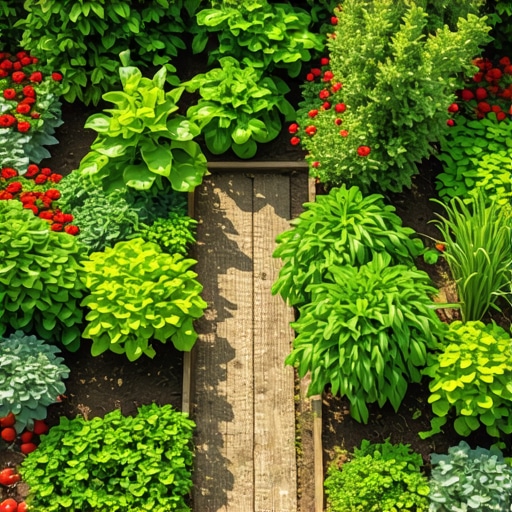
Edible landscaping in small backyards requires structural raised masonry beds that utilize hydrostatic pressure management and high-porosity soil blends to maximize root zone oxygenation. Unlike wooden frames that rot, masonry provides the thermal mass needed to stabilize soil temperatures during volatile 2026 spring cycles. Stop thinking about dirt and start thinking about the rhizosphere. For a 10×10 space, we use 6-inch CMU blocks or natural stone with a dedicated drainage weep system. Every bed must have 4 inches of 57 stone as a sub-base. Don’t skip the geotextile fabric. If you allow the native clay to migrate into your engineered soil mix, you lose the Cation Exchange Capacity (CEC) that makes edibles flourish. It will fail.
“Soil health is the primary driver of plant productivity; without a balanced Cation Exchange Capacity, nutrient uptake remains stunted regardless of fertilizer input.” – Agronomy Manual of Soil Science
How do I maximize vegetable yield in a 10×10 backyard?
To maximize yield, you must employ vertical trellising and succession planting within a controlled-release nutrient environment. This means using 40 percent composted organic matter mixed with 30 percent coarse sand and 30 percent peat or coco coir. This ratio ensures that the water-holding capacity does not lead to root rot. We install 1/4-inch drip irrigation lines on a solar-powered timer. Efficiency is the only way to win in a small footprint.
The Espalier Method: Vertical Fruit Production
Espaliered fruit trees are the 2026 standard for small-space landscaping, using mechanical pruning techniques to train apples, pears, or peaches against flat surfaces. This is not just for looks; it is about solar gain. By flattening the canopy, every leaf gets hit by the sun. We use a three-tier T-trellis system. I prefer the M9 rootstock for its dwarfing characteristics. It keeps the tree at a manageable 6 feet while forcing the energy into fruit production rather than wood. If you let a standard rootstock get into a tiny yard, the roots will eventually heave your patio. Avoid that disaster. Use the right genetics for the space.
| Material Choice | Service Life (Years) | Drainage Rating | Installation Difficulty |
|---|---|---|---|
| Pressure Treated Pine | 7-10 | Low | Easy |
| Western Red Cedar | 15-20 | Medium | Moderate |
| Natural Stone/Masonry | 50+ | High | Professional |
| Composite Timber | 25+ | Medium | Moderate |
Hydro-Zoning and Drip Irrigation Engineering
Precision irrigation systems eliminate the water waste and foliar diseases associated with traditional spray heads by delivering water directly to the root flare. In 2026, we are seeing stricter municipal water codes. You cannot afford to spray the sidewalk. We design the yard into three zones: high water (leafy greens), moderate water (fruit trees), and low water (perennial herbs). This prevents the common mistake of drowning your rosemary while your lettuce wilts. Deep, infrequent watering is the goal. You want to force those roots down at least 12 inches. If you water for 5 minutes every day, you are training the roots to stay at the surface. They will fry in the first heatwave. Don’t do it.
Integrated Pest Management and Soil Microbiology
Successful edible garden design incorporates Integrated Pest Management (IPM) and beneficial soil fungi to reduce the need for synthetic chemical interventions. We inoculate every planting hole with mycorrhizal fungi. This creates a symbiotic relationship that extends the root system’s reach by up to 100 times. You cannot see it, but it is the difference between a plant that survives and one that thrives. Stop using high-nitrogen synthetic fertilizers that kill soil life. Use a 4-4-4 organic slow-release instead. It keeps the soil biology intact. Your yard is an ecosystem, not a lab experiment.
“A retaining wall doesn’t fail because of the stone; it fails because of the water trapped behind it.” – Hardscape Engineering Axiom
What is the best soil mix for raised edible garden beds?
The optimal soil mix consists of triple-shredded hardwood mulch, screened topsoil, and vermiculite to ensure porosity and nutrient retention. Avoid cheap bagged soils from big-box retailers; they often contain undecomposed wood chips that rob the soil of nitrogen. I always test the soil pH before we plant. For vegetables, we aim for 6.2 to 6.8. If you are at a 5.5, your plants are starving even if the soil is full of food. They can’t eat if the chemistry is wrong.
The 2026 Pre-Installation Checklist
- Call 811 to mark all underground utility lines before excavating.
- Perform a percolation test: dig a 12-inch hole, fill with water, and ensure it drains within 4 hours.
- Analyze solar patterns: edible plants require at least 6 to 8 hours of direct UV exposure.
- Check local HOA bylaws regarding front-yard vegetable integration.
- Select USDA Hardiness Zone appropriate cultivars to ensure winter survival.
Landscaping is about physics and biology. If you ignore the structural needs of the soil or the physiological needs of the plant, you are wasting money. Build the foundation first. The fruit will follow. Stick to the measurements. Trust the science. Keep the mower in the shed.