How to Design a Small Backyard for Entertaining Guests
The Hardscape Autopsy: Why Most Small Backyards Fail
I recently got called out to tear up a $30,000 patio that was sinking because the previous contractor thought he could skip the compaction phase in a tight space. Small yards aren’t an excuse for small-scale engineering. In fact, the tighter the space, the higher the stakes. When you have a 15×20 footprint, every inch of hydrostatic pressure from a poorly graded corner is focused right onto your foundation or your neighbor’s fence line. This wasn’t a ‘design’ failure; it was a civil engineering failure. We found six inches of uncompacted organic topsoil buried under a thin layer of stone dust. It turned into a sponge. The pavers didn’t stand a chance.
Engineering the Foundation for Small Space Entertaining
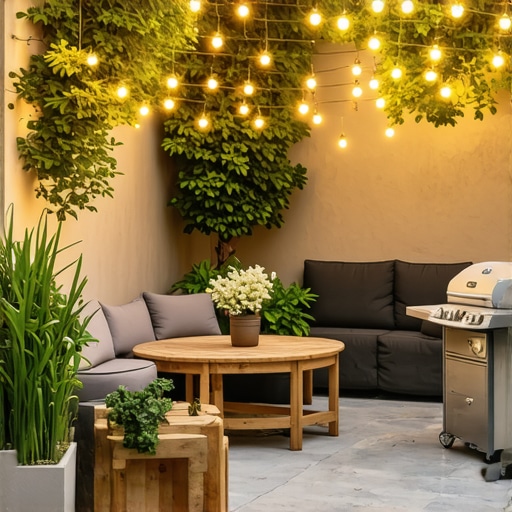
Designing a small backyard for guests requires vertical integration, multi-functional hardscaping, and precise drainage engineering to prevent soil saturation. By prioritizing a compacted sub-base and zonal planting, homeowners can maximize usable square footage while ensuring long-term structural integrity and plant health. Do not start with furniture; start with the dirt. You need to understand the Angle of Repose if you’re building raised tiers, and you better know your soil’s percolation rate.
“A retaining wall doesn’t fail because of the stone; it fails because of the water trapped behind it.” – Hardscape Engineering Axiom
How much modified gravel do I need for a patio base?
For a standard pedestrian patio, you need a minimum of 4 to 6 inches of 2A modified crushed stone, compacted in 2-inch lifts. To calculate this, multiply your square footage by the depth in feet (e.g., 0.5 feet for 6 inches), then multiply by 1.35 to account for compaction density. Small yards often require manual plate compactors because heavy machinery won’t fit through the gate. This is manual labor in its purest form. If you aren’t sweating, the base isn’t solid.
| Material Choice | Structural Benefit | Longevity Factor | Maintenance Level |
|---|---|---|---|
| Permeable Pavers | Reduces runoff, handles heavy rain | 25+ Years | Low (vacuum joints) |
| Thermal Bluestone | High density, heat resistant | 30+ Years | Medium (sealing) |
| Composite Decking | Zero rot, no splinters | 20 Years | Very Low |
| Crushed Granite | Excellent drainage, low cost | 10 Years | High (replenishing) |
The Science of Spatial Flow in Tight Quarters
Human movement is a measurement, not a guess. To entertain 10 guests in a small yard, you need clearance zones. A dining table requires at least 36 inches of ‘push-back’ space for chairs. A fire pit needs a 48-inch safety buffer from any combustible structure. In small designs, we use Seat Walls. A 18-inch high masonry wall serves as both a retaining structure for your garden beds and permanent seating for a dozen people. It eliminates the ‘chair clutter’ that chokes small patios.
The Biology of Small Space Planting
Stop buying plants at big-box stores. Those plants are pumped with nitrogen and growth hormones to look good on the shelf, but their root systems are often root-bound or girdled. In a small backyard, you don’t have room for a plant that grows six feet wider than its tag says it will. Focus on Cation Exchange Capacity (CEC) in your soil. For small containers or raised beds, you need a high-porosity mix that won’t compact under its own weight. Use native species with vertical growth habits like ‘Sky Rocket’ Junipers or ‘Slender Silhouette’ Sweetgums. They provide the privacy ‘green wall’ without eating 10 feet of your patio.
“Proper compaction of the subgrade and base is the single most critical factor in the longevity of any segmental pavement system.” – ICPI Tech Spec 2
How do I prevent my small backyard from flooding?
In small, enclosed yards, water has nowhere to go. You must install a French Drain or a Dry Well. We use 4-inch SDR-35 perforated pipe wrapped in non-woven geotextile fabric. This isn’t optional. If your yard has a 2% slope towards the house, you are building a swimming pool for your basement. We cut ‘pop-up’ emitters into the lawn or garden beds to distribute water away from high-traffic entertaining zones.
- Check Utility Lines: Always call 811 before you dig. Even a small fence post can hit a gas line.
- Subgrade Compaction: Rent a 3,000-lb plate compactor. Your hand-tamper is a toy.
- Geotextile Separation: Place fabric between the soil and the gravel base. It prevents the ‘migration of fines.’
- Polymeric Sand: Use high-quality sand to lock paver joints. It prevents weed growth and ant hills.
- Lighting Voltage: Use a 12V LED system. It’s safer for DIY and allows for longer wire runs without voltage drop.
The Maintenance Reality: Year One and Beyond
Your yard will move. Physics demands it. In the first year, expect your polymeric sand to settle. You might need a touch-up. If you installed a lawn, don’t scalp it. Small lawns are stressed easily; keep your mower blade at 3.5 inches to encourage deep root growth. Deep, infrequent watering—exactly 1 inch per week—forces roots to chase water down into the soil profile rather than staying at the surface where they fry in the July sun. Landscaping is a long game. Your backyard isn’t a product; it’s a living, breathing biological system. Respect the engineering, and it will respect your guest list.”,”image”:{“imagePrompt”:”A high-detail, wide-angle shot of a professionally engineered small backyard with a seat wall made of gray pavers, a built-in stone fire pit, and vertical columnar trees like ‘Sky Rocket’ Junipers against a wooden fence. The ground is a mix of clean-lined bluestone pavers and a small, perfectly manicured turf area. No people. Real-world construction quality showing precise drainage grates.”,”imageTitle”:”Small Backyard Hardscape Engineering”,”imageAlt”:”A professionally designed small backyard with stone pavers, seat walls, and vertical landscaping.”},”categoryId”:0,”postTime”:””}