![5 Drought-Tolerant Shrubs for 2026 Privacy Hedges [Zone 6]](https://lawnmajesty.com/wp-content/uploads/2026/07/5-Drought-Tolerant-Shrubs-for-2026-Privacy-Hedges-Zone-6.jpeg)
5 Drought-Tolerant Shrubs for 2026 Privacy Hedges [Zone 6]
The Hard Reality of Zone 6 Privacy Landscaping
Planning a living screen in USDA Hardiness Zone 6 is not about aesthetics; it is a calculation of biological survival and engineering resilience. I always drill into my new crew members: if you don’t fix the soil grading first, every plant you put in the ground is just expensive compost. After two decades of digging in the heavy silts and rocky clays that define this belt, I have seen thousands of dollars of nursery stock die because a homeowner bought a ‘fast-growing’ plant that could not handle a three-week dry spell or a -10°F cold snap. In 2026, as climate volatility increases, we must prioritize shrubs that exhibit high drought tolerance while maintaining a dense enough habit to block your neighbor’s driveway. This is about establishing a hedge that survives without a constant umbilical cord to the garden hose.
[IMAGE_PLACEHOLDER]
The Science of Zone 6 Privacy Screens
Zone 6 privacy hedges require species capable of surviving -10°F winters while maintaining cellular turgidity during mid-summer droughts through high water-use efficiency and deep root penetration. Professionals select species like Juniperus virginiana or Physocarpus opulifolius because they manage stomatal conductance better than standard hydrangeas, preventing total desiccation when the water table drops in August.
“Plants in Zone 6 face a unique physiological challenge where winter desiccation can be as damaging as summer drought, requiring species with high cuticular wax or dense internal structures.” – Penn State Extension Horticulture Manual
How far apart do you plant shrubs for a privacy hedge?
For a dense screen, spacing is determined by the mature width of the species, typically planting at 75% of the expected spread to ensure overlap. If a shrub matures to 8 feet wide, you space them 6 feet on center; spacing them too close leads to air stagnation and fungal pathogens like Cercospora leaf spot.
1. Eastern Red Cedar (Juniperus virginiana)
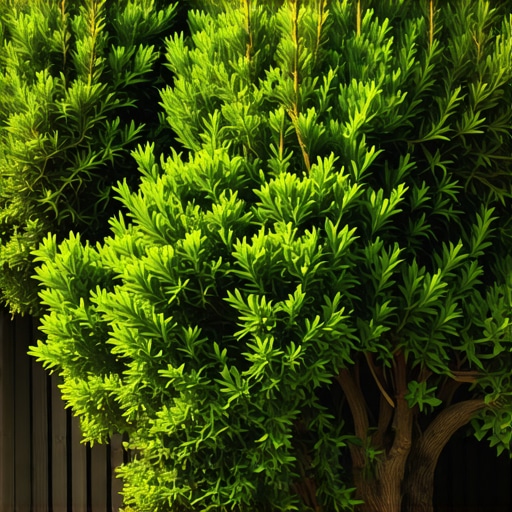
This is the tank of the horticultural world. It is a native evergreen that laughs at road salt, drought, and alkaline soil. In Zone 6, it provides a year-round visual barrier. While some call it a pioneer weed, in a managed landscape, it is an indestructible wall. It thrives in soils where the bulk density is too high for more sensitive species. You are looking for a growth rate of 12 to 18 inches per year once established. Do not plant these near apple trees, or you will deal with Cedar-Apple Rust. It is a biological trade-off.
2. Ninebark (Physocarpus opulifolius)
Ninebark has moved from a roadside shrub to a landscape staple. Specifically, varieties like ‘Diabolo’ or ‘Amber Jubilee’ provide intense foliage color without the water demands of a Japanese Maple. Its bark peels in layers—hence the name—providing winter interest. From an engineering perspective, Ninebark is excellent for slope stabilization. If you have a grading issue where water sheds too fast, Ninebark’s fibrous root system will hold the dirt while the plant survives on minimal rainfall.
3. Arrowwood Viburnum (Viburnum dentatum)
This shrub is named Arrowwood because Native Americans used its straight, tough stems for arrow shafts. That tells you everything about its structural integrity. It is exceptionally drought-tolerant once the root flare is properly established. It produces white flat-top flowers followed by blue-black drupes that birds love. It handles a wide pH range, from 5.5 to 7.5, making it versatile for the varied geochemistry of Zone 6. It will grow 10 feet tall and 10 feet wide. It is a beast. Give it room.
4. Panicle Hydrangea (Hydrangea paniculata ‘Limelight’)
Most hydrangeas are water hogs. Not the paniculata species. If you want a flowering hedge that does not wilt the moment the sun hits it, ‘Limelight’ is the industry standard. It blooms on new wood, meaning even a brutal Zone 6 winter won’t kill the flower buds. We use these in hardscaping designs where the shrubs are near concrete or stone—areas that radiate heat. The panicle hydrangea can handle that reflected thermal energy without shedding leaves. It requires a hard prune in late winter to maintain its structural density.
5. Staghorn Sumac (Rhus typhina ‘Tiger Eyes’)
If you have ‘hell-strip’ conditions—thin soil, high heat, zero irrigation—this is your plant. The ‘Tiger Eyes’ cultivar stays smaller and less aggressive than the wild species. Its architectural form adds a professional, designed look to the hedge. Sumac is a xeriscaping champion. It uses a specialized sap chemistry to resist transpiration. It will grow in cracks in the sidewalk if you let it. Use it as the ‘filler’ or the end-cap of a privacy run where the soil quality is at its worst.
What is the fastest growing privacy hedge for Zone 6?
The fastest-growing option that remains drought-tolerant is the Green Giant Arborvitae, which can grow 3 feet per year under optimal conditions, though it requires more initial water than the Juniperus virginiana. For a more resilient, low-maintenance choice, Ninebark offers a balance of rapid 12-24 inch annual growth and superior drought resistance once the root system reaches the B-horizon of the soil profile.
The Professional Installation Protocol
Stop digging deep holes. A shrub’s root system needs oxygen as much as water. We dig holes three times as wide as the root ball but no deeper. If you bury the root flare—the point where the trunk widens into the roots—the plant will eventually suffer from bark rot or girdling roots. I have seen $10,000 projects fail because the crew buried the flares. It is a slow death that takes three years. Don’t be that guy.
| Shrub Species | Growth Rate | Drought Tolerance | Mature Height |
|---|---|---|---|
| Eastern Red Cedar | Medium | Extreme | 30-40 ft |
| Ninebark | Fast | High | 8-10 ft |
| Arrowwood Viburnum | Medium | High | 10-12 ft |
| Panicle Hydrangea | Fast | Moderate | 6-8 ft |
| Staghorn Sumac | Slow/Medium | Extreme | 6 ft |
“A retaining wall doesn’t fail because of the stone; it fails because of the water trapped behind it.” – Hardscape Engineering Axiom
While the quote above refers to walls, the logic applies to hedges. Drainage is king. If you plant a drought-tolerant shrub in a ‘bathtub’ of heavy clay that holds water for three days after a rain, the roots will drown. Drought tolerance is not a license to plant in a swamp. You need percolation. Test your soil by digging a 12-inch hole and filling it with water. If it takes more than 12 hours to drain, you don’t have a drought problem; you have a drainage crisis. Fix the grade or install a French drain before you buy your plants.
The 2026 Privacy Hedge Maintenance Checklist
- Year 1: Deep soak once a week. Forget the sprinkler. Use a 5-gallon bucket with a small hole in the bottom at the base of each plant.
- Mulching: Use 3 inches of triple-shredded hardwood mulch. Keep it 2 inches away from the trunk. No mulch volcanoes. They kill trees.
- Soil Testing: Check your pH every two years. Zone 6 soils tend to acidify over time as organic matter breaks down.
- Pruning: Only prune after the plant has finished its flowering cycle to preserve next year’s buds.
Landscape design is a long game. You are not buying a product; you are managing a biological process. Choose the right species for your specific soil chemistry and stop over-watering. Your plants will be stronger, your water bill will be lower, and your privacy will be permanent.
![Why Your 2026 Hydrangeas Won't Bloom [3 Common Reasons]](https://lawnmajesty.com/wp-content/uploads/2026/05/Why-Your-2026-Hydrangeas-Wont-Bloom-3-Common-Reasons.jpeg)