5 2026 Groundcovers for Steep Shady Banks
The Hard Truth About Steep Shady Slopes
I always drill into my new crew members: if you don’t fix the soil grading first, every plant you put in the ground is just expensive compost. I have seen guys spend six figures on nursery stock only to watch it slide down a 30-degree incline after the first heavy spring rain. When you are dealing with a steep, shady bank, you aren’t just gardening; you are performing geotechnical engineering with biological components. Shade slows down evaporation, keeping soil moist and prone to fungal pathogens, while the incline forces water to move at a velocity that shears topsoil right off the bedrock or sub-clay layers. In 2026, we are moving away from the invasive ‘quick-fix’ vines of the past and toward high-performance, resilient natives and cultivars that actually bind soil together through deep rhizomatic structures and root tensile strength. You need plants that can handle the low light but possess the hydraulic lift capacity to manage moisture levels on a vertical plane. It is not about looks. It is about holding the earth in place.
“Soil erosion on slopes is a function of water velocity and soil shear strength; vegetation reduces velocity by increasing surface roughness and increases shear strength via root reinforcement.” – USDA NRCS Technical Manual
What are the best groundcovers for steep shady banks in 2026?
The best groundcovers for 2026 are Pachysandra procumbens, Microbiota decussata, Epimedium, Carex pensylvanica, and Waldsteinia fragarioides, which offer superior slope stabilization, shade tolerance, and root-mat density. These selections outperform traditional invasive species by providing ecosystem services and long-term soil anchoring without the risk of choking out native timber or clogging drainage systems.
1. Pachysandra procumbens (Allegheny Spurge)
Forget the common Japanese variety that every ‘mow-and-blow’ crew installs. Allegheny Spurge is the professional’s choice for 2026. This native powerhouse grows slowly, which is why the big-box stores don’t stock it, but its root system is vastly superior for slope work. It creates a dense, matte-finish carpet that doesn’t just sit on top of the soil; it weaves into it. We measure its effectiveness by its ability to prevent surface rilling. If you plant these at 12-inch centers, you will have a locked-in bank within two seasons. The foliage is mottled and blue-green, providing a technical advantage: it has a higher chlorophyll density for low-light photosynthesis. It won’t rot in the humid microclimates of a shady bank.
2. Microbiota decussata (Siberian Cypress)
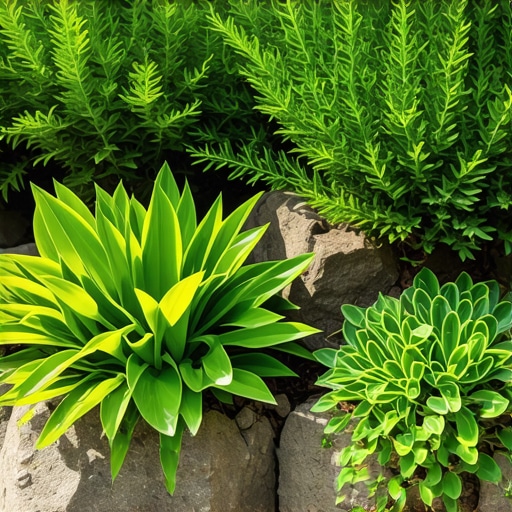
This is a hardscape contractor’s favorite ‘soft’ material. It looks like a juniper but thrives in the shade where junipers would turn into brown sticks. Siberian Cypress is incredibly tough, handling temperatures down to -40 degrees and resisting the hydrostatic pressure of heavy snow loads on a slope. Its horizontal branching habit acts as a natural terrace, breaking the fall of rainwater and forcing it to infiltrate the soil rather than run off. I look for 3-gallon pots with a minimum 12-inch spread. The root flare must be positioned perfectly level, even on a 45-degree bank, or you’ll face girdling issues within five years. It is a workhorse, plain and simple. [image_placeholder_1]
3. Epimedium (Barrenwort)
Often called ‘Bishop’s Hat,’ this plant is the solution for ‘dry shade,’ which is the hardest environment to manage on a bank. On a slope, water moves too fast for most plants to drink. Epimedium has leathery, waxy leaves that minimize transpiration. Its rhizomes are like steel cables. They spread laterally and weld themselves into the soil. I’ve used these on banks where the pH was a mess—anywhere from 4.5 to 7.5—and they didn’t flinch. In 2026, we’re seeing more drought cycles, and Epimedium is the insurance policy for your landscaping investment. Don’t skip the soil test; even though they are tough, they need that initial 2-inch layer of leaf mold to kickstart the fungal associations in the roots.
4. Carex pensylvanica (Pennsylvania Sedge)
People call this ‘shade grass,’ but it is a sedge. There is a massive difference in the vascular structure. Sedge has ‘edges’—triangular stems that are structurally more rigid than turf grass. It creates a soft, weeping look that is perfect for ‘naturalizing’ a steep bank. More importantly, it forms a dense sod that is nearly impossible for weeds to penetrate. This reduces your maintenance labor by 80%. When we install Carex, we use a staggered grid pattern. This creates a ‘baffle’ effect for water runoff. You want the water to zig-zag down the hill, not find a straight path. It is biology meeting fluid dynamics.
5. Waldsteinia fragarioides (Appalachian Barren Strawberry)
If you want a carpet that stays under 4 inches but holds a hill like a retaining wall, this is it. It looks like a strawberry plant but produces no fruit, putting all its energy into stolons and roots. It is a ‘mat-former.’ In the landscaping world, we value mat-formers because they create a physical barrier against soil splash-back. This keeps the lower leaves of your canopy trees clean and disease-free. It’s also incredibly salt-tolerant, making it the go-to for banks that sit near salted winter roads or driveways. It’s a low-profile, high-impact tool.
“Rhizomatous groundcovers provide a continuous underground network that significantly increases the factor of safety against shallow landslides on shaded embankments.” – Journal of Soil and Water Conservation
Technical Comparison of 2026 Groundcovers
| Plant Species | Root Structure | Growth Rate | Soil PH Preference | Drought Tolerance |
|---|---|---|---|---|
| Allegheny Spurge | Rhizomatous | Slow | 5.5 – 6.5 | Moderate |
| Siberian Cypress | Fibrous/Woody | Medium | 6.0 – 7.5 | High |
| Epimedium | Woody Rhizome | Slow/Medium | 5.0 – 7.0 | Extreme |
| Pennsylvania Sedge | Stoloniferous | Fast | 5.0 – 7.0 | Moderate |
| Barren Strawberry | Mat-forming | Medium | 6.0 – 8.0 | High |
How do I prepare a steep bank for planting?
To prepare a steep bank, you must first address surface drainage, remove all invasive competition, and install erosion control blankets to stabilize the soil while new groundcovers establish their root systems. Do not simply dig holes; you must create small ‘benches’ or flat pockets for each plant to ensure water reaches the root ball rather than bypasses it. Every plant needs a temporary ‘well’ on its downhill side.
The Installation Checklist: Don’t Skip These Steps
- Site Analysis: Measure the slope angle. Anything over 35 degrees needs structural reinforcement like boulders or geogrid.
- Soil Testing: Check your Cation Exchange Capacity (CEC). Shady banks often have depleted nutrients due to tree root competition.
- Erosion Blankets: Use 100% biodegradable coconut coir (jute) mesh. Do not use plastic netting; it kills wildlife and clogs mowers.
- Staggered Planting: Never plant in straight rows. Use a triangular ‘quincunx’ pattern to maximize soil coverage.
- Irrigation: Install temporary drip lines. Even ‘drought-tolerant’ plants need 1 inch of water per week for the first year to anchor.
Will these groundcovers stop a hill from sliding?
While deep-rooted groundcovers significantly improve soil cohesion and reduce surface erosion, they cannot fix deep-seated slope failure caused by poor hydrostatic drainage or lack of a retaining wall. For slopes with high water tables or structural instability, you must combine vegetation with engineered hardscaping solutions like French drains or rip-rap.
The Year-One Maintenance Reality
The first year is the ‘creep’ phase. The second is the ‘leap’ phase. In year one, your only job is to manage moisture and keep the ‘mow-and-blow’ guys away from your bank with their string trimmers. One bad pass with a weed whacker can set a slow-growing Pachysandra back two seasons. You need to hand-weed. It is tedious. It is hard on the knees. But it is the only way to ensure the groundcover forms a contiguous mat. Once that canopy closes, the maintenance drops to almost zero. If you see a patch of bare dirt, fill it immediately with more mulch or a ‘plug’ of the same species. Bare dirt is a failure point. It will rot the integrity of the entire bank if water finds a way in. Don’t be lazy. Fix the gaps early.
![4 Heat-Proof Perennials That Won't Wilt in 2026 [Zone 7]](https://lawnmajesty.com/wp-content/uploads/2026/05/4-Heat-Proof-Perennials-That-Wont-Wilt-in-2026-Zone-7.jpeg)