5 Native Plants That Won’t Die During a Record Heatwave
Landscaping is not about aesthetics; it is a discipline of biological engineering. Most homeowners view a garden as a collection of pretty objects, but a professional treats it as a high-stakes survival system where the ambient temperature and soil chemistry are the primary adversaries. When the thermometer hits triple digits, your yard is a battlefield. If you have not engineered the soil and selected the correct genetic profiles, your investment will perish.
The Engineering of Heat-Resistant Garden Design
To design a landscape for record heatwaves, you must select native plants with high root-to-shoot ratios and xerophytic adaptations such as waxy cuticles or specialized photosynthetic pathways. These plants maintain turgor pressure by accessing deep-channel ground moisture that shallow-rooted turf grass cannot reach during drought cycles.
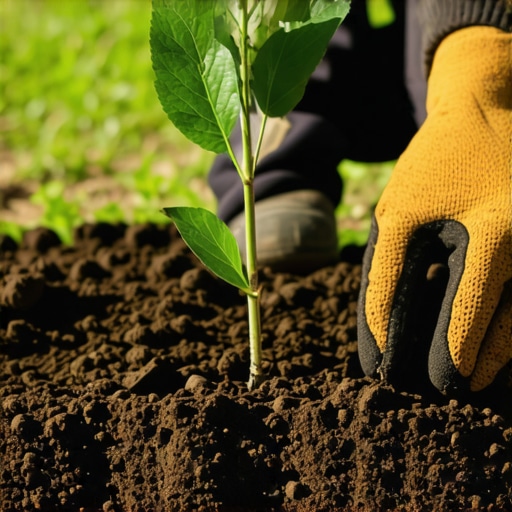
I always drill into my new crew members: if you don’t fix the soil grading first, every plant you put in the ground is just expensive compost. Last summer, I saw a homeowner spend four figures on premium nursery stock only to watch it cook in a week because the soil was compacted to a bulk density of 1.7 g/cm3. Roots cannot penetrate concrete-like dirt. You can water all day, but if the water cannot reach the rhizosphere, the plant is functionally in a vacuum. We start by analyzing the cation exchange capacity of the soil. If your soil can’t hold onto nutrients or water, the genetics of the plant won’t save it. You must build the foundation before you buy the foliage. Every hole we dig is twice the width of the root ball. We never bury the root flare. If you cover that flare, the tree will suffocate. It is physics, not a suggestion.
“Successful establishment of woody plants in urban environments is more dependent on soil volume and moisture availability than on any other single factor, including species selection.” – Penn State Department of Plant Science
5 Species Engineered by Nature for Extreme Heat
These five plants are not just survivors; they are specialists in thermal management. They utilize specific biological mechanisms to thrive when lesser plants succumb to heat stress.
1. Echinacea purpurea (Purple Coneflower)
The Purple Coneflower is a powerhouse of the prairie biome. Its primary defense mechanism is a massive, central taproot that can descend several feet into the subsoil. While the top three inches of soil might be bone-dry, the Echinacea is pulling moisture from the capillary fringe. It also features rough, hairy leaves that create a micro-boundary layer of air, reducing the rate of evapotranspiration.
2. Schizachyrium scoparium (Little Bluestem)
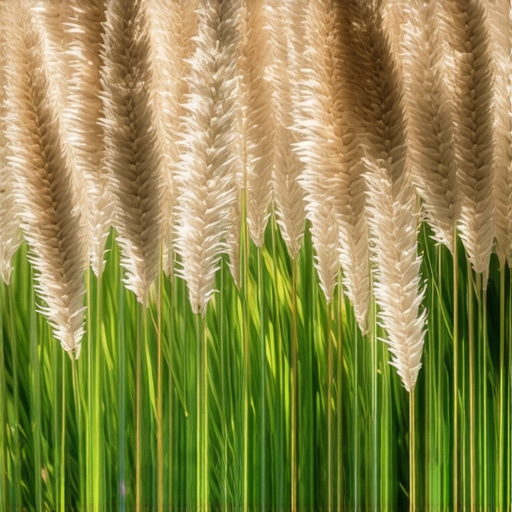
This is not your average lawn grass. Little Bluestem is a C4 photosynthetic plant. Most turf grasses (C3) begin to shut down their stomata at 85 degrees Fahrenheit to prevent water loss, which also stops their growth. C4 plants like Little Bluestem have a specialized internal anatomy that allows them to continue photosynthesizing at temperatures well over 100 degrees. It is an ornamental grass that laughs at a heatwave.
3. Baptisia australis (False Indigo)
Baptisia is a member of the legume family, meaning it has a symbiotic relationship with rhizobia bacteria to fix its own nitrogen. During a heatwave, nutrient uptake is often restricted because water is the carrier for minerals. Because Baptisia manages its own nitrogen supply and develops a root system so deep and woody that it is nearly impossible to move once established, it remains structurally sound while other shrubs wilt.
4. Asclepias tuberosa (Butterfly Weed)
The clue is in the name: tuberosa. This plant stores massive amounts of energy and water in its tuberous root system. It is the biological equivalent of a camel. It thrives in sandy loam and rocky soils where hydrostatic pressure is low. It requires almost zero supplemental irrigation once the root system has cleared the first two seasons of establishment.
5. Quercus macrocarpa (Bur Oak)
If you need a canopy that won’t fail, the Bur Oak is the gold standard. It features thick, corky bark that acts as thermal insulation for the vascular cambium. Furthermore, its leaves have a thick, leathery texture (cuticle) that prevents desiccation. In the first year, a Bur Oak seedling may only grow a few inches above ground while sending a taproot down four feet. It prioritizes survival infrastructure over surface showmanship.
How much water do native plants need during a drought?
Native plants require deep, infrequent irrigation totaling approximately one inch of water per week during their first two years of establishment. Once mature, species like Little Bluestem or Baptisia can survive 30 to 45 days without supplemental water, provided the soil structure allows for deep root penetration.
Why do plants die during record heatwaves?
Plants die during heatwaves due to cellular cavitation, where the tension on the water column inside the xylem becomes so great that it snaps, creating air bubbles (embolisms). This prevents water from moving from roots to leaves. High-heat also causes protein denaturation within the plant cells, leading to necrosis.
| Plant Species | Root Structure | Photosynthetic Type | Drought Tolerance |
|---|---|---|---|
| Echinacea purpurea | Taproot | C3 (Heat-adapted) | High |
| Little Bluestem | Fibrous/Deep | C4 (Elite) | Extreme |
| Baptisia australis | Deep/Woody | C3 (Nitrogen-fixing) | High |
| Butterfly Weed | Tuberous | C3 (Succulent-like) | Extreme |
| Bur Oak | Deep Taproot | C3 (Heavy Cuticle) | High |
The 7-Step Planting Protocol for Heat Survival
- Test Soil pH and Compaction: Use a penetrometer to ensure roots can actually grow.
- Excavate Wide, Not Deep: The hole should be twice the width of the root ball to allow lateral root expansion.
- Identify the Root Flare: Ensure the trunk-to-root transition is visible above the soil line.
- Hydrate the Hole: Fill the empty hole with water and let it drain to ensure percolation is functional.
- Backfill with Native Soil: Do not over-amend; the plant needs to get used to the