
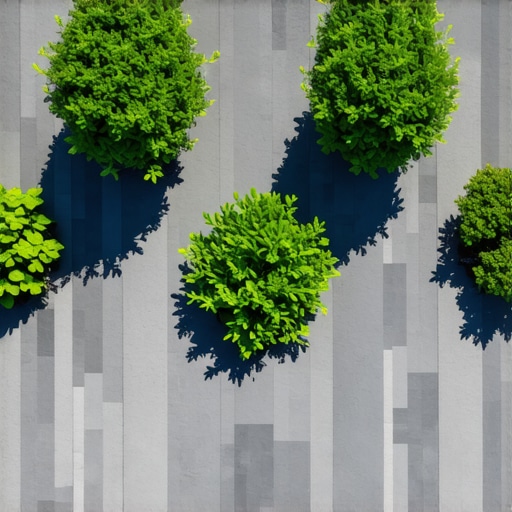
5 Salt-Tolerant Plants for Driveway Borders
Why Driveway Borders Are the Most Hostile Real Estate on Your Property
Driveway borders require specific salt-tolerant plants because these zones face a lethal combination of chemical de-icers, radiated asphalt heat, and heavy soil compaction. Choosing the wrong species leads to physiological drought, where the plant starves for water even in saturated soil due to high osmotic pressure from sodium ions.
A homeowner called me in a panic last spring after they completely torched their front lawn and a $4,000 row of boxwoods by applying nearly fifty pounds of rock salt during a single ice storm. By March, the boxwoods weren’t just dead; they were mummified. The salt had desiccated the root tissue so thoroughly that the wood snapped like dry matches. This wasn’t a gardening mistake. It was a chemical execution. Most contractors won’t tell you that 811 is just the start. You have to understand the cation exchange capacity of your soil before you put a single shovel in the ground near a driveway. If your soil has a high clay content, that sodium is going to stick around for years, ruining the structure and preventing water infiltration. It is a slow death. Don’t skip the soil prep.
“Salt accumulation in the root zone hinders the plant’s ability to take up water, effectively starving the specimen despite adequate moisture levels.” – University Extension Soil Science Manual
The Engineering of a Resilient Border
Before selecting plants, you must address the physical environment. Driveways act as heat sinks. During July, the edge of an asphalt driveway can reach temperatures exceeding 140 degrees Fahrenheit. This cooks the root systems of delicate perennials. Furthermore, the hardscaping base, usually a compacted layer of modified stone or crusher run, often extends six to twelve inches beyond the visible edge of the driveway. You aren’t planting in topsoil; you are planting in a construction zone. You need plants with high xeric qualities and thick leaf cuticles to survive the salt spray kicked up by passing vehicles.
| Plant Species | Growth Habit | Salt Tolerance | Key Benefit |
|---|---|---|---|
| Rugosa Rose | Shrub | Extreme | Thick, leathery leaves resist spray |
| Russian Sage | Perennial | High | Thrives in heat and poor soil |
| Sea Thrift | Groundcover | High | Natural halophyte (salt-lover) |
| Adam’s Needle | Evergreen | Very High | Architectural form; drought proof |
| Blue Star Juniper | Conifer | High | Waxy needles prevent desiccation |
The 5 Best Salt-Tolerant Plants for Driveway Borders
Salt-tolerant plants for driveway borders must be able to handle sodium chloride exposure while maintaining their structural integrity in poor, compacted soil. These five species are selected for their ability to thrive in the harsh micro-climates created by landscaping adjacent to pavement and salty winter runoff.
1. Rugosa Rose (Rosa rugosa)
The Rugosa Rose is the tank of the horticultural world. Unlike the fragile tea roses you see in magazines, this species has deep-veined, leathery foliage that acts as a shield against salt spray. It handles the garden design challenge of a driveway border by providing both height and a physical barrier. Its root system is aggressive, allowing it to find nutrients in lean, sandy, or compacted soils where other plants would fail. It will thrive. Don’t prune it too hard.
2. Russian Sage (Salvia yangii)
Russian Sage is a staple in professional landscaping because it loves the heat. It is technically a sub-shrub that produces airy spires of purple flowers, but its true strength lies in its silver-grey foliage. Those silver hairs reflect sunlight, keeping the plant cool when the asphalt is baking. It is highly resistant to the alkaline pH levels often found near concrete and pavers. It won’t flop if you keep the soil lean.
3. Sea Thrift (Armeria maritima)
If you need a low-growing border, Sea Thrift is a natural halophyte. This means its biology is literally evolved to handle salt. It forms tight, grass-like mounds that stay green even when subjected to winter road spray. In lawn care circles, this is often used as a transition plant between the turf and the driveway edge to prevent the typical “brown-out” seen in early spring. It stays small. It stays tough.
4. Adam’s Needle (Yucca filamentosa)
Yucca is the ultimate choice for high-stress hardscaping borders. It features stiff, sword-like leaves that are virtually immune to salt damage. The waxy coating on the leaves prevents moisture loss through transpiration, making it a hero in drought conditions. From a garden design perspective, it provides a permanent evergreen structure that holds its own even when buried under a snow pile. It is indestructible.
5. Blue Star Juniper (Juniperus squamata)
Junipers are known for their resilience, but the ‘Blue Star’ variety is particularly well-suited for borders. Its needles are coated in a protective wax that shrugs off salt spray. It grows slowly, which is vital for driveway edges where you don’t want plants overgrowing the pavement and requiring constant shearing. It provides a cool, steel-blue color that contrasts perfectly against dark asphalt. It won’t die on you.
“A retaining wall doesn’t fail because of the stone; it fails because of the water trapped behind it, and similarly, a plant fails not just from salt, but from the resulting soil compaction and lack of oxygen.” – Hardscape Engineering Axiom
How much modified gravel do I need for a patio base?
For a standard pedestrian patio, you need a minimum of four inches of compacted 21A or 3/4-inch modified stone. For driveways, this must increase to at least eight to twelve inches to support vehicle weight without shifting. Use a plate compactor. Do not skip this step or your pavers will heave within two seasons.
How do I neutralize salt in my garden soil?
To neutralize salt in garden soil, apply pelletized gypsum (calcium sulfate). The calcium ions in the gypsum displace the sodium ions on the soil particles. Once the sodium is displaced, you must flush the area with deep, infrequent watering to leach the salt below the root zone. One inch of water per week is the standard. Use a rain gauge.
- Test soil pH and sodium levels before planting.
- Excavate a trench 12 inches deep to remove construction debris.
- Amend the soil with organic compost to improve drainage.
- Install a 2-inch layer of hardwood mulch to regulate soil temperature.
- Water deeply once a week to force roots to grow downward.
Soil isn’t just dirt. It’s a complex biological matrix. When you plant next to a driveway, you are fighting a war against chemistry and physics. Use the right species, fix your drainage, and stop over-salting your pavement. It’s that simple.
![5 Drought-Proof Perennials for 2026 Clay Soil [Tested]](https://lawnmajesty.com/wp-content/uploads/2026/05/5-Drought-Proof-Perennials-for-2026-Clay-Soil-Tested.jpeg)