
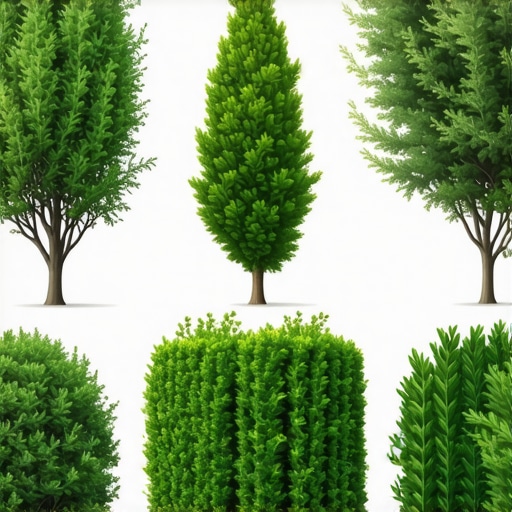
5 Privacy Screening Plants That Aren’t Leyland Cypress in 2026
The End of the Leyland Era: Superior Screening for Modern Landscapes
I always drill into my new crew members: if you don’t fix the soil grading first, every plant you put in the ground is just expensive compost. I was standing over a row of twelve-foot Leyland Cypress last Tuesday, watching a rookie try to backfill a hole with heavy red clay without checking the root flare. I stopped him right there. I told him that those trees were already dead; they just didn’t know it yet. The Leyland Cypress has become the ‘disposable razor’ of the landscaping world. It is fast, cheap, and breaks down exactly when you need it most. In 2026, we are moving away from these monoculture disasters toward species that actually possess the biological fortitude to survive suburban stresses. Effective garden design requires more than a fast growth rate; it requires structural integrity and pathological resistance.
Why the Leyland Cypress is a Liability
The Leyland Cypress is a genetic bottleneck that fails because of its extreme susceptibility to Seiridium canker and Botryosphaeria dieback, which are fungal pathogens that thrive in the stressed, compacted soils of modern landscaping projects. These trees lack the lateral root stability to handle high-wind events once they exceed twenty feet in height, often resulting in total structural failure during localized storms. It is a biological ticking clock.
“Seiridium canker is one of the most damaging diseases of Leyland cypress. The fungus destroys the vascular tissue, preventing the movement of water and nutrients, eventually leading to branch dieback and tree death.” – Clemson University Cooperative Extension
When you plant a Leyland, you are essentially gambling against the local fungal spore load. The plant’s dense canopy prevents airflow, creating a humid microclimate that acts as an incubator for pathogens. Once the central leader is infected, the tree is aesthetically ruined. We are seeing a massive shift in hardscaping integration where homeowners want permanent, living walls that do not require a chainsaw every seven years. You need plants that respect the USDA Hardiness Zones and possess the Cation Exchange Capacity to thrive in your specific soil profile. Stop buying the big-box store clearance rack specials and start looking at the physiological requirements of your property.
1. Thuja Standishii x Plicata ‘Green Giant’
The Thuja Green Giant is the primary industry standard for high-speed privacy screening because it offers a growth rate of up to three feet per year while maintaining a far superior resistance to bagworms and canker than the Leyland Cypress. This hybrid possesses a much more aggressive root system that can anchor itself in sandy loam or heavy clay with equal efficacy. It is the workhorse of the modern lawn care professional. [image_placeholder_1] Unlike its predecessor, the Green Giant can handle heavy snow loads without the branches splaying open. This is due to its internal branch structure which is significantly more lignified. When we install these, we focus on the drip-line irrigation. You cannot just spray the foliage; you need to deliver water to the feeder roots located at the edge of the canopy. This encourages lateral growth and prevents the root ball from becoming girdled. In 2026, this is still the king of the screen.
2. Ilex x ‘Nellie R. Stevens’ (Nellie R. Stevens Holly)
The Nellie R. Stevens Holly provides a dense, evergreen barrier with a high photosynthetic efficiency and a waxy cuticle that makes it nearly impervious to most common leaf-spot diseases and pests. It is a dioecious hybrid that produces bright red berries without needing a male pollinator, adding seasonal interest to your garden design. This plant is a beast. I have seen Nellies survive in soil pH levels ranging from 5.0 to 7.5. It is the closest thing to a ‘set it and forget it’ screen. The key here is the root flare. If you bury the trunk too deep, you will induce stem-girdling roots that will choke the tree in ten years. We use a pneumatic air tool to clear the soil from the top of the root ball before every installation. If I don’t see the buttress roots, that tree doesn’t go in the hole. It is that simple.
3. Juniperus virginiana ‘Taylor’ (Taylor Juniper)
The Taylor Juniper is the ideal solution for narrow privacy screens where lateral space is limited, offering a columnar habit that reaches fifteen feet in height while staying only three feet wide. This native cultivar is exceptionally drought-tolerant once established and avoids the Cercospora needle blight that ravages other upright evergreens. This is for the homeowner who doesn’t have a forty-foot backyard. If you are working in an urban environment with high hydrostatic pressure against hardscaping walls, the Taylor Juniper is your best friend. Its roots are non-aggressive, meaning they won’t heave your expensive paver patio. We often pair these with a French drain system to ensure that the roots aren’t sitting in stagnant water. Water is life, but too much water in a compacted soil profile is a death sentence. We measure soil moisture with a tensiometer to ensure we are hitting that 1-inch-per-week sweet spot.
4. Viburnum awabuki ‘Chindo’
Chindo Viburnum is a broadleaf evergreen that provides a lustrous (though I hate that word, it describes the wax layer well) foliage cover that creates a 100% opaque visual barrier within three growing seasons. It thrives in USDA Zones 7-9 and is particularly resistant to the viburnum leaf beetle that has decimated other species in the North. This isn’t your grandmother’s hedge. The Chindo has a massive transpiration rate, which means it can actually help manage minor drainage issues in a yard by pumping water out of the soil. However, don’t mistake it for a swamp plant. It needs well-drained soil. When we prep a site for Chindos, we use expanded shale to increase macro-pore space in the soil. This allows for oxygen exchange. Roots need to breathe. If you suffocate them with thick, un-aged mulch, you are just inviting Phytophthora root rot to the party.
5. Ulmus propinqua ‘JFS-Bieberich’ (Emerald Sunshine Elm)
The Emerald Sunshine Elm is a deciduous screening powerhouse that offers Dutch Elm Disease resistance and a heat-tolerant canopy that can survive the urban heat island effect better than any conifer. While it loses leaves in winter, its dense branching structure provides a winter silhouette that still offers significant privacy. Why choose a deciduous tree? Because conifers are susceptible to bagworms and spider mites in ways that elms simply aren’t. In 2026, smart landscaping involves diversity. If a fungus hits the evergreens in your neighborhood, your Elm screen will still be standing. We focus on structural pruning in the first three years to establish a strong central leader. This isn’t just about height; it’s about the caliper of the trunk. A thick trunk can withstand the ice storms that are becoming more common in the transition zones.
The Ground-Up Build: Technical Installation Standards
Planning is 80% of the job. You don’t just dig a hole; you engineer a biological pit. Most contractors fail because they treat the soil as a static medium. It is a living ecosystem. If you don’t understand the bulk density of your soil, you are guessing. We use a soil penetrometer to check for compaction layers at the 12-inch and 24-inch depths. If that needle hits 300 PSI, no root is getting through it. You have to break that hardpan or you are just planting a very expensive potted plant in a clay bowl.
“A retaining wall doesn’t fail because of the stone; it fails because of the water trapped behind it. Similarly, a tree doesn’t fail because of the wind; it fails because the root system was compromised by poor site preparation.” – Hardscape Engineering Axiom
How much modified gravel do I need for a patio base?
For a standard hardscaping install involving a patio or walkway near your screening trees, you need a minimum of 6 inches of 2A modified gravel, compacted in 2-inch lifts. You must use a vibratory plate compactor until the base literally bounces the machine back at you. If you skip the geotextile fabric between the subgrade and the gravel, your base will eventually migrate into the soil, leading to settling and heaving.
What is the best fertilizer for new privacy trees?
Stop using high-nitrogen turf fertilizer on your trees. You want a slow-release organic fertilizer with a mycorrhizal inoculant. We look for a 10-10-10 ratio or lower. The goal in year one isn’t top growth; it’s root colonization. We want the hyphae of the fungi to wrap around those roots and expand their surface area by 1000%. This is how a tree survives a drought. If you force top growth with high nitrogen, you get weak, spindly wood that snaps in the first thunderstorm.
| Species | Growth Rate (Annual) | Max Height | Hardiness Zone | Primary Benefit |
|---|---|---|---|---|
| Green Giant | 3-4 Feet | 40+ Feet | 5-8 | Speed and wind resistance |
| Nellie R. Stevens | 1-2 Feet | 25 Feet | 6-9 | Salt and drought tolerance |
| Taylor Juniper | 1 Foot | 15 Feet | 4-9 | Ultra-narrow footprint |
| Chindo Viburnum | 2 Feet | 20 Feet | 7-9 | Opaque broadleaf cover |
| Emerald Sunshine | 2-3 Feet | 35 Feet | 5-9 | Heat and disease resistance |
- Step 1: Call 811. Never dig without a utility mark.
- Step 2: Excavate a hole 3x the width of the root ball but no deeper than the root ball itself.
- Step 3: Remove all burlap, wire cages, and twine. These do not rot fast enough and will girdle the tree.
- Step 4: Backfill with native soil. Do not use 100% bagged potting mix; it creates a ‘perched water table’.
- Step 5: Apply 2-3 inches of arborist wood chips, keeping the mulch 4 inches away from the trunk.
- Step 6: Install a soaker hose or drip emitters at the drip line.
The first year is the ‘settling in’ period. You will see minimal top growth as the tree allocates energy to root establishment. Do not panic. Do not over-water. Check the soil 2 inches down with your finger. If it’s moist, leave it alone. If it’s dry, give it a deep soak. In year two, the tree will ‘creep,’ and in year three, it will ‘leap.’ That is the biological reality of landscaping. It takes patience and engineering, not just a shovel and a dream.
{“@context”:”https://schema.org”,”@type”:”Article”,”headline”:”5 Privacy Screening Plants That Aren’t Leyland Cypress in 2026″,”author”:{“@type”:”Person”,”name”:”Veteran Horticulturist”},”datePublished”:”2024-05-20″,”publisher”:{“@type”:”Organization”,”name”:”Professional Landscaping Firm”},”description”:”Discover the best alternatives to Leyland Cypress for privacy screening in 2026, focusing on disease resistance, soil health, and structural integrity.”}{“@context”:”https://schema.org”,”@type”:”FAQPage”,”mainEntity”:[{“@type”:”Question”,”name”:”Why are Leyland Cypress trees dying?”,”acceptedAnswer”:{“@type”:”Answer”,”text”:”Leyland Cypress trees are highly susceptible to Seiridium canker and Botryosphaeria dieback, fungal diseases that thrive in compacted, poorly drained suburban soils.”}},{“@type”:”Question”,”name”:”What is the best narrow privacy tree?”,”acceptedAnswer”:{“@type”:”Answer”,”text”:”The Taylor Juniper is an excellent narrow privacy tree, offering a columnar habit that reaches 15 feet in height with only a 3-foot spread.”}},{“@type”:”Question”,”name”:”How do I prevent root rot in new trees?”,”acceptedAnswer”:{“@type”:”Answer”,”text”:”To prevent root rot, ensure proper soil drainage, avoid planting too deep, and do not over-mulch. Always keep mulch away from the tree trunk to allow the root flare to breathe.”}}]}