7 Modern 2026 Hardscaping Trends for Small Yards
The Engineering Reality of Modern Small-Scale Hardscaping
Small yard hardscaping in 2026 is no longer about aesthetic decoration; it is a complex exercise in civil engineering and soil mechanics designed to maximize every square inch of usable terrain. Success in a tight footprint requires a fundamental understanding of hydrostatic pressure, load-bearing capacities, and ASTM material standards. Most homeowners fail because they prioritize the color of a paver over the Standard Proctor density of the sub-base. I recently got called out to tear up a $30,000 patio that was sinking because the previous contractor used a simple sand bed over uncompacted clay. Within two seasons, the freeze-thaw cycle turned that ‘investment’ into a dangerous, tripping-hazard swamp. We had to excavate 12 inches, install a true modified gravel base, and implement a non-woven geotextile fabric to prevent soil migration. This is the difference between a landscaper and a hardscape technician. If you do not respect the physics of the ground, the ground will eventually reclaim your work.
“A retaining wall doesn’t fail because of the stone; it fails because of the water trapped behind it.” – Hardscape Engineering Axiom
1. Vertical Terracing and Segmental Retaining Walls
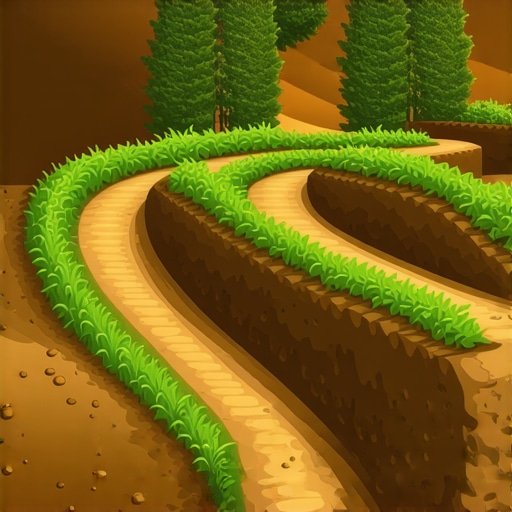
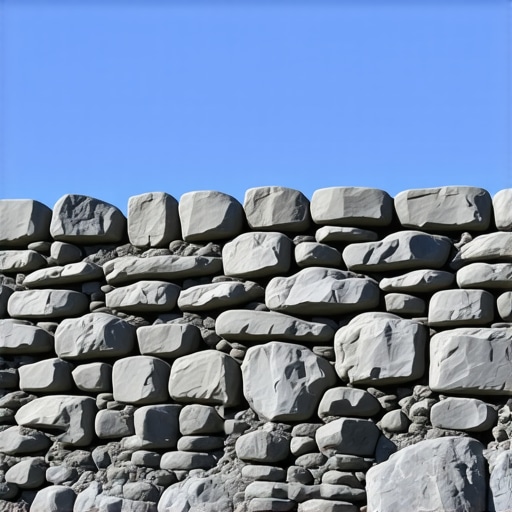
Vertical hardscaping in small yards utilizes segmental retaining walls (SRWs) to create tiered usable levels on sloped lots where traditional grading is impossible. By using geogrid reinforcement and clean #57 stone for backfill, we can turn a 15-degree useless slope into a series of functional engineered plateaus. This prevents soil erosion and manages surface runoff far more effectively than simple sod. Don’t skip the 4-inch perforated perforated drain pipe at the heel of the wall. It is the most important component of the entire structure.
2. Permeable Interlocking Concrete Pavements (PICP)
Permeable hardscaping utilizes specialized aggregate-filled joints to allow 100% of rainwater to infiltrate the sub-base rather than flooding municipal storm systems. In 2026, small yard designs are pivoting toward PICP systems because they satisfy impervious surface ratio codes while providing a solid, vehicular-rated surface. This is critical for urban lots where stormwater management fees are increasing. The base must consist of open-graded stone (No. 2, No. 57, and No. 8) to create a reservoir that holds water while it slowly percolates into the subgrade.
3. Sunken Fire Pits with Sub-Surface Drainage
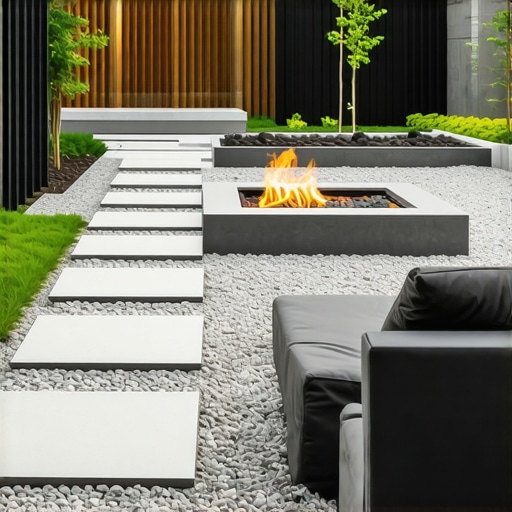
Sunken seating areas create a sense of intimacy in small yards by lowering the site’s vertical profile, but they require rigorous civil engineering to prevent them from becoming swimming pools. To build these correctly, you must install a sump pump or a gravity-fed French drain connected to a lower exit point on the property. We use cast-in-place concrete or heavy-duty masonry units to withstand the lateral earth pressure exerted by the surrounding soil. It is a bunker, not just a bench.
How much modified gravel do I need for a patio base?
For a standard pedestrian patio, you need a minimum of 4 to 6 inches of compacted 21A or 3/4-inch minus modified gravel. For small yards with heavy clay soil, you must increase this to 8 inches and use a vibratory plate compactor in 2-inch lifts to ensure maximum density. Anything less will result in paver heaving.
| Material Type | Compaction Rating | Drainage Capability | Best Use Case |
|---|---|---|---|
| Modified Gravel (21A) | High | Moderate | Standard Paver Base |
| Clean #57 Stone | Low (Self-compacting) | High | Retaining Wall Backfill |
| Polymeric Sand | N/A | Low | Joint Stabilization |
| Open-Graded Base | Moderate | Extreme | Permeable Paver Systems |
4. Modular Geometric Slabs for Visual Expansion
Large-format modular pavers (24×36 or larger) reduce the number of visible joints, which tricks the eye into perceiving a small space as significantly larger. However, these slabs are prone to cracking if the screed layer isn’t perfectly level. We use fine-graded limestone screenings or concrete sand (ASTM C33) to create a 1-inch bedding layer. Do not use stone dust; it holds too much moisture and leads to efflorescence—that white, salty film that ruins the look of premium stone.
5. Integrated Concrete Planters as Structural Barriers
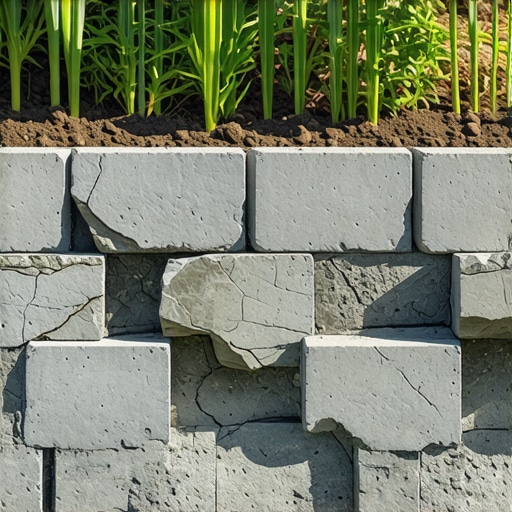
Modern garden design is moving toward integrated planters that serve as both horticultural beds and perimeter security. By pouring reinforced concrete walls, we can create thin-profile planting pockets that don’t eat up the footprint like bulky timber beds do. These walls must be waterproofed with a bituminous coating on the interior to prevent moisture from leaching through and staining the exterior finish. It keeps the roots contained and the hardscape pristine.
6. Low-Voltage Hardscape Lighting (Infrastructure First)
Hardscape lighting in 2026 is about integrated LED fixtures recessed directly into the stone or under the stair nosing. The mistake I see is people trying to add lights after the build. You must run your 12/2 low-voltage wire through PVC conduit beneath the paver base before a single stone is laid. This protects the line from shovels and root intrusion. Every connection must be heat-shrunk. Don’t use those cheap clip-on connectors; they will corrode in six months.
7. Thermal Mass Materials for Micro-Climate Control
In small yards, the choice of material significantly impacts the ambient temperature. Dark basalt or granite acts as a thermal mass, absorbing heat during the day and radiating it at night. This can extend your outdoor season by weeks. Conversely, in hot climates, we use light-colored travertine which has a high Solar Reflectance Index (SRI) to keep the surface cool for bare feet. This isn’t just about color; it’s about thermodynamics.
“Soil compaction is the foundation of all structural longevity in landscaping; without it, you are building on a fluid.” – Agronomy Manual Vol. 4
How do I prevent weeds from growing in my pavers?
Weeds don’t grow from the bottom up; they grow from seeds landing in the joints. You must use high-quality polymeric sand that undergoes a chemical hydration process to harden into a plastic-like bond. This seals the joint, prevents washout, and creates a hostile environment for germination. Check your joint depth; it needs to be at least 1 inch deep to hold.
- Step 1: Excavate to a depth of 8-12 inches depending on soil type.
- Step 2: Install non-woven geotextile fabric to separate subgrade from base.
- Step 3: Lay and compact modified gravel in 2-inch lifts (95% Standard Proctor).
- Step 4: Screed 1 inch of ASTM C33 concrete sand for the bedding layer.
- Step 5: Install pavers with tight joints and sweep in polymeric sand.
- Step 6: Compact the pavers into the sand and hydrate according to manufacturer specs.
Landscape construction is a discipline of inches. If you skip the grading, you invite foundation rot. If you skip the compaction, you invite settlement. If you skip the drainage, you invite catastrophic failure. Treat your small yard like a bridge project: over-engineer the parts you can’t see, and the parts you can see will last a lifetime.