
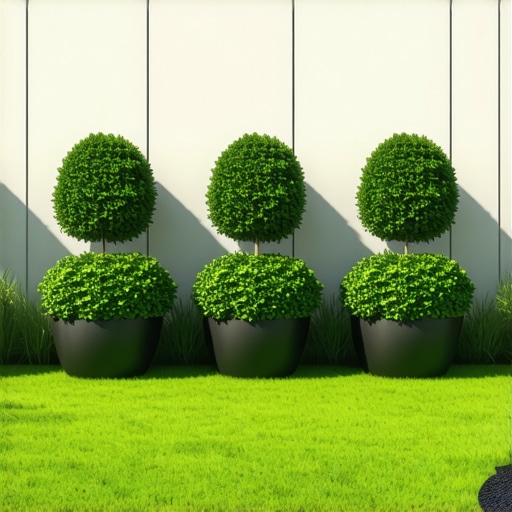
5 2026 Low-Maintenance Shrubs for Modern Yards
The Engineering of a Low-Maintenance Modern Yard
Professional landscape design requires a deep understanding of soil bulk density and hydrostatic pressure to ensure plant longevity. Successful yard modernization starts with topographic grading and percolation testing rather than aesthetic plant selection, ensuring that root systems have adequate oxygen exchange and moisture drainage within the subsoil layers.
I always drill into my new crew members: if you don’t fix the soil grading first, every plant you put in the ground is just expensive compost. Last season, I was called to a site where a homeowner spent twelve thousand dollars on nursery stock only to watch it rot. The previous contractor had ignored the 2% minimum slope requirement, creating a basin where water sat for forty-eight hours after every rain. We had to excavate three feet of anaerobic, grey-colored clay and install a series of four-inch perforated French drains before a single new shrub could be sited. If you skip the forensics of your dirt, you are just throwing money into a hole. Landscaping is 10% planting and 90% civil engineering. Most people see a pretty bush; I see a biological machine that requires a specific Cation Exchange Capacity (CEC) to function. Without the right soil chemistry, your ‘low-maintenance’ dream becomes a high-maintenance nightmare.
“Planting the root flare too deep is the primary cause of tree and shrub mortality in urban landscapes. Proper installation requires the topmost root to be at or slightly above the soil grade.” – International Society of Arboriculture (ISA) Best Management Practices
The Science of Site Preparation and Soil Structure
Soil preparation for modern landscaping involves more than just dumping a bag of mulch; it requires analyzing macronutrient ratios and compaction levels. High-quality garden design utilizes soil amendments like expanded shale or organic compost to break up heavy clay, ensuring that shrub root zones can expand without facing mechanical resistance.
Before you even look at a plant catalog for 2026, you must understand your bulk density. If your soil is as hard as a parking lot, no shrub is ‘low-maintenance.’ I recommend a simple ‘perc’ test: dig a hole 12 inches deep, fill it with water, and time how long it takes to drain. If it takes more than 4 hours, you have a drainage crisis. You don’t solve this by adding sand, you’ll just make concrete. You solve it by adding organic matter that encourages microbial activity. Soil is a living matrix. When we talk about 2026 trends, we are talking about shrubs that can handle the erratic weather patterns we are seeing: flash droughts followed by 3-inch rain events. This requires a root system that can breathe. [image-placeholder-1] Modern yards often suffer from ‘legacy soil’ where decades of chemical fertilizers have killed the mycorrhizal fungi. I tell my clients to stop the ‘mow-and-blow’ chemical cycle. It is killing your investment. Use a slow-release, organic-based fertilizer that feeds the soil, not just the plant.
How much water do new shrubs need?
New shrubs require approximately one inch of water per week, delivered through deep, infrequent applications to encourage roots to grow downward into the cooler subsoil. Avoid daily light sprinkling, which promotes shallow, weak root systems that are susceptible to heat stress and drought-induced mortality during the summer months.
Top 5 Low-Maintenance Shrubs for 2026
Selecting resilient shrubs like Itea virginica and Aronia melanocarpa involves analyzing USDA Hardiness Zones and photoperiod requirements. These low-maintenance cultivars are genetically selected for compact growth habits, reducing the need for manual pruning while maintaining architectural integrity in modern landscape designs and urban environments.
1. Itea virginica ‘Little Henry’ (Sweetspire): This is a workhorse for the modern yard. It handles the ‘wet feet’ of a rain garden but survives a drought once established. It stays at a manageable 2 to 3 feet. The fall color is a deep maroon that beats any invasive burning bush. 2. Hydrangea paniculata ‘Little Lime’: Forget the old-fashioned hydrangeas that wilt the moment the sun hits them. ‘Little Lime’ blooms on new wood, meaning you can’t mess up the pruning. It has thick, woody stems that don’t flop under the weight of the flowers. 3. Rhamnus frangula ‘Fine Line’ (Fernleaf Buckthorn): For narrow spaces between a driveway and a fence, this is the engineering solution. It grows 6 feet tall but only 2 feet wide. It provides a vertical architectural element without the maintenance of a hedge. 4. Aronia melanocarpa ‘Low Scape Mound’ (Chokeberry): This is a ground-hugging shrub that replaces the need for mulch over time. It is salt-tolerant, making it perfect for areas near salted sidewalks. It offers white flowers in spring and dark berries for birds in winter. 5. Ilex glabra ‘Gem Box’ (Inkberry Holly): This is the professional’s replacement for Boxwood. With Boxwood Blight sweeping through neighborhoods, ‘Gem Box’ offers that same manicured look but with much higher disease resistance and better cold hardiness.
What are the best shrubs for heavy clay soil?
Shrubs like Itea virginica and Aronia melanocarpa are superior choices for heavy clay soil because they possess specialized vascular tissues that tolerate low-oxygen environments. These native-derived cultivars can withstand the hydrostatic pressure of water-saturated clays better than traditional ornamental species like boxwoods or azaleas.
| Shrub Cultivar | Mature Height | Sun Requirement | Soil Preference |
|---|---|---|---|
| Itea ‘Little Henry’ | 2-3 ft | Full Sun to Shade | Acidic / Moist |
| Hydrangea ‘Little Lime’ | 3-5 ft | Full Sun to Part Shade | Well-Drained |
| Rhamnus ‘Fine Line’ | 5-7 ft | Full Sun | Adaptable |
| Aronia ‘Low Scape’ | 1-2 ft | Full Sun | Salt Tolerant |
| Ilex ‘Gem Box’ | 2-3 ft | Full Sun to Part Shade | Acidic / Sandy Loam |
“A landscape is only as resilient as its weakest link, which is almost always a failure to match the plant’s biological needs to the site’s environmental constraints.” – Penn State Agricultural Extension
The Ground-Up Installation Checklist
Proper planting techniques are essential for shrub establishment and long-term landscape health in modern yards. Every horticultural installation must prioritize the root flare position and avoid mulch volcanoes, which trap moisture against the bark and invite pathogenic fungi and boring insects to destroy the cambium layer.
- Call 811 to mark underground utilities before any excavation begins.
- Excavate the planting hole to twice the width of the root ball but no deeper than its height.
- Locate the root flare (the point where the trunk widens at the base) and ensure it sits 1 inch above the surrounding grade.
- Backfill with native soil; do not over-amend the hole, as this creates a ‘pot-bound’ effect where roots refuse to leave the loose soil.
- Apply a 2-inch layer of hardwood mulch, keeping it 3 inches away from the main stems.
- Install a dedicated drip irrigation line with 2-gallon-per-hour emitters for targeted watering.
Final Maintenance Specifications
Low-maintenance does not mean no-maintenance. In the first year, your focus is root development. I tell my clients: ‘The first year they sleep, the second year they creep, the third year they leap.’ Don’t panic if you don’t see three feet of growth in 2026. The plant is busy building a hydraulic system underground. Avoid high-nitrogen fertilizers in late fall, as this forces soft growth that will succumb to winter kill. Instead, focus on maintaining a consistent mulch layer to regulate soil temperature. If you follow these engineering principles, your yard will look better than the neighbors’ with half the effort. It’s about working with biology, not against it. Don’t be a hack. Do the dirt work first.”,
![4 Drought-Tolerant Perennials for 2026 Full Sun [Zone 8]](https://lawnmajesty.com/wp-content/uploads/2026/05/4-Drought-Tolerant-Perennials-for-2026-Full-Sun-Zone-8.jpeg)
![Stop Winter Salt Damage on 2026 Roadside Hedges [Fix]](https://lawnmajesty.com/wp-content/uploads/2026/05/Stop-Winter-Salt-Damage-on-2026-Roadside-Hedges-Fix.jpeg)