
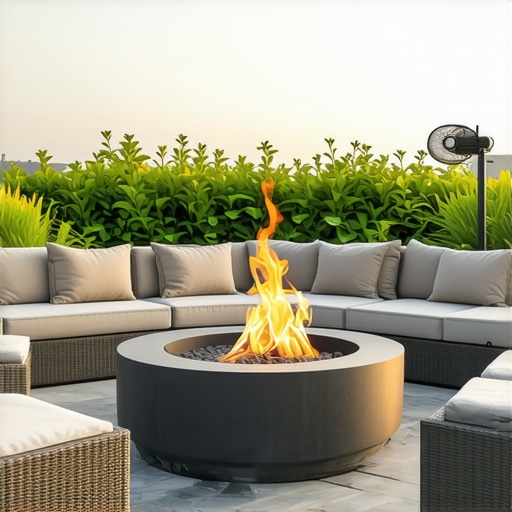
3 Ways to Keep Your Fire Pit Area Smoke-Free
Engineering a Smoke-Free Fire Pit: 3 Professional Hardscaping Secrets for Clean Outdoor Living
A smoke-free fire pit is achieved by optimizing thermal draft through cross-ventilation, using fuel with a moisture content below 20 percent, and installing secondary combustion inserts that re-burn wood gases before they exit the pit. Achieving this requires precise hardscaping engineering and an understanding of fluid dynamics.
I recently got called out to tear up a $30,000 patio that was sinking because the previous contractor didn’t understand basic drainage. But the real kicker? The homeowner couldn’t even sit on the expensive pavers because their custom-built stone fire pit was a literal smoke factory. It was a classic hardscape autopsy. I found that the builder had used a solid steel liner with zero air intake at the base. They basically built a masonry bucket that trapped cold air and smothered the fire. Every time a log was tossed in, the lack of oxygenation resulted in incomplete combustion. It was a mess of soot and expensive, wasted landscaping. I had to explain that if you don’t account for the thermal buoyancy of the air, you are just building a very expensive trash burner. We ripped it out, installed a proper aggregate base, and integrated ventilation ports. Now, they can sit downwind without stinging eyes. Experience matters. Dirt under the fingernails teaches you what a textbook can’t.
1. Master the Thermodynamics of Cross-Ventilation
Cross-ventilation in a fire pit is the mechanical process of drawing ambient air through the bottom of the structure to feed the combustion zone, creating a convection current that pushes smoke upward at high velocity. Without this, the fire starves for oxygen. Most garden design plans ignore the physics of fire. They focus on the stone’s color, not the PSI of the air intake. To fix this, you must engineer intake ports into the base of your masonry. This is not optional. It is civil engineering on a micro-scale. You want at least four openings around the perimeter. These should be at least 2 inches in diameter. I prefer using Schedule 40 PVC sleeves during the pour or leaving gaps in the paver blocks. This creates a venturi effect. Cold air is sucked in. Hot air rises. The smoke goes up, not in your face. It is simple physics. Don’t skip this.
“A fire pit’s efficiency is directly proportional to its ability to facilitate gas exchange at the fuel-bed level, preventing the accumulation of particulate matter.” – Agricultural Engineering Handbook
2. Implement Secondary Combustion with Double-Wall Inserts
A double-wall fire pit insert reduces smoke by heating air between two layers of stainless steel and injecting it into the top of the flames, triggering a secondary burn of the volatile organic compounds. This is the gold standard for hardscaping projects. You are essentially creating a gasifier. Most DIYers just pile stones in a circle. That is a mistake. A professional installation uses a 304 stainless steel liner with pre-drilled oxygen holes at the top rim. This allows the smoke, which is just unburned fuel, to catch fire before it leaves the pit. It increases the BTU output significantly. It also protects your hardscape stone from thermal shock. Standard concrete blocks will crack at 800 degrees. High-end inserts can handle 1200 degrees. Protect your investment. Use a liner.
How much modified gravel do I need for a patio base?
For a standard fire pit patio, you need a base depth of 6 inches of AASHTO #57 crushed stone or modified gravel, which typically equates to 1 ton of material for every 50 square feet of area. Proper compaction is vital. You must use a plate compactor until the aggregate reaches 95 percent Proctor density. If the base shifts, your fire pit vents will misalign. If they misalign, the airflow dies. Everything is connected.
3. Control Fuel Quality and Moisture Micro-Physics
Smoke is primarily the result of moisture evaporation from wood cells, so using kiln-dried hardwood with a lignin structure that is fully cured is the only way to ensure a clean burn. I tell my lawn care clients this all the time: stop throwing your brush piles into the fire pit. Green wood is 50 percent water. When you burn it, you aren’t making heat; you are boiling water. This creates heavy, low-temperature smoke that hugs the ground. You need Oak, Hickory, or Ash. These hardwoods have higher density and lower resin content. Use a moisture meter. If the reading is over 20 percent, the wood stays in the shed. Also, keep your landscaping mulch away. Cedar mulch near a fire pit is a fire hazard and a smoke generator. Clean the ash out after every three burns. Ash buildup blocks the ventilation ports you worked so hard to install. Maintenance is the price of performance.
Why does my fire pit smoke so much when it’s windy?
Wind creates turbulent airflow and high-pressure zones around the masonry, which can overpower the natural draft of the fire and push smoke horizontally. In garden design, we use windbreaks or retaining walls to create a micro-climate. However, the wall must be at least 10 feet away. Any closer and you create a vortex. This sucks smoke right back into the seating area. Engineering the elevation of your hardscaping is critical for smoke mitigation.
“Effective outdoor heating requires an understanding of local wind vectors and the hydrostatic pressure changes within the fire chamber.” – ICPI Technical Manual
The No-Smoke Installation Checklist
- Excavate 8 inches for aggregate base and drainage.
- Install four 2-inch ventilation ports at the base level.
- Use a double-wall stainless steel insert for secondary combustion.
- Select kiln-dried hardwoods (Oak, Ash) only.
- Maintain a 10-foot clearance from structures and overhanging trees.
- Check soil grading to ensure water doesn’t pool in the pit.
Fire Pit Airflow Comparison
| System Type | Airflow Mechanism | Smoke Reduction % | Structural Complexity |
|---|---|---|---|
| Standard Stone Ring | Top-down Only | 15% | Low |
| Masonry with Vent Ports | Passive Intake | 45% | Medium |
| Double-Wall Gasifier | Secondary Combustion | 95% | High |
Don’t be the homeowner with a beautiful yard they can’t stand to sit in. Landscaping is about civil engineering. It is about biology. And when it comes to fire, it is about thermodynamics. Build it right the first time. Dig deep. Compact the base. Let the fire breathe. It is that simple. And for the love of all things green, stop using wet wood.
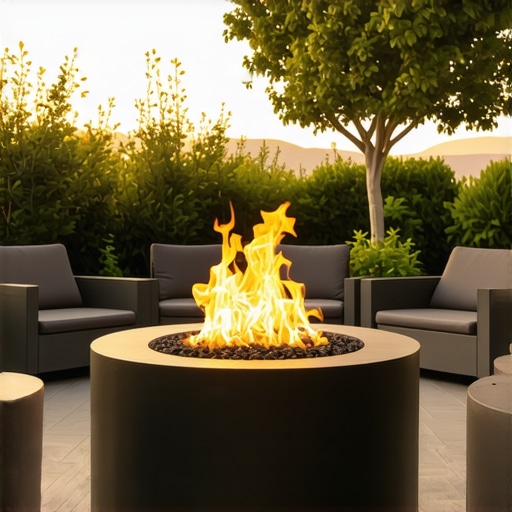
![Build a $300 Boulder Fire Pit Circle [2026]](https://lawnmajesty.com/wp-content/uploads/2026/06/Build-a-300-Boulder-Fire-Pit-Circle-2026.jpeg)