Build a $200 Solar-Powered Pond Fountain This Weekend
I always drill into my new crew members: if you do not fix the soil grading first, every plant you put in the ground is just expensive compost. The same logic applies to water features. I have spent 20 years fixing ‘DIY’ ponds that turned into mosquito-breeding mud pits because the homeowner prioritized aesthetics over hydraulic engineering. A $200 solar-powered fountain is a biology experiment as much as it is a landscaping project. If you ignore the physics of head height or the chemistry of water stagnation, you are just throwing two Franklins into a hole in the dirt. Most people fail because they buy a pump from a big-box store meant for a birdbath and expect it to power a tiered fountain. It will not work. You need to understand flow rates, solar conversion efficiency, and structural stability before you touch a shovel.
The Core Components of a Sustainable Solar Fountain
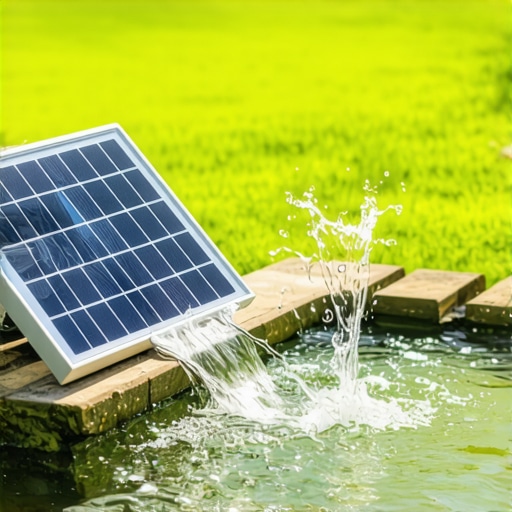
To build a $200 solar-powered pond fountain, you must integrate a submersible 12V-24V brushless pump, a monocrystalline solar panel with at least 20 watts of output, and a non-toxic EPDM liner or high-density polyethylene basin. Success depends on calculating the hydraulic head height and ensuring the pump’s gallons per hour (GPH) rating exceeds your basin volume by three times.
When selecting a pump, look for ‘brushless’ models. These utilize permanent magnets and electronic commutators instead of carbon brushes, which significantly reduces friction and heat. Friction is the enemy of solar efficiency. In a $200 budget, your pump and panel will consume 50% of the funds. Do not skimp here. A cheap pump will seize within 90 days when the first grain of sand hits the impeller. You want a pump with a pre-filter cage. This cage prevents organic debris from clogging the intake, which would otherwise cause the motor to burn out as it fights against the vacuum.
How much modified gravel do I need for a fountain base?
For a standard 50-gallon fountain basin, you need approximately 2 to 3 cubic feet of 21A modified gravel to create a stable, 4-inch compacted base. This prevents the basin from settling or tilting as the soil moisture levels fluctuate throughout the seasons. Do not use pea gravel for the base; it acts like ball bearings and will cause the feature to shift. You need the jagged edges of modified stone to lock together under compaction. Use a hand tamper. The tamper should literally bounce off the compacted base when you are done. If it sinks, your fountain will eventually lean. It is that simple.
| Material | Estimated Cost | Technical Specification |
|---|---|---|
| Submersible Pump | $45 | 12V DC, 400 GPH, Brushless |
| Solar Panel | $60 | 25W Monocrystalline, 18V |
| EPDM Pond Liner | $40 | 45 Mil Thickness, 5ft x 5ft |
| Modified Gravel/Sand | $25 | 21A Grade, 0.5-inch Minus |
| Tubing and Fittings | $30 | 1/2-inch ID Kink-Free Tubing |
“A retaining wall does not fail because of the stone; it fails because of the water trapped behind it.” – Hardscape Engineering Axiom
This engineering truth applies to fountains too. Hydrostatic pressure in the surrounding soil can collapse the walls of a thin plastic basin if you do not backfill properly. When you excavate your hole, make it 6 inches wider than the basin on all sides. Once the basin is set on your compacted gravel, fill it with water *before* you backfill the exterior. This equalizes the pressure. If you backfill a dry basin, the weight of the dirt will bow the plastic inward, ruining the structural integrity of your feature.
The Hydraulics of Head Height and Flow Friction
The maximum head height of a pump is the vertical distance the pump can lift water before the flow rate drops to zero. If your fountain head is 3 feet above the pump, you cannot use a pump with a 3-foot max head; you will get a trickle at best. You need a pump with a 6-foot max head to maintain a consistent, visually appealing spray at a 3-foot elevation. Friction loss is another silent killer. Every inch of tubing and every 90-degree elbow adds resistance. Use smooth-bore, kink-free tubing. Ribbed tubing causes turbulence, which slows down the water and forces the pump to work harder, draining your solar battery faster.
What is the best solar panel angle for a fountain?
For maximum year-round efficiency, mount your solar panel at an angle equal to your latitude, tilted toward the true south. If you live in a northern climate, add 15 degrees in winter to capture the lower sun. Use a multimeter to test the output before final mounting. If your 20W panel is only putting out 12W because of a slight shadow from a fence post, your fountain will surge and sputter. Solar power is binary in most cheap systems: either there is enough voltage to break the motor’s starting inertia, or there is not. Keep the glass clean. A thin layer of dust can drop efficiency by 20%.
- Call 811 before you dig to mark underground utility lines.
- Excavate the basin hole 4 inches deeper than the actual basin height for gravel.
- Level the base using a 2-foot bubble level in both directions.
- Install a filter box around the pump to minimize maintenance.
- Use 1/2-inch ID (Inner Diameter) tubing to reduce friction loss.
- Position the solar panel in a zone that receives 6+ hours of direct sun.
“Proper aeration in small water bodies is critical to prevent anaerobic conditions that lead to hydrogen sulfide production.” – Agricultural Extension Service Manual
Without the fountain running, your small pond will become a ‘dead zone.’ Oxygen enters the water at the surface. By splashing water into the air, you increase the surface area contact between water and oxygen. This supports aerobic bacteria that break down fish waste and decaying leaves. Without this, your pond will smell like rotten eggs. That is the hydrogen sulfide. It is toxic. A solar fountain ensures that even when you are not home, the biology of the pond is being supported by the sun’s energy.
Biological Balance and Algae Management
Do not use chlorine in your fountain. It will kill the birds and ruin the pump seals. If you have an algae bloom, it is because you have too many nutrients (nitrates/phosphates) and too much sunlight. Since this is a solar fountain, the sunlight part is hard to avoid. Instead, use barley straw extract or beneficial bacteria. These microbes out-compete the algae for food. Also, ensure your fountain spray is not so high that wind blows the water out of the basin. This is a common failure point. If the basin runs dry, the pump motor will overheat and melt the internal windings. Most $200 setups do not have an automatic low-water shut-off. Check the level every 48 hours. Use a rain barrel to top it off; tap water has too many minerals that will create scale buildup on your pump impeller.