![Why Your 2026 Drip System is Wasting Water [Fix]](https://lawnmajesty.com/wp-content/uploads/2026/06/Why-Your-2026-Drip-System-is-Wasting-Water-Fix.jpeg)
Why Your 2026 Drip System is Wasting Water [Fix]
The Invisible Flood: Diagnosing Your 2026 Drip System Failure
Your 2026 drip irrigation system is likely wasting water because of hydraulic friction loss and soil capillary bypass, which occurs when water is delivered too fast for your soil type to absorb. Even with high-end smart controllers, a system with poorly spaced emitters or incorrect PSI regulation will lead to subsurface runoff that never reaches the root zone. I see it every week. A client calls me out because their garden design looks like a graveyard despite their phone app saying everything is perfect. They expect a high-tech solution to a biology problem. It does not work that way. Water follows the path of least resistance. If your soil is compacted or your grade is off, that expensive water is just feeding the weeds in the neighbor’s yard.
The Apprentice Lesson: Why Grading Precedes Irrigation
I always drill into my new crew members: if you don’t fix the soil grading first, every plant you put in the ground is just expensive compost. Last year, I had a greenhorn try to install a 500-foot run of 1/2-inch poly tubing on a three-degree slope without checking the flow rate at the end of the line. By the time the water reached the last plant, the pressure had dropped from 30 PSI to 8 PSI. The plants at the top of the hill were drowning in mud, while the ones at the bottom were desiccating. We had to rip the whole thing out. We spent three days re-grading the site to ensure the sub-base didn’t trap water behind the retaining wall. You cannot out-tech a gravity problem. Most 2026 systems fail because the installer trusted the ‘smart’ software more than the actual slope of the land.
“Efficient irrigation is not about the amount of water applied, but the percentage of that water that remains in the root zone available for plant uptake.” – University of California Agriculture and Natural Resources
The Physics of Water Waste in Modern Hardscaping
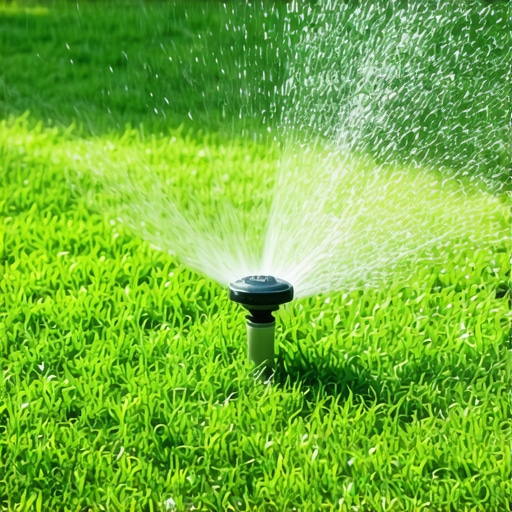
Waste in drip systems occurs primarily through evaporation from surface pooling and deep percolation past the root zone due to excessive run times on non-porous soils. To fix this, you must match your gallons-per-hour (GPH) output to the percolation rate of your specific soil texture, whether it is heavy clay or sandy loam. [image_placeholder_1] Most homeowners set their systems to run for 20 minutes every day. That is a death sentence for turf grass and perennials. It keeps the surface wet but leaves the deep roots thirsty. You need deep, infrequent cycles. This forces the roots to chase the moisture down into the profile. It builds a resilient plant. Shallow watering creates a weak plant that will wilt the second the power goes out or a heatwave hits.
How much water does a 24-inch root ball actually need?
A standard 24-inch root ball for a newly planted tree requires approximately 15 to 20 gallons of water per week during its first two growing seasons, delivered directly to the root flare and the outer drip line. Using two 2-GPH emitters per tree and running the system for four to five hours once a week is far more effective than 15 minutes of daily spray. This ensures the water penetrates the full 18 to 24 inches of the soil profile where the feeder roots reside. If you see water pooling on the surface before the hour is up, your soil is too compacted. You need to aerate or add organic matter. Do not just turn the water off. Fix the soil.
The Clogging Crisis: Bio-films and Mineral Calcification
Drip emitters in 2026 are prone to failure from internal bio-film growth and calcium carbonate buildup, which restricts flow and creates uneven distribution across the irrigation zone. This is the most common reason for ‘phantom’ water waste: the system is on, the meter is spinning, but the plants are dying because the orifices are 60% blocked. You must install a 200-mesh filter at the zone valve. Clean it monthly. If you have hard water, you need to flush the lines with a mild acid solution once a season to dissolve the mineral deposits. If you skip this, your 0.6 GPH emitters will eventually put out zero. You will be paying for pressure that has nowhere to go but out of a burst fitting.
What is the ideal pressure for a residential drip system?
The ideal operating pressure for most residential drip irrigation systems is between 20 and 30 PSI, maintained by a dedicated pressure regulator. Higher pressures, common in municipal lines which can reach 80 PSI, will cause emitters to ‘mist’ or pop off the tubing, leading to massive water loss. Check your regulator every spring. They are mechanical devices and they do fail. A failed regulator can turn a precision drip system into a series of mini-geysers in a single afternoon. It will rot your garden design from the inside out.
“A retaining wall doesn’t fail because of the stone; it fails because of the water trapped behind it.” – Hardscape Engineering Axiom
Technical Specifications for Emitter Efficiency
Compare your current hardware against these industrial standards to identify where your system is hemorrhaging money and resources. Using the wrong emitter for your soil type is the fastest way to kill a landscape.
| Feature | Clay Soil (Heavy) | Sandy Soil (Light) | Loam (Ideal) |
|---|---|---|---|
| Emitter Flow Rate | 0.4 to 0.6 GPH | 1.0 to 2.0 GPH | 0.9 GPH |
| Emitter Spacing | 18 to 24 inches | 12 inches | 12 to 18 inches |
| Wetted Pattern | Wide and Shallow | Narrow and Deep | Bell-Shaped |
| Run Frequency | Once every 10 days | Every 3 days | Once a week |
The 2026 Drip System Diagnostic Checklist
Follow these steps to remediate a failing system and stop the waste immediately. Do not skip the pressure test. It is the most critical step.
- Check the Filter: Unscrew the Y-filter and look for silt or organic slime. If it is coated, your emitters are likely compromised.
- Verify PSI: Attach a pressure gauge to the end of the furthest drip line. If it reads above 40 or below 15, your regulator is the problem.
- Inspect for ‘Mulch Volcanoes’: Ensure emitters are not buried under 6 inches of mulch. They should be just under the surface to prevent back-siphoning of dirt.
- Calculate Zone Flow: Check your water meter with only one zone running. Compare the usage to the theoretical GPH of your emitters. If the meter is higher, you have a subsurface leak.
- Test Sensor Calibration: Place a manual rain gauge next to your ‘smart’ soil moisture sensor. If the sensor says ‘dry’ but the gauge is full, the sensor is fouled.
Remediation: The Ground-Up Fix
To fix a wasting system, you must first address the hydrostatic pressure and soil structure. If your yard has heavy clay, you are likely experiencing surface runoff. You need to incorporate expanded shale or high-quality compost to open up the soil pores. Then, swap out your high-flow emitters for pressure-compensating (PC) emitters. These ensure that every plant gets the same amount of water regardless of whether it is first or last on the line. Stop using the cheap ‘soaker hoses’ from the big-box stores. They are garbage. They leak unevenly and degrade in the sun within one season. Buy professional-grade 17mm dripline with factory-installed emitters. It is an investment in your property’s future. It will last 15 years if you treat it right. Dig it in. Set it right. Walk away.