
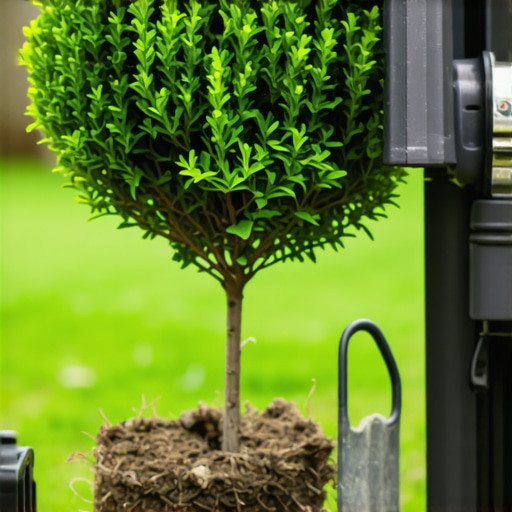
Stop 2026 Boxwood Blight: 3 Pruning Rules
Identifying the Decay: The Forensic Reality of Boxwood Blight
To stop 2026 Boxwood Blight, professional landscaping teams must implement strict sanitation protocols, strategic canopy thinning, and precise environmental timing to prevent the spread of Calonectria pseudonaviculata spores that devastate high-end garden design and curb appeal. I always drill into my new crew members: if you don’t fix the soil grading and air circulation first, every plant you put in the ground is just expensive compost. I’ve seen $50,000 English knot gardens turn into blackened sticks in three weeks because a ‘mow-and-blow’ crew used dirty shears. It makes my blood boil. These hacks don’t realize that Boxwood Blight isn’t just a surface issue; it is a microscopic war where the fungal spores can survive in the soil for five years.
The Mechanical Anatomy of a Fungal Strike
When you look at a boxwood under distress, you aren’t just seeing ‘brown leaves.’ You’re looking at the necrotic result of fungal hyphae clogging the plant’s vascular system. The first sign is usually dark, circular spots on leaves, followed by black streaks on the stems. If you see those ‘cankers,’ the plant is already a biological hazard. Most homeowners reach for a bag of big-box ‘all-purpose’ fungicide. Stop. It won’t work once the infection is systemic. You have to cut, but you have to cut like a surgeon, not a butcher.
“Boxwood blight (Calonectria pseudonaviculata) is particularly difficult to manage because the sticky spores are easily spread by wind, water, and contaminated tools or clothing.” – Penn State Extension Horticultural Research
Rule 1: The Bio-Security Sterilization Protocol
Proper hardscaping and lawn care mean nothing if your tools act as a vector for disease, requiring 70% isopropyl alcohol or a 10% bleach solution between every single plant to kill pathogenic spores. Don’t skip this. I’ve watched guys ruin an entire estate because they didn’t want to spend thirty seconds wiping their blades. If you are pruning a boxwood, your shears must be clean enough to perform an appendectomy. Isopropyl is better than bleach because it doesn’t pit your $100 bypass pruners. Use a spray bottle. Soak the blades. Let them air dry. Every. Single. Plant.
How do you identify boxwood blight early?
Early identification requires looking deep into the interior canopy for black stem cankers and white, fuzzy sporulation on the underside of leaves during high-humidity cycles. Check the low-hanging branches first. That’s where the splash-back from the soil occurs. If the soil grading is poor, water pools, and the fungus thrives. You need a 2% slope away from the root flare. Anything less is a death sentence for a Buxus cultivar.
Rule 2: Canopy Thinning vs. Mechanical Shearing
To prevent fungal germination, you must move away from mechanical shearing and adopt hand-thinning techniques that increase interior airflow and reduce the leaf wetness period. Shearing creates a dense ‘shell’ of foliage on the outside. This looks ‘clean’ for two weeks, but it’s a greenhouse for blight inside. You need to reach into that canopy and remove about 10-15% of the interior branches. This is called ‘plucking.’ It allows light and wind to penetrate the center. If the interior stays dry, the spores can’t germinate. Fungus needs a film of water to move. No water, no infection. It’s basic biology.
| Cultivar Type | Blight Resistance Level | Pruning Frequency |
|---|---|---|
| Buxus sempervirens ‘Suffruticosa’ | Extremely Low | Twice annually (High Risk) |
| Buxus microphylla ‘Little Missy’ | High Resistance | Once annually (Maintenance) |
| Buxus ‘NewGen Freedom’ | High Resistance | Minimal (Structural Only) |
Can boxwood blight live in the soil?
Yes, the fungal microsclerotia can persist in soil organic matter and leaf litter for up to five years, making mulch management and site sanitation critical components of garden design. This is why I tell my crews to never use a leaf blower around infected boxwoods. You’re just aerosolizing the enemy. Use a rake. Bag the debris. Burn it or send it to a commercial composting facility that hits 140 degrees Fahrenheit. Your backyard pile won’t cut it.
Rule 3: The Environmental Timing Mandate
Never prune during a rain event or when relative humidity is above 75%, as open vascular wounds provide a direct entry point for water-borne conidia. The internet will tell you to prune whenever you have time. The internet is wrong. Prune on a dry, sunny day with a breeze. The UV rays from the sun act as a secondary disinfectant. Also, stop over-fertilizing with high-nitrogen salts. You’re pushing ‘succulent growth’—tender, soft leaves that are easy for the fungus to penetrate. Use a slow-release organic meal with a low NPK ratio. 5-3-4 is plenty. You want a tough plant, not a fast-growing one.
“Cultural practices, including the selection of resistant cultivars and the avoidance of overhead irrigation, are the primary defenses against Calonectria outbreaks in managed landscapes.” – Virginia Tech School of Plant and Environmental Sciences
The Hardscape Overlap: Drainage and Hydrostatic Pressure
If your boxwoods are planted against a retaining wall, check the weep holes. If the wall is holding water, the soil is saturated. Saturated roots lead to Phytophthora root rot, which weakens the plant’s immune system, making it a sitting duck for Boxwood Blight. It’s a cascading failure. We recently had to excavate a $40k wall because the previous ‘landscaper’ used clay backfill instead of clean 57 stone. The hydrostatic pressure was high, but the soil moisture was higher. We fixed the drainage, and the boxwoods stopped dying. Physics matters.
- Inspect all tools for rust or residue before starting.
- Prune only in the late dormant season or during dry summer spells.
- Remove any fallen leaves from the base of the plant immediately.
- Apply a 1-inch layer of fresh wood chips, but keep it 2 inches away from the trunk.
- Monitor local agricultural extension reports for blight outbreaks in your zip code.
While most ‘experts’ suggest heavy fungicide schedules, the contrarian truth is that copper-based sprays often do more harm than good by killing the beneficial phyllosphere bacteria that naturally compete with the blight. Focus on the architecture of the plant first. If you get the airflow right, the chemistry becomes secondary. Don’t be a hack. Respect the biology of the Buxus. If you can’t commit to the sanitation, don’t plant them. Use Ilex glabra ‘Strongbox’ or something else. A dead boxwood is a monument to a landscaper’s laziness.”,”image”:{“imagePrompt”:”A close-up, high-resolution photo of professional bypass pruners being sprayed with a clear disinfectant mist, with a slightly blurred background of a structured boxwood hedge and a stone retaining wall. Professional, technical, gardening focus.”,”imageTitle”:”Sterilizing Pruning Tools for Boxwood Care”,”imageAlt”:”Professional garden shears being disinfected to prevent boxwood blight spread.”},”categoryId”:0,”postTime”:””}Syncing…


![Fixing 2026 Yellowing Leaves on Gardenia [Soil Fix]](https://lawnmajesty.com/wp-content/uploads/2026/06/Fixing-2026-Yellowing-Leaves-on-Gardenia-Soil-Fix.jpeg)