How to Build a Natural Playground with Logs and Stumps
The Engineering of Natural Play Structures
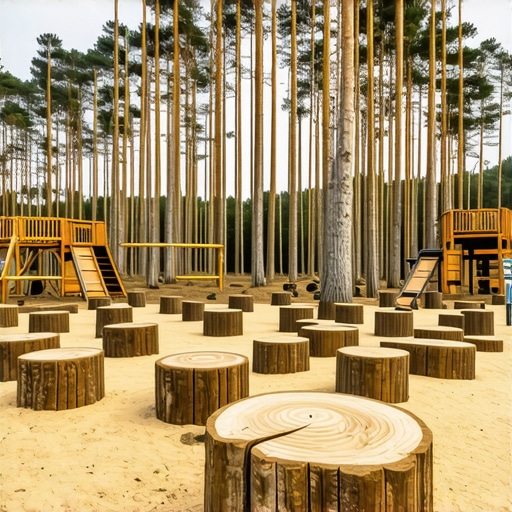
Building a natural playground with logs and stumps requires a mastery of soil mechanics and wood pathology. It is not about scattered debris; it involves structural grading, sub-base compaction, and selecting rot-resistant timber like Black Locust to ensure longevity and safety standards. I always drill into my new crew members: if you don’t fix the soil grading first, every plant you put in the ground is just expensive compost. The same applies to natural playgrounds. You stick a locust log into a drainage bowl, and you have just built a very expensive fungal incubator. I have seen countless DIY attempts where the homeowner thinks they are being ‘eco-friendly’ by tossing a few pine logs in the dirt. Three years later, those logs are a mushy mess of termites and rot because they ignored the hydrostatic pressure and the biology of the wood. Natural playgrounds are an exercise in civil engineering. We are dealing with massive weight, irregular shapes, and the relentless force of moisture. If you don’t understand the difference between heartwood and sapwood, you shouldn’t be building these.
The Critical Importance of Wood Species Selection
Not all wood is created equal. When you are looking for logs and stumps to serve as hardscaping elements in a playground, you are looking for high lignin content and natural extractives that repel insects. Black Locust, Osage Orange, and White Oak are the gold standards. Avoid Red Oak; its open tyloses act like straws, sucking moisture straight into the center of the log. If you use Pine or Poplar, you are wasting your time. They will rot within 24 months of ground contact. I recommend sourcing timber from a professional arborist who can guarantee the species. Do not trust what you find on the side of the road.
“For ground-contact applications, heartwood of species like Black Locust or Osage Orange provides the highest resistance to decay-causing fungi.” – USDA Forest Products Laboratory
Site Preparation and Drainage Logistics
The ground beneath the playground must be excavated and graded to a 2 percent slope minimum to move water away from the play area. Lawn care professionals often ignore this when transitioning to garden design, but in a playground, standing water is the enemy of the impact surface. We start by stripping the organic layer. You cannot build on topsoil. It is too compressible. We excavate down to the subsoil, usually 12 to 18 inches depending on the design. We then install a non-woven geotextile fabric to separate the soil from our drainage stone. This prevents the soil from migrating up into the gravel, which would eventually lead to settling and ‘heaving’ during freeze-thaw cycles. Do not skip the fabric. It is the only thing keeping your playground from sinking into the mud.
How deep should I bury playground stumps for stability?
To ensure a stump or log does not tip under the weight of a child, a minimum of one-third of the total height must be buried below the finished grade. For a stump standing 24 inches high, you need at least 12 inches of depth in a compacted gravel base. We do not use concrete footings for natural logs if we can avoid it. Concrete traps moisture against the wood, accelerating rot at the ‘ground line’ where oxygen and moisture are most prevalent. Instead, we use a modified gravel base (often called 2A modified or 3/4-inch minus). We compact this in 4-inch lifts using a plate compactor until the tamper literally bounces off the surface. This creates a stable, well-draining socket for the wood. It is basic hardscaping physics. If the base moves, the playground fails.
| Wood Species | Decay Resistance | Janka Hardness (lbf) | Best Use Case |
|---|---|---|---|
| Black Locust | Exceptional | 1,700 | Ground contact posts, climbing logs |
| White Oak | High | 1,360 | Stumps, balance beams |
| Western Red Cedar | Moderate | 350 | Above-ground railings (soft) |
| Red Maple | Low | 950 | Temporary structures only |
The Safety Zone: Engineering for Impact
The landscaping around the logs is just as important as the logs themselves. We follow the ASTM F1292 standards for Engineered Wood Fiber (EWF). This isn’t your standard garden mulch. EWF is composed of shredded hardwood that knits together to form a stable, impact-absorbing surface.
“Structural stability in playground equipment is contingent upon the resistance of the support members to both vertical and lateral forces.” – National Recreation and Park Association
You need a minimum of 12 inches of EWF for a 4-foot fall height. We install a containment border made of 6×6 pressure-treated timbers (UC4B rated for heavy ground contact) or large stones to keep the mulch in place. Check the depth monthly. Kids kick it away at the base of the logs, creating ‘holes’ that compromise the safety rating. Fill them back in. It is part of the job.
How to prevent logs from rotting in the ground?
The best way to prevent rot is to manage the moisture-oxygen interface. We often char the bottom of the logs using a propane torch—a technique called Shou Sugi Ban. This carbonizes the outer layer of the wood, making it less attractive to fungi and insects. Additionally, we apply a copper-based preservative to the end-grain. End-grain is like a bundle of straws; it will suck up water via capillary action. Seal it tight. We also leave a 2-inch gap of clean 3/4-inch stone at the very bottom of the stump hole to ensure water can drain away from the wood quickly rather than sitting in a pool of silt.
The Installation Checklist
- Verify all timber species are rot-resistant heartwood.
- Call 811 to mark underground utilities before excavation.
- Excavate the ‘fall zone’ to a depth of 18 inches.
- Install 4-inch perforated HDPE pipe for drainage if soil is heavy clay.
- Compact the sub-base with a 5,000 lbf plate compactor.
- De-bark all logs to prevent moisture trapping and insect nesting.
- Sand all surfaces to 80-grit to prevent splinters.
- Install EWF and rake to a depth of 12 inches.
Maintaining the Natural Playground
Natural materials are dynamic. They check, they crack, and they age. Checking is the natural process of the log drying and splitting along the grain. It is usually not a structural issue unless the crack is wide enough to trap a finger. We use a gap gauge to check this. If the gap is between 0.375 and 0.625 inches, it is a hazard. We either sand the edges smooth or fill the gap with a flexible, exterior-grade sealant. Every spring, we power-wash the logs to remove algae, which makes them slippery and dangerous. We then apply a non-toxic, penetrating oil finish. Don’t use film-forming stains. They will peel and look like garbage within six months. Stick to oils. They penetrate. They protect. They work. The garden design should integrate these elements seamlessly into the surrounding lawn care routine, ensuring that irrigation heads are pointed away from the wood structures. Constant soaking from a sprinkler will kill even the toughest locust log. Keep it dry, keep it safe, and it will last for a decade.
![Build a $80 Gravel Fire Pit Area [2026 Budget]](https://lawnmajesty.com/wp-content/uploads/2026/07/Build-a-80-Gravel-Fire-Pit-Area-2026-Budget.jpeg)
![Build a $250 Flagstone Fire Pit Circle [Weekend Fix]](https://lawnmajesty.com/wp-content/uploads/2026/06/Build-a-250-Flagstone-Fire-Pit-Circle-Weekend-Fix.jpeg)