How to Incorporate Large Boulders into Your Landscaping
The Hardscape Autopsy: Why Most Boulder Features Fail
I recently got called out to tear up a 30,000 dollar patio that was sinking because the previous contractor thought he could just ‘plop’ three-ton granite boulders on top of a finished surface. Gravity is a relentless force. Within six months, those stones had punched through the pavers and compacted the subgrade unevenly, causing a massive drainage failure that sent water directly toward the foundation of the house. This is what happens when you treat landscaping like interior decorating instead of civil engineering. If you do not respect the mass of the material, the material will eventually disrespect your property. Large boulders are the heaviest elements you will ever move into a landscape. They require a foundation, a plan for hydrostatic pressure, and an understanding of soil load-bearing capacity. If you skip the prep work, you are just creating a future liability. Stone moves. Soil shifts. You must plan for both.
How to Incorporate Large Boulders into Your Landscaping
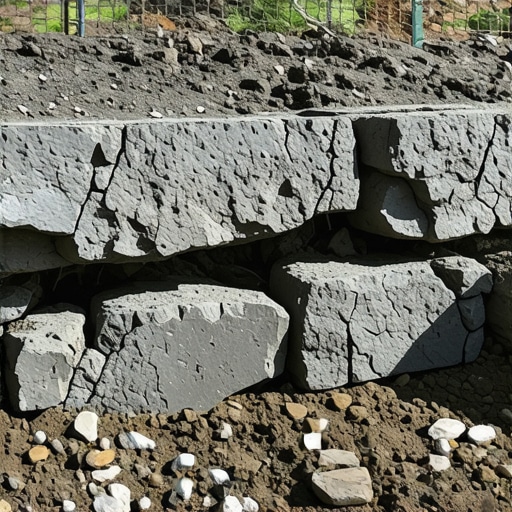
To effectively incorporate large boulders into your landscaping, you must bury the bottom third of the stone into a compacted 411 or 57 modified gravel base to ensure structural stability and a natural aesthetic. Professional installation requires geotextile fabric to prevent soil migration and mechanical compaction of the subgrade to at least 95 percent Standard Proctor Density. Do not place stones on top of turf or uncompacted fill soil. It will sink.
Selecting the Right Stone: Beyond the Aesthetics
Not all rock is created equal. A soft sandstone might look good in a desert climate, but in the freeze-thaw cycles of the north, it will delaminate and crumble within five seasons. I see homeowners buy cheap limestone from big-box suppliers that ends up leaching calcium into the soil, spiking the pH and killing their acid-loving azaleas. You need to know the mineralogy of what you are putting in the ground. Granite is the gold standard for durability. It is dense, heavy, and ignores the weather. Basalt is another excellent choice for modern, clean lines. When sourcing, go to a real stone yard, not a garden center. You want ‘fieldstone’ if you want a rounded, weathered look, or ‘quarried stone’ if you want sharp, angular edges that imply a mountain outcropping.
“A retaining wall doesn’t fail because of the stone; it fails because of the water trapped behind it.” – Hardscape Engineering Axiom
How deep should a boulder be buried?
A boulder should be buried between 25 percent and 33 percent of its total height. This is known as ‘planting’ the stone. If a boulder sits entirely on top of the ground, it looks like a giant potato dropped from space. By burying the base, you create the illusion that the stone is part of a larger, underground rock formation. This also provides the necessary lateral resistance to keep the stone from shifting during heavy rains or frost heaves. For stones over 500 pounds, this ‘set’ is the only thing keeping the stone from becoming a safety hazard.
| Stone Type | Weight per Cubic Foot | Compression Strength (PSI) | Best Application |
|---|---|---|---|
| Granite | 165-175 lbs | 15,000+ | Structural walls and steps |
| Limestone | 150-160 lbs | 8,000-12,000 | Decorative outcroppings |
| Sandstone | 130-145 lbs | 4,000-6,000 | Low-traffic accents |
| Quartzite | 160-170 lbs | 18,000+ | High-durability features |
The Engineering of the Base Layer
If you are putting a two-ton boulder in a yard, you are applying concentrated pressure that most residential topsoil cannot handle. You must excavate down to the subsoil. Remove all organic matter. If I see a crew putting stone on top of mulch, I fire them on the spot. Organic matter rots, creates voids, and leads to settling. Once you hit solid subsoil, lay down a woven geotextile fabric. This is your insurance policy against soil mixing with your gravel. Fill the hole with 411 modified stone or 2A crushed limestone. Compact it in two-inch lifts using a plate compactor. You want that base to be so hard a hammer would bounce off it. This base distributes the weight of the boulder across a larger surface area, preventing it from sinking into the earth like a lead weight in water.
What type of stone is best for landscaping boulders?
The best stone for landscaping is one that matches your local geology and climate needs. Igneous rocks like granite and basalt are the most durable for areas with high moisture and temperature swings. Sedimentary rocks like limestone and sandstone are easier to stack and shape but can be prone to erosion and biological growth like moss and algae. Always choose a stone that is locally sourced to minimize shipping costs and ensure the mineral chemistry does not negatively impact your local soil microbiome.
- Identify utility lines by calling 811 before any excavation.
- Determine the ‘face’ of the boulder before it leaves the truck.
- Use nylon slings, not chains, to move stones to prevent scarring.
- Ensure the center of gravity is tilted slightly back into the slope.
- Install a French drain behind large clusters to manage runoff.
- Backfill with 57 stone for maximum drainage efficiency.
- Top-dress with a matching crushed aggregate for a professional finish.
Managing Hydrostatic Pressure and Drainage
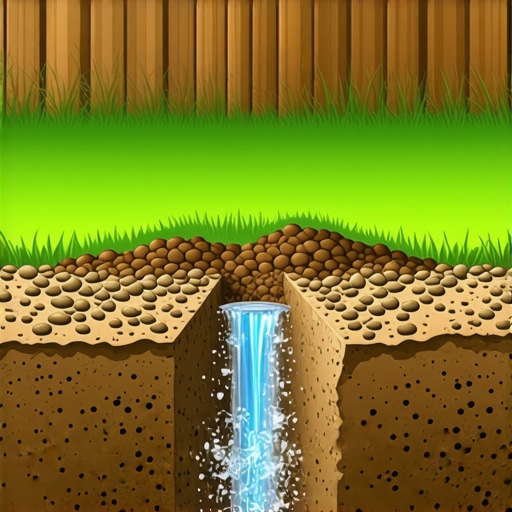
When you put a massive stone in the ground, you are essentially creating a dam. Water that used to flow through the soil now hits a solid wall. If you do not give that water a place to go, it will build up pressure behind the stone. Eventually, that pressure will push the stone out of alignment or wash out the soil around it. This is why I always install a drainage ‘chimney’ of clean crushed stone behind any large boulder installation. This allows water to drop straight down to the base where it can be piped away via a perforated SDR-35 pipe. Do not use that cheap, corrugated black pipe. It crushes under the weight of the stone. Use rigid pipe. Do it once, do it right.
“Soil compaction is the foundation of all successful hardscaping; without it, you are simply building on a liquid.” – Agronomy Manual Section 4
The Biological Component: Plants and Boulders
Boulders are giant heat sinks. In the summer, a dark granite stone can reach surface temperatures of 140 degrees. If you plant sensitive turf grass or delicate perennials right against the stone, you will bake the root systems. You need to choose ‘tough’ plants for the immediate perimeter. Think Sedum, Creeping Thyme, or certain ornamental grasses like Pennisetum. These species can handle the reflected heat. Additionally, the stone creates a ‘rain shadow.’ One side of the stone will stay bone dry while the other gets soaked. Adjust your irrigation heads accordingly. I often run a dedicated drip line around the base of major boulders to ensure the ‘shadow’ side doesn’t turn into a dust bowl. Use your head. Think about the micro-climate you are creating.