Fix 2026 Standing Water with This $120 French Drain
The Hardscape Autopsy: Why Your Yard is a Swamp
Standing water in your yard is a symptom of a systemic engineering failure that usually originates in the soil structure or the sub-grade. When I get called out to a site where a homeowner is complaining about a ‘spongy lawn,’ I usually find a history of poor grading or the use of cheap, non-permeable backfill. I recently got called out to tear up a $30,000 patio that was sinking because the previous contractor failed to install a basic diversion system. The hydrostatic pressure from the trapped water was literally lifting the pavers during freeze-thaw cycles. Water wins every time. If you don’t give it a path, it will carve its own, usually through your foundation or under your hardscaping.
Standing water is often the result of soil compaction or heavy clay layers that prevent vertical infiltration, forcing water to pool in low spots. To fix this, you must implement a gravity-fed French drain system that utilizes hydrostatic pressure to move water from the saturated area to a safe discharge point. This requires a 1 percent minimum slope and the correct geotextile fabric to prevent siltation.
“A retaining wall doesn’t fail because of the stone; it fails because of the water trapped behind it.” – Hardscape Engineering Axiom
How much modified gravel do I need for a drainage trench?
Calculating your aggregate needs is simple math. For a 12-inch wide by 18-inch deep trench, you will need approximately 1.5 cubic feet of 3/4-inch clean crushed stone per linear foot of the French drain. Do not use ‘fines’ or ‘modified’ gravel for the drainage core, as these will clog the system and render it useless within two seasons.
| Material | Purpose | Estimated Cost (15ft Run) |
|---|---|---|
| 4-inch SDR-35 PVC Pipe | Primary water transport | $35.00 |
| Non-woven Geotextile Fabric | Silt filtration | $25.00 |
| 3/4-inch Clean Crushed Stone | Permeable backfill | $45.00 |
| PVC Fittings & Pop-up Emitter | Discharge management | $15.00 |
The $120 Professional Bill of Materials
Successful yard drainage is not about fancy gadgets; it is about managing the physics of water flow with the right raw materials. Most homeowners make the mistake of buying perforated corrugated black pipe from a big-box store. Stop. That pipe is a sediment trap. Its ridges catch silt, and within three years, it will be a 4-inch tube of mud. Instead, use SDR-35 or Schedule 40 PVC. It is smooth-walled, meaning water moves faster, and it is much easier to clean with a hydro-jet if a root ever finds its way inside. You also need a non-woven geotextile. Do not use woven landscape fabric. Woven fabric is designed for weed suppression; it has a low ‘perm rate’ and will eventually slick over, stopping the water from ever reaching your pipe.
[IMAGE_PLACEHOLDER]
What is the best slope for a French drain?
To ensure scouring velocity and prevent sediment buildup, a French drain must maintain a minimum 1 percent grade, which equates to a 1-inch drop for every 8 feet of run. In heavy clay soils, increasing this to 2 percent is advisable to overcome the initial friction loss of the water entering the perforated pipe.
The Step-by-Step Forensic Fix
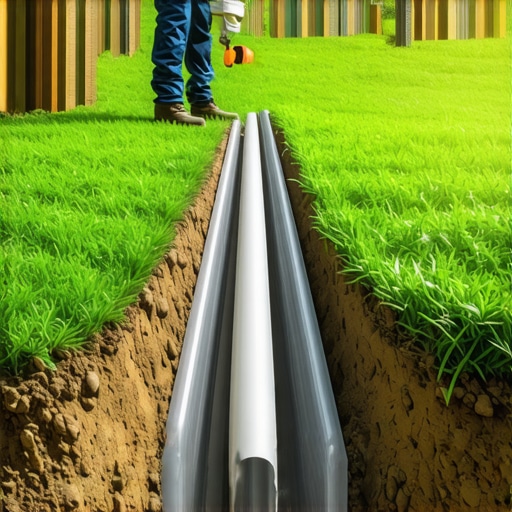
Before you dig, call 811. Every time. I have seen too many ‘simple’ drainage projects turn into $5,000 gas line repairs. Once clear, you dig your trench 12 inches wide and at least 18 inches deep. The depth is critical to get below the root zone of most turfgrasses. Lay your fabric first, leaving enough over the edges to ‘burrito wrap’ the stone later. This is the most ignored step. Without the fabric wrap, your $120 investment is just expensive compost. Next, add 2 inches of stone, then lay your PVC pipe with the holes facing down. Yes, down. Water rises from the bottom of the trench into the pipe. If you put the holes up, the pipe has to be completely flooded before it starts to work.
- Step 1: Excavate trench with a 1 percent slope toward the discharge area.
- Step 2: Line the trench with 4-ounce non-woven geotextile.
- Step 3: Install 2 inches of 3/4-inch clean stone as a base.
- Step 4: Place perforated PVC pipe with holes at the 4 and 8 o’clock positions.
- Step 5: Backfill with stone to within 3 inches of the surface.
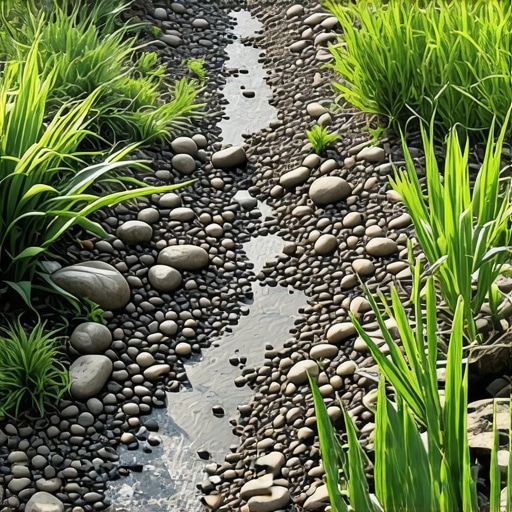
- Step 6: Fold fabric over the stone and cap with topsoil or decorative river rock.
“Soil drainage is the single most important factor in plant health and structural longevity in the residential landscape.” – Penn State Agricultural Extension
The final discharge is where most DIYers fail. Do not just let the pipe end in the middle of the yard. Use a pop-up emitter. These are designed to stay closed to keep out rodents and debris but will pop up under the weight of the water during a rain event. This allows the water to spread out over the lawn rather than eroding a single hole in your turf. If you are in a freeze-thaw climate, make sure the emitter is at the lowest point of the run so water doesn’t sit in the pipe and crack it when the temperature drops. Maintenance is minimal. Check the emitter twice a year. Clear out any grass clippings. That is it. Your yard will stay dry, and your foundation will stay stable. Don’t overthink it. Physics does the work for you.