How to Stop Your Lawn from Turning Yellow in Winter
The sight of a straw-colored lawn in January isn’t just an aesthetic failure; it is a biological SOS. When you see your turf transition from a deep emerald to a sickly, pale yellow, you are witnessing a combination of metabolic dormancy, cellular desiccation, and potentially, a catastrophic failure of soil chemistry. Most homeowners think the cold kills the grass. It doesn’t. Neglect and bad science kill the grass. As a professional who has spent two decades digging into compacted subsoils and diagnosing necrotic turf, I can tell you that winter color is won in the fall, or lost in the hardware store fertilizer aisle.
The Chemical Nightmare: A Cautionary Tale of Late-Season Greed
A homeowner called me in a panic last December after they completely torched their front lawn by applying a massive dose of quick-release nitrogen in a desperate attempt to keep it green for a holiday party. They thought they were ‘feeding’ the grass. In reality, they were inducing a salt-driven chemical burn. The high salt index of the cheap urea they used pulled moisture directly out of the root cells through osmosis—a process effectively known as physiological drought. By the time I arrived, the lawn wasn’t just yellow; it was chemically mummified. We had to wait until spring just to see if the crowns survived, which most didn’t. I had to excavate the top two inches of soil and start over. Don’t be that person. You cannot cheat the biological clock of your turf with a bag of ‘miracle’ pellets.
Why Grass Turns Yellow in Winter
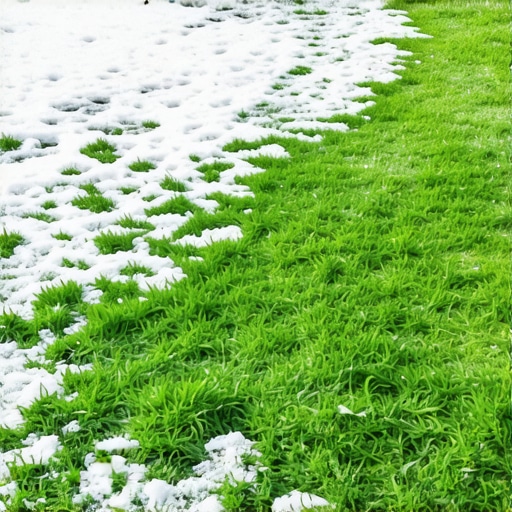
Yellowing in winter is primarily caused by chlorophyll degradation and moisture stress, where the grass plant enters a state of dormancy to protect its crown from freezing temperatures and desiccation. This process is triggered when soil temperatures at a 4-inch depth consistently drop below 50°F (10°C), causing the plant to prioritize carbohydrate storage over leaf pigment.
“A lawn does not fail because of the frost; it fails because the internal cellular pressure drops, allowing ice crystals to rupture the cell walls.” – Agronomy Manual for Turfgrass Managers
How often should I water my lawn in the winter?
Turf grass requires exactly 1 inch of water per week, even in winter, provided the ground is not frozen. If the soil is dry, the roots will shrink, leading to desiccation. Use a rain gauge. Do not guess. Deep, infrequent watering is the only way to maintain the root turgor pressure necessary to prevent yellowing.
What is the best winter fertilizer for green grass?
The best ‘fertilizer’ for winter greening isn’t nitrogen; it is chelated iron and potassium sulfate. Iron provides a deep green color without forcing the dangerous new growth that nitrogen induces, while potassium strengthens the cell walls against freeze-thaw cycles. Apply these when the grass is still semi-active in late autumn.
The Anatomy of Winter Color Retention
To keep a lawn from turning yellow, you must understand the ‘Forensic Autopsy’ of the soil. If your soil pH is off, no amount of water will help. Most turf thrives at a pH of 6.2 to 6.8. When the pH drops below 5.5, nutrients like magnesium and iron become chemically bound to soil particles and are unavailable to the plant. This is called ‘nutrient lockout.’ [IMAGE_PLACEHOLDER] You can have a soil full of iron, but if it’s too acidic, your grass will starve and turn yellow anyway. I always tell my crew: if you don’t test the pH, you’re just throwing money at the wind.
| Nutrient | Role in Winter Survival | Target Measurement |
|---|---|---|
| Nitrogen (N) | Avoid high levels; forces tender growth | 0.5 lbs / 1,000 sq ft (Late Fall) |
| Potassium (K) | Regulates osmotic pressure and cell thickness | 1.0 lbs / 1,000 sq ft |
| Iron (Fe) | Chlorophyll synthesis without growth spurts | Chelated liquid application |
| Soil pH | Ensures nutrient availability | 6.5 pH |
The Engineering of Drainage and Soil Compaction
Yellowing is often a symptom of poor drainage. When water sits on the surface because of a compacted modified gravel base or heavy clay, it creates an anaerobic environment. The roots literally suffocate. During a freeze, that standing water turns into an ice sheet, which creates ‘crown hydration’ issues. When the ice melts and refreezes, it expands, physically crushing the plant’s growth center. You need 3-inch deep core aeration in the fall to allow oxygen and water to reach the rhizosphere. It is a non-negotiable step.
“Soil compaction is the silent killer of the urban landscape, reducing pore space and halting the gas exchange necessary for root respiration.” – Hardscape Engineering Axiom
- Step 1: Soil Test. Perform a professional lab test by October. Do not use a cheap probe.
- Step 2: Core Aeration. Pull 3-inch plugs to relieve compaction and manage the thatch layer.
- Step 3: Potassium Load. Apply Potassium Sulfate (0-0-50) to increase winter hardiness.
- Step 4: Iron Supplement. Use a liquid chelated iron to maintain color without nitrogen-induced growth.
- Step 5: Winter Watering. Water during ‘warm’ spells (above 40°F) if there has been no precipitation for 14 days.
Stop looking for a ‘winter green’ spray. Look at your soil structure. If your lawn is turning yellow, it’s because you didn’t prepare the foundation. Landscaping is civil engineering with living materials. Treat it with that level of respect, or get used to the straw-colored view until April. It’s your choice.

![Why Your 2026 Fescue Needs Lime [Soil pH Guide]](https://lawnmajesty.com/wp-content/uploads/2026/05/Why-Your-2026-Fescue-Needs-Lime-Soil-pH-Guide.jpeg)