The Best Plants for Stabilizing a Loose Soil Slope
The Science of Slope Stabilization: Engineering Your Landscape with Biological Rebar
Ninety percent of the homeowners who call me about a sliding hill want a quick fix involving a few flats of ivy. They are wrong. You do not fix a failing slope with a weekend trip to a big-box nursery; you fix it with applied civil engineering and horticultural biology. A loose soil slope is not a garden feature; it is a structural liability waiting for the next five-inch rain event to become a mudslide. When you are dealing with gravity, hydrostatic pressure, and the shear strength of soil, your plant choice is the only thing standing between a stable yard and a catastrophic failure of your property’s grading.
The Apprentice Lesson: Why Grading and Soil Science Come First
I always drill into my new crew members: if you do not fix the soil grading and understand the soil’s bulk density first, every plant you put in the ground is just expensive compost. I remember a job in the hills where a client had spent six figures on rare specimens, only to have the entire hillside slough off because the previous contractor didn’t understand the difference between surface erosion and mass wasting. We had to excavate the entire mess, re-establish the angle of repose, and install a tiered system of deep-rooted natives. It was a $40,000 lesson for the homeowner in why you never skip the soil analysis. If the soil is loose, the plants need to be more than just pretty; they need to be structural. Most ‘mow-and-blow’ outfits will just throw down some landscape fabric and mulch. That is a death sentence for your hill. Landscape fabric prevents the very root-to-soil integration required to lock the earth in place.
The Mechanics of Soil Erosion and Shear Resistance
Stabilizing a loose soil slope requires deep-rooted native perennials and shrubs that create a biological rebar system within the soil profile. You must prioritize fibrous-rooted plants over taproots to bind the upper twelve to twenty-four inches of the soil mantle, preventing mass wasting and surface rill erosion caused by concentrated water runoff. Soil is essentially a collection of particles with air and water between them; plants provide the tensile strength that keeps those particles from sliding past one another under the weight of saturation.
“Slope stability depends heavily on the root-soil matrix, where root tensile strength increases the soil’s shear resistance and mitigates the risk of shallow landslides.” – USDA Natural Resources Conservation Service Technical Manual
How do I stop dirt from washing down a hill?
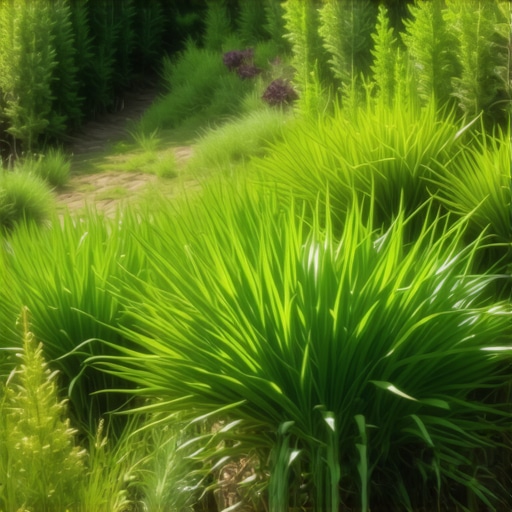
To stop soil movement, you must interrupt the velocity of water. This is achieved through a multi-canopy approach: low-growing groundcovers to break the impact of raindrops, mid-sized shrubs to provide structural root mass, and deep-rooted grasses to tie the layers together. Avoid smooth, manicured turf on slopes steeper than 3:1. It will fail. The root system of standard Kentucky Bluegrass rarely exceeds four inches. You need roots that measure in feet, not inches. [IMAGE_PLACEHOLDER]
Selecting the Biological Rebar: Root Architectures
Choosing the best plants for a slope means looking at what is happening underground rather than what is happening on the surface. We categorize these plants by their root architecture: fibrous, rhizomatous, and tap-rooted. For loose soil, rhizomatous plants are your best friend. They spread via underground stems, creating a literal net that catches soil particles. While the internet tells you to plant whatever is on sale, professional land managers look for species that can handle the specific moisture levels of a slope. The top of a hill is always drier (shedding water), while the toe of the slope is often anaerobic and saturated. One size does not fit all.
| Plant Species | Root Type | Max Depth | Function |
|---|---|---|---|
| Little Bluestem | Fibrous | 5-8 Feet | Deep structural stabilization |
| Creeping Juniper | Spreading | 12-18 Inches | Surface matting/Erosion control |
| Fragrant Sumac | Rhizomatous | 3-5 Feet | Binding loose topsoil layers |
| Switchgrass | Fibrous/Dense | 9 Feet | Massive water absorption |
What are the best ground covers for steep slopes?
The best ground covers for steep slopes are those that root at every node, such as Arctostaphylos uva-ursi (Kinnikinnick) or certain varieties of Juniperus horizontalis. These plants create a continuous carpet that prevents sunlight from hitting the soil (which discourages weed growth) and prevents water from gaining enough velocity to create gullies. Stay away from English Ivy or Vinca Minor; they are invasive and often too heavy for the soil they are meant to hold, leading to ‘slumping’ where the weight of the plant actually pulls the soil down the hill.
The Three-Tier Planting Strategy
To secure a loose slope, you must implement a three-tier system. First, the Ground Matrix: fast-spreading, low-height plants that cover the soil surface entirely. Second, the Structural Layer: woody shrubs with aggressive, branching root systems that reach into the subsoil. Third, the Anchor Layer: larger trees or heavy shrubs that act as the primary structural anchors. This mimicry of a natural forest or prairie ecosystem is the only way to ensure long-term stability. If you only plant one species, a single pest or disease can wipe out your entire stabilization project in one season. Diversity is not just an aesthetic choice; it is a risk management strategy.
“A retaining wall doesn’t fail because of the stone; it fails because of the water trapped behind it.” – Hardscape Engineering Axiom
Installation Protocol: Beyond the Digging
Installing plants on a slope is a high-risk operation. If you disturb the soil too much, you trigger the very erosion you are trying to prevent. We use a ‘pocket planting’ technique. Instead of tilling the whole hill, we dig individual holes just large enough for the root ball. We leave the surrounding soil crust intact. We also use ‘live staking’ for dormant woody plants like Willows or Dogwoods. You literally drive a sharpened branch into the mud, and it grows. It is the most cost-effective engineering tool in our kit.
- Test the pH: Loose soil often has high acidity or alkalinity due to leaching. Adjust with lime or sulfur before planting.
- Install Wattles: Use straw or coconut coir wattles pinned across the slope to catch sediment while plants establish.
- Drip Irrigation Only: Never use overhead sprinklers on a slope. It causes surface runoff and soil saturation.
- Skip the Fertilizer: Heavy nitrogen promotes top growth at the expense of root development. You want the roots to ‘hunt’ for nutrients, forcing them deeper into the soil.
How much mulch do I need for a slope?
On a slope, you need exactly zero inches of standard wood mulch. It will float away in the first storm. Use a ‘tackified’ straw mulch or a heavy shredded hardwood bark that knits together. Better yet, use a biodegradable erosion control blanket (ECB) made of jute or coir. Pin it down with 6-inch staples. Plant your specimens directly through slits in the blanket. The blanket will hold the hill for 2-3 years while your plants’ roots take over the heavy lifting. Don’t skip this. It is the difference between success and a muddy mess in your neighbor’s pool down the hill.
Long-Term Maintenance and Monitoring
Your job isn’t done once the plants are in the ground. For the first two years, you are a technician monitoring a living machine. Check for ‘piping’—small holes where water is tunneling under the soil surface. If you see them, pack them with clay and replant immediately. Monitor the moisture levels at the root flare. Plants on a slope are under constant stress from gravity and wind. If they don’t get deep, infrequent watering in the first season, they will develop shallow roots and fail during the first drought. It’s a binary outcome: either the plants own the hill, or the hill owns the plants.