Native Wildflowers That Handle Heavy Clay
Landscaping in heavy clay is not a gardening task; it is a civil engineering project involving microscopic plate-like minerals. I always drill into my new crew members: if you don’t fix the soil grading first, every plant you put in the ground is just expensive compost. Most homeowners see a puddle after a rainstorm and think they need more mulch. They are wrong. What they have is a structural failure of the soil profile where bulk density has reached a point that inhibits gas exchange and root penetration. Clay is composed of tiny, flat particles that stack like wet sheets of paper. When these particles are compacted by construction equipment or poor foot traffic, they create a nearly anaerobic environment. To successfully install native wildflowers in this medium, you must understand the physics of the site before you ever touch a shovel. 80% of the success of your garden design is determined by how you manage hydrostatic pressure and soil pore space during the planning phase.
Understanding the Engineering of Heavy Clay Soil
Heavy clay soil consists of microscopic, plate-like particles that stack tightly, creating high bulk density and low oxygen diffusion rates, which suffocates standard landscape plants but allows specific native wildflowers with deep taproots to thrive. When we analyze a site for a new install, we look at the cation exchange capacity (CEC). Clay has a high CEC, meaning it holds onto nutrients well, but those nutrients are often locked away from plants that lack the evolutionary tools to extract them.
“A soil with high clay content has a high surface area, which leads to high water-holding capacity but very low aeration when saturated.” – USDA NRCS Soil Mechanics Manual
The problem isn’t the clay itself; it is the lack of macropores. Without these larger spaces between particles, water cannot move vertically through the profile. This is why your lawn turns into a swamp in April and a brick in August. We don’t solve this by adding sand. Adding sand to heavy clay creates a substance functionally identical to low-grade concrete. We solve it with biology and mechanical aeration.
Top Native Wildflowers for Impenetrable Clay
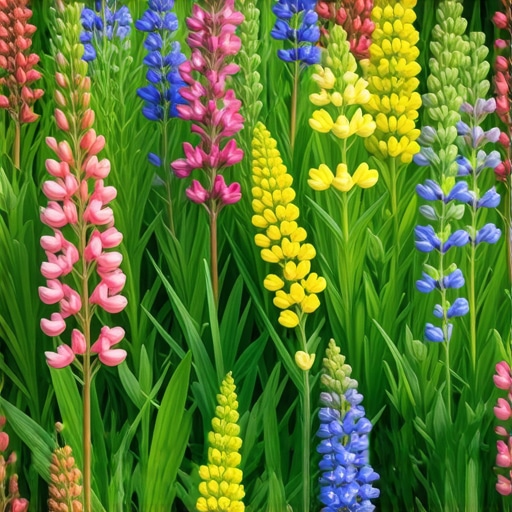
Species like Asclepias syriaca (Common Milkweed), Baptisia australis (False Indigo), and Symphyotrichum novae-angliae (New England Aster) are ideal because their aggressive root systems penetrate compacted subsoil, improving soil structure and water infiltration over time. These plants do not just survive in clay; they re-engineer it. Their roots create channels that allow air and water to reach deeper into the horizon. This is a slow process of biological tillage. For a professional-grade garden design, you need to select plants based on their ability to handle both the saturated conditions of spring and the high-tension moisture deficit of a late-August drought.
| Species Name | Root Type | Max Height (ft) | Engineering Benefit |
|---|---|---|---|
| Baptisia australis | Deep Taproot | 3-4 | Fixes nitrogen and breaks subsoil |
| Liatris pycnostachya | Corm/Fibrous | 4-5 | Handles high water table |
| Ratibida pinnata | Deep Taproot | 3-5 | Drought resistant once established |
| Silphium laciniatum | Massive Taproot | 6-8 | Roots reach 10+ feet deep |
How do I prepare heavy clay for planting?
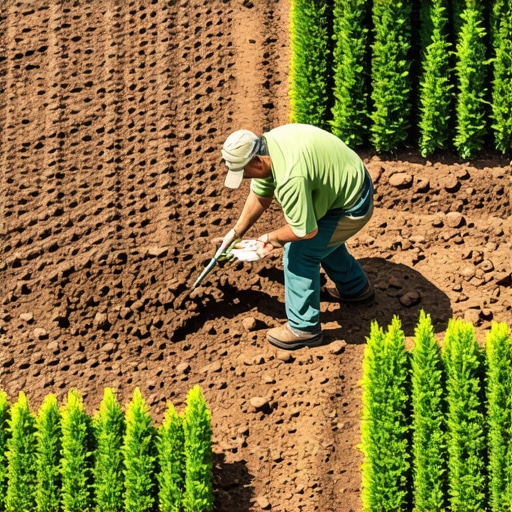
To prepare heavy clay soil for native wildflowers, you must focus on mechanical aeration and the addition of decomposed organic matter rather than tilling, which can destroy existing soil aggregates and lead to further compaction. If you till clay when it is too wet, you create clods that will remain hard for years. We use a broadfork or a core aerator to open the ground. Then, we top-dress with a thin layer of leaf mold. Do not bury the organic matter deep; let the earthworms and the deep roots of your new plants pull that carbon down into the profile. This mimics the natural soil-building process of a prairie.
Do native plants need fertilizer in clay?
Most native wildflowers adapted to heavy clay require zero supplemental fertilizer because clay minerals are naturally rich in potassium and magnesium, and adding high-nitrogen fertilizers only encourages weak, floppy growth and increased pest pressure. In my 20 years of lawn care and landscaping, I have seen more plants killed by well-intentioned fertilization than by neglect. If the plants look pale, check the pH first. In heavy clay, the pH can often be alkaline, which locks up iron and manganese. Adjust the chemistry, don’t just dump more N-P-K on the problem.
The Installation Process: Avoiding the Bathtub Effect
The most common mistake hacks make is digging a hole in clay, filling it with potting soil, and dropping a plant in. You have just created a bathtub. When it rains, water will fill that hole and sit there because the surrounding clay won’t let it drain. The roots will rot in days. It will rot. You must plant “high.” This means the root flare of your wildflowers or the top of the root ball should be about one inch above the surrounding soil grade.
“Poor drainage is the primary cause of plant failure in urban landscapes with heavy clay subsoils.” – Penn State Department of Plant Science
We backfill with the native clay we dug out, perhaps mixed with 10% compost. This forces the plant to adapt to the heavy soil immediately. It’s tough love for plants. If they can’t handle the native soil, they don’t belong in your garden design.
- Check for utility lines by calling 811 before any excavation.
- Test soil drainage by digging a 12-inch hole and filling it with water.
- Select plants based on USDA Hardiness Zone and light requirements.
- Plant in the fall or early spring to allow root establishment before heat stress.
- Mulch with arborist wood chips to retain moisture and prevent surface crusting.
Maintaining the Clay-Based Meadow
Year one is about moisture management. Even though these plants are tough, they need deep, infrequent watering to force roots to chase the moisture down. Once they hit the 12-inch mark, they are usually self-sufficient. Don’t use overhead irrigation if you can avoid it. Drip lines or soaker hoses are better for clay because they deliver water slowly, preventing runoff. By year three, the roots of your Silphium and Baptisia will have created a network of biological pipes. You will notice the ground feels softer underfoot. The clay is still there, but it is now a functional, living medium. This is the difference between a contractor who just plants flowers and a land manager who understands soil engineering. Success is measured in inches of root growth, not just blooms.