5 Plants for a Modern Minimalist Garden
Modern minimalist garden design is not about having fewer plants; it is about intentionality and structural engineering within the landscape. In my twenty years of running a hardscape and horticultural firm, I have seen too many homeowners mistake ‘minimalism’ for ’emptiness,’ resulting in sterile, hot, and ecologically dead yards that fail within two seasons. A true minimalist garden requires a deep understanding of soil physics, drainage, and the specific growth habits of select specimens. If you do not have a plan for your soil’s cation exchange capacity or a strategy for hydrostatic pressure, your garden is just a ticking clock of maintenance failures.
The Foundation of Modern Minimalist Landscaping
Modern minimalist garden design relies on clean lines, architectural forms, and limited color palettes to create a high-impact, low-clutter environment that emphasizes structural integrity over floral variety. By selecting plants with distinct silhouettes and predictable growth patterns, you reduce the need for constant intervention while maintaining a sophisticated aesthetic. I always drill into my new crew members: if you don’t fix the soil grading first, every plant you put in the ground is just expensive compost. I remember a job in ’22 where a client wanted a sleek, monochromatic look but refused to address a 3-degree slope heading toward the foundation. Three months later, those high-end specimens were rotting in anaerobic muck because the water had nowhere to go. You must build from the ground up, starting with a percolation test and a 2-inch layer of organic compost tilled into the subsoil.
“A successful landscape installation is 80% site preparation and 20% planting; skipping the soil analysis is the fastest way to ensure plant mortality.” – Penn State Extension Horticultural Manual
How do I prepare soil for a minimalist garden?
Soil preparation for minimalist gardens involves testing the pH levels to ensure they match your specific plant selections and amending with coarse aggregate to improve drainage. You must ensure a minimum of 6 inches of friable topsoil that has been cleared of all perennial weed rhizomes before the first specimen is ever positioned.
1. Buxus sempervirens ‘Dee Runk’ (Columnar Boxwood)
Buxus sempervirens ‘Dee Runk’ is an essential structural element in minimalist design, providing tight verticality and year-round evergreen presence without the sprawl of traditional shrubs. Unlike the common boxwoods used by ‘mow-and-blow’ contractors, ‘Dee Runk’ maintains a narrow footprint, typically reaching 8 feet in height while staying under 24 inches wide. This predictability is vital for geometric layouts. When planting these, never bury the root flare. I see hacks piling mulch up against the trunk—we call those ‘mulch volcanoes.’ It will rot the bark and kill the vascular system of the plant. Instead, ensure the top of the root ball is 1 inch above the surrounding grade to allow for settling. Use a slow-release nitrogen fertilizer with a 10-10-10 NPK ratio in early spring to support the dense leaf structure. Precision pruning is required once a year, but don’t take off more than 20% of the canopy, or you’ll stress the plant into a dieback cycle.
2. Calamagrostis × acutiflora ‘Karl Foerster’ (Feather Reed Grass)
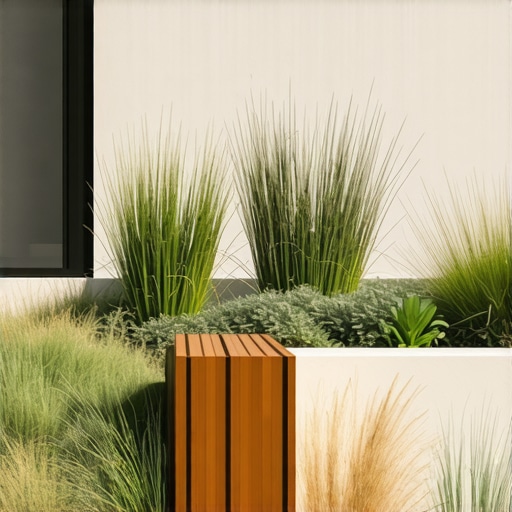
Calamagrostis × acutiflora ‘Karl Foerster’ serves as the vertical kinetic engine of the minimalist garden, offering rigid upright stems that catch the wind without flopping over. This grass is sterile, meaning it won’t invade the rest of your beds like some cheap nursery stock. It thrives in USDA zones 4 through 9 and handles heavy clay better than most ornamentals. In my experience, ‘Karl Foerster’ is the ultimate ‘screen’ for hiding utility boxes or creating soft boundaries. It reaches its full height of 5 feet by mid-summer. One specific data point the internet gets wrong: you don’t cut these back in the fall. Leave the tan stalks up through winter for structural interest. Cut them to 3 inches above the crown in late February before the new green shoots emerge. If you wait until April, you’ll damage the new growth points. No excuses. [image_placeholder]
3. Ophiopogon planiscapus ‘Nigrescens’ (Black Mondo Grass)
Ophiopogon planiscapus ‘Nigrescens’ provides the critical dark contrast necessary to make minimalist greens and hardscapes pop. This is not a true grass but a member of the Asparagaceae family, and its slow-growing nature makes it perfect for edging pavers or filling gaps in a grid pattern. It only grows about 6 inches tall. The enemy of Mondo Grass is poor drainage. If it sits in water, the roots will succumb to Phytophthora within weeks. We install these in a 50/50 mix of topsoil and coarse sand to ensure water moves past the root zone quickly.
“Poor drainage is the primary cause of root rot in ornamental perennials; increasing pore space in the soil is mandatory for high-density plantings.” – Agronomy Journal of America
| Plant Species | Growth Habit | Sun Requirement | Water Needs |
|---|---|---|---|
| Buxus ‘Dee Runk’ | Columnar/Evergreen | Full Sun/Part Shade | Moderate |
| Karl Foerster Grass | Vertical/Deciduous | Full Sun | Low to Moderate |
| Black Mondo Grass | Mounding/Evergreen | Full Sun/Part Shade | Consistent/Well-drained |
| Betula jacquemontii | Tree/Deciduous | Full Sun | High (Requires mulch) |
| Agave victoriae-reginae | Succulent/Evergreen | Full Sun | Xeric (Very Low) |
4. Betula utilis var. jacquemontii (Himalayan Birch)
Betula utilis var. jacquemontii is selected for its stark white bark, which provides a clean, architectural backdrop that looks like a living sculpture. In a minimalist setting, the texture of the bark is more important than the leaves. However, Birch trees are heavy drinkers. You cannot just plant these in a dry corner and forget them. They need a deep, infrequent watering schedule—exactly 1 inch per week—to force the roots to chase the water deep into the soil column. This prevents surface rooting which can heave your expensive pavers. I recommend a 3-inch layer of arborist wood chips around the base (keeping the flare clear) to regulate soil temperature and retain moisture. If your soil pH is above 6.5, you’ll start seeing chlorosis—yellowing leaves with green veins. Hit it with elemental sulfur to bring the pH down. It’s chemistry, not magic.
5. Agave victoriae-reginae (Queen Victoria Agave)
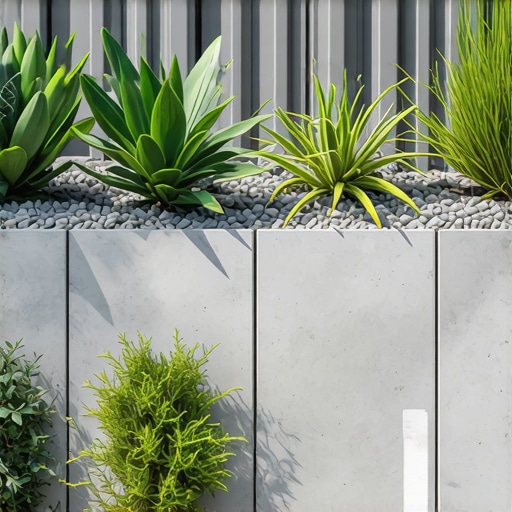
Agave victoriae-reginae is the geometric masterpiece of the plant world, featuring white margins on dark green leaves that look like they were drawn with a drafting pen. For a modern minimalist garden in a warmer climate or a container-focused design, this is the gold standard. It is incredibly slow-growing, which is a benefit for those who don’t want to prune. But hear me on this: the biggest mistake is over-watering. This plant thrives on neglect. If you plant this in standard potting soil, it will die. You need a gritty, mineral-heavy substrate—think 70% crushed lava rock or pumice and 30% organic matter. This ensures the crown never stays wet. In areas with frost, you have to ensure the soil is bone dry before the first freeze hits, or the cell walls in the leaves will rupture. It’s a matter of biological physics.
How much modified gravel do I need for a patio base?
Calculating the modified gravel base requires determining the square footage and multiplying by the depth (minimum 4 inches for walkways, 6 inches for patios) then dividing by 27 to get cubic yards. For a standard 200 sq ft patio at a 6-inch depth, you will need approximately 4.5 cubic yards of compacted 21A or CR-6 aggregate.
The Professional Installation Checklist
- Site Analysis: Check for buried utilities (811) and determine soil texture (ribbon test).
- Grading: Ensure a 2% slope away from all structures to prevent hydrostatic pressure buildup.
- Soil Prep: Amend with organic matter and adjust pH based on a lab-verified soil test.
- Root Flare Check: Ensure the transition between the trunk and roots is visible above the soil line.
- Irrigation: Install a drip line system with a smart controller to prevent water waste.
- Mulching: Apply 2-3 inches of hardwood mulch, keeping it 4 inches away from plant stems.
Landscaping is not about decoration; it is about managing a biological system within an engineered environment. If you follow these specs, your minimalist garden will look as sharp in ten years as it does the day the last paver is swept. Don’t skip the prep. Don’t buy cheap plants. Do the work right the first time.
![Stop Winter Salt Damage on 2026 Roadside Hedges [Fix]](https://lawnmajesty.com/wp-content/uploads/2026/05/Stop-Winter-Salt-Damage-on-2026-Roadside-Hedges-Fix.jpeg)