5 Hardy 2026 Shrubs for Drought-Heavy Zones
The Engineering of a Drought-Resilient Landscape
Drought-heavy zones require specific shrub species like Ceanothus, Manzanita, and Rhus varieties that utilize specialized root systems and leaf cuticles to survive extreme transpiration rates. These 2026-ready selections focus on water-use efficiency, soil stabilization, and long-term structural integrity within a professional landscaping framework.
I always drill into my new crew members: if you don’t fix the soil grading first, every plant you put in the ground is just expensive compost. Most residential soils are so compacted from construction equipment that they have the density of concrete. You can’t just dig a hole, drop a $150 shrub in, and expect it to thrive when the roots hit a wall of clay at 300 PSI of resistance. We spend 80% of our time on the site prep because the biology of the plant is entirely dependent on the physics of the soil. If the bulk density of your soil is too high, there is zero gas exchange, and your roots will suffocate regardless of how much you paid for that fancy nursery stock. Successful landscaping is not an aesthetic exercise; it is an exercise in managing the nitrogen cycle and hydraulic conductivity. We look for shrubs that have evolved in high-stress environments, focusing on their ability to regulate stomatal conductance during peak solar load. The 2026 season brings a focus on species that can handle the erratic freeze-thaw cycles that often follow prolonged dry spells. We are moving away from the fragile, high-maintenance species that demand constant irrigation and toward hardened, woody shrubs that can survive on local precipitation alone once established.
Top 5 Shrub Selections for 2026 Drought Cycles
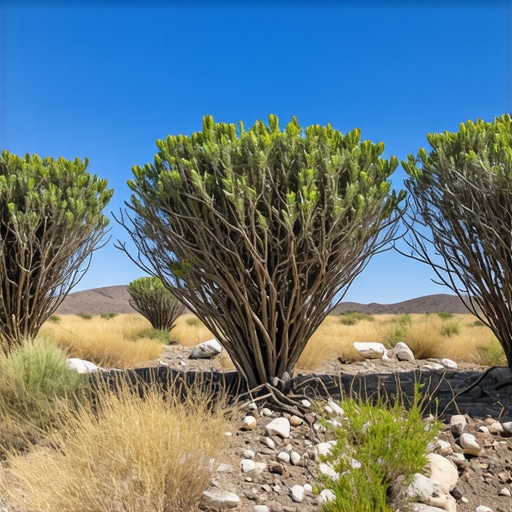
The most resilient shrubs for 2026 include the Ceanothus ‘Concha’, Arctostaphylos ‘Emerald Carpet’, Fallugia paradoxa, Shepherdia argentea, and Atriplex canescens due to their deep taproots and metabolic adaptations. These plants are selected for their high drought tolerance, low nutrient requirements, and ability to thrive in alkaline soils common in arid regions.
“Planting a tree or shrub too deep is the primary cause of environmental stress and premature death in managed landscapes.” – International Society of Arboriculture (ISA) Best Management Practices
1. Ceanothus ‘Concha’ (California Lilac)
This is a cornerstone for any serious xeriscaping project. The Ceanothus ‘Concha’ is a nitrogen-fixing powerhouse. It hosts Actinomycetes bacteria in its root nodules, allowing it to thrive in nutrient-poor, rocky soils where other shrubs would starve. Its small, leathery leaves are coated in a thick waxy cuticle that minimizes water loss through transpiration. In a professional garden design, we use this for structural screening. Warning: do not over-irrigate. This shrub is highly susceptible to root rot if the soil does not drain at a rate of at least 2 inches per hour. It requires the ‘neglect’ of a dry summer to prevent fungal pathogens from colonizing the root flare.
2. Arctostaphylos ‘Emerald Carpet’ (Manzanita)
Manzanitas are the elite athletes of the plant world. The ‘Emerald Carpet’ cultivar provides a dense, ground-hugging form that acts as a living mulch, shading the soil and reducing evaporation. Its smooth, mahogany bark is not just for show; it is an evolutionary adaptation to shed heat. We specify this for slopes where erosion control is a priority. The root system is fibrous and aggressive, locking into the soil horizons to prevent slippage during rare but heavy rain events. It is a slow grower, which means less pruning and lower biomass removal costs over its lifespan.
3. Fallugia paradoxa (Apache Plume)
If you are dealing with 100-plus degree days and reflective heat from hardscaping or masonry, the Apache Plume is the only logical choice. This shrub features finely textured, silvery-green foliage that reflects sunlight rather than absorbing it. It is exceptionally cold-hardy, surviving down to USDA Zone 4. Its root system is designed for hydraulic lift, drawing moisture from deep sub-soil layers and making it available to the upper rhizosphere during the night. It is a rugged performer that bridges the gap between wild land restoration and refined residential landscaping.
4. Shepherdia argentea (Silver Buffaloberry)
This is for the heavy clay zones. Most drought-tolerant shrubs hate ‘wet feet’, but the Silver Buffaloberry can tolerate the occasional poor drainage of a clay loam while still being incredibly drought-resistant. Like the Ceanothus, it is a nitrogen-fixer. It produces a dense, thorny structure that is perfect for perimeter security and wildlife habitat. Its silver leaves indicate a high density of trichomes (tiny hairs) that trap a layer of humid air against the leaf surface, further reducing the plant’s water demand. This is a technical favorite for windbreaks in open, exposed landscapes.
5. Atriplex canescens (Four-wing Saltbush)
For high-alkalinity soils or areas near coastal salt spray, the Four-wing Saltbush is indispensable. It has one of the deepest taproots in the shrub world, sometimes reaching depths of 20 feet to find the water table. It is practically indestructible once the first two years of establishment are complete. We use this in lawn care transitions where the edge of a property might not receive regular maintenance. It handles high-salinity soil conditions that would kill 95% of other nursery stock. It is the definition of a low-input, high-output landscape component.
How much water do drought-heavy shrubs need?
New drought-tolerant shrubs require deep watering once a week for the first two growing seasons to establish a deep root architecture. Once established, these shrubs typically require no supplemental irrigation unless the region experiences more than 60 days without measurable precipitation, at which point a single deep soak is recommended.
What is the best soil for low-water garden design?
The ideal soil for xeriscaping is a well-draining sandy loam with a bulk density below 1.4 g/cm3. Avoiding heavy clay is preferable, but if necessary, amending the soil with expanded shale or coarse organic matter can improve macropore space, which is essential for oxygenating the root systems of drought-hardy species.
| Shrub Species | USDA Zone | Max Height | Primary Engineering Benefit |
|---|---|---|---|
| Ceanothus ‘Concha’ | 7-10 | 6-8 ft | Nitrogen Fixation |
| Arctostaphylos ‘Emerald Carpet’ | 7-9 | 1 ft | Erosion Control |
| Fallugia paradoxa | 4-9 | 5 ft | Heat Reflectivity |
| Shepherdia argentea | 3-9 | 12 ft | Clay Tolerance |
| Atriplex canescens | 4-10 | 6 ft | Salinity Resistance |
“A landscape’s resilience is determined by its soil’s water-holding capacity and the plant’s ability to maintain turgor pressure under atmospheric stress.” – Agronomy Field Manual, 4th Edition
- Conduct a percolation test: Ensure your soil drains at least 1-2 inches per hour before planting.
- Expose the root flare: Never bury the stem of the shrub; the transition point between roots and trunk must be visible.
- Dig a wide, shallow hole: The hole should be 3 times the width of the root ball but no deeper.
- Drip irrigation only: Use pressure-compensating emitters to deliver water directly to the soil without evaporation loss.
- Mulch correctly: Use 3 inches of wood chips, but keep it 4 inches away from the shrub’s base to prevent bark rot.
[IMAGE_PLACEHOLDER]
When we install these projects, I tell the crew to watch the tamper. On a hardscape base, it should bounce. In a planting bed, the soil should be firm but not compacted. We aim for a ’tilth’ that allows for easy root penetration while maintaining enough structure to support the plant. Don’t fall for the big-box store ‘miracle’ soils. They are usually too high in peat moss, which becomes hydrophobic when dry, actually repelling the water your shrubs desperately need. Stick to local compost and native soil mixes. Your plants will thank you by not dying in the first heatwave of July. It is about building a system that works with the environment, not against it. Real landscaping is about the long game.