5 2026 Best Plants for Shade and Clay Soil
Why Clay and Shade Are the Ultimate Landscape Challenge
Gardening in shade and clay requires selecting species with high anaerobic tolerance and aggressive fibrous root systems that can penetrate dense subsoil without succumbing to root rot. Clay soil holds water due to its microscopic particle size, and shade drastically slows evaporation, making drainage remediation and species selection the only path to success.
I always drill into my new crew members: if you don’t fix the soil grading first, every plant you put in the ground is just expensive compost. I’ve seen $50,000 landscapes turn into stagnant bogs because some guy with a truck thought he could just dig a hole, drop a plant in, and call it a day. In clay, a hole is just a ceramic pot without a drain hole. If you don’t provide a way for the water to move away from the root flare, you are essentially drowning your investment. We use a laser level on every single shade bed we cut. A 2% slope is the bare minimum. Anything less, and you’re just building a grave for a $200 shrub. Clay is stubborn. It is made of flat, microscopic plates that stack and compress, leaving zero room for oxygen. In the shade, where the sun can’t bake that moisture out, you have a recipe for fungal pathogens that will liquidate a root system in forty-eight hours.
“Clay soils have a high water-holding capacity but low aeration. Successful planting requires selecting species adapted to low-oxygen environments or modifying the soil structure to increase macropore space.” – USDA Soil Taxonomy Manual
1. Helleborus orientalis (Lenten Rose) – The 2026 Standard
Hellebores are the workhorses of the modern shade garden. They thrive in heavy clay because their thick, rhizomatous roots can withstand the pressure of expanding and contracting soil. For 2026, we are seeing more drought-tolerant hybrids that handle the late-summer ‘clay bake’ when the ground cracks like a desert. Pro tip: Do not bury the crown. If the crown is more than a half-inch deep in clay, it will rot. No exceptions.
2. Carex pensylvanica (Pennsylvania Sedge)
Forget the ‘mow-and-blow’ grass. This sedge is the solution for shaded clay slopes. It forms a dense, low-growing mat that holds the soil against erosion while its roots help break up compaction. We use it as a living mulch. It doesn’t need the nitrogen levels that turf grass demands, which is better for the overall soil microbiology. It is a tough, utilitarian plant that looks clean and handles the hydrostatic pressure of wet clay better than any fescue.
3. Hydrangea quercifolia (Oakleaf Hydrangea)
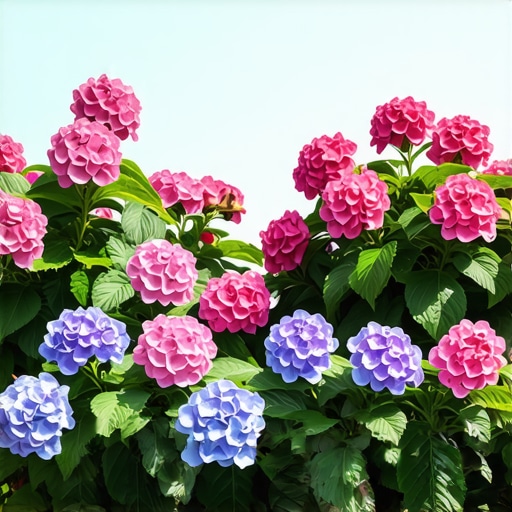
While most hydrangeas wilt the moment the clay gets slightly dry, the Oakleaf variety is built differently. It is native to the southeastern US and is acclimated to heavy soils. However, you must plant it ‘high.’ We install these in a slight mound, ensuring the top of the root ball is 2 inches above the surrounding grade. This allows the primary lateral roots to breathe even when the surrounding clay is saturated. The 2026 cultivars offer better resistance to leaf spot, which is a major win in high-humidity shade environments.
4. Heuchera (Coral Bells) – The ‘Forever Purple’ Series
Heuchera used to be finicky, but the latest 2026 genetics have focused on crown rot resistance. These plants provide the color that most shade gardens lack without the need for high-maintenance annuals. They prefer the mineral-rich profile of clay soil, provided you incorporate about 20% coarse organic matter into the planting hole to prevent the clay from ‘armoring’ around the roots.
5. Polystichum acrostichoides (Christmas Fern)
This is the ultimate ‘clay-buster’ for deep shade. The Christmas Fern is an evergreen native that can handle the sheer weight of heavy clay better than almost any other fern species. Its root structure is incredibly dense, providing excellent stabilization for shaded hillsides. It thrives in the cation exchange capacity of clay, pulling nutrients that lighter, sandier soils simply can’t hold.
| Plant Name | Root Type | pH Preference | Max Height |
|---|---|---|---|
| Helleborus | Rhizomatous | 6.5 – 7.5 | 18 inches |
| Carex pensylvanica | Fibrous | 5.5 – 7.0 | 8 inches |
| Oakleaf Hydrangea | Woody/Spreading | 5.0 – 6.5 | 6-8 feet |
| Heuchera | Fibrous/Clumping | 6.0 – 7.0 | 12 inches |
| Christmas Fern | Rhizomatous | 5.0 – 7.0 | 2 feet |
How do you improve drainage in clay soil for shade gardens?
To improve drainage in shaded clay, you must focus on soil flocculation. Adding gypsum can help in specific sodic soils, but generally, the best method is the deep incorporation of expanded shale or coarse organic compost. This creates larger pore spaces (macropores) that allow water to move via gravity rather than capillary action. Avoid adding sand alone, as this can create a soil structure similar to low-grade concrete.
Can I plant directly into clay soil?
Yes, you can plant directly into clay, but you must avoid the ‘glazing’ effect. When you dig a hole with a shovel, the blade smooths the sides of the hole, creating a barrier that roots cannot penetrate. Always use a hand pick or garden fork to ‘scarify’ the sides of the planting hole. This breaks the surface tension and allows the roots to move into the surrounding soil matrix.
“The most common cause of plant failure in clay soils is the lack of gas exchange between the atmosphere and the root zone.” – Penn State Agricultural Extension
- Step 1: Test the soil pH. Clay is often alkaline but can be acidic depending on regional geology.
- Step 2: Rough up the edges of your planting hole. Never leave them smooth.
- Step 3: Plant ‘proud.’ Keep the root flare 1-2 inches above the ground level.
- Step 4: Use 2 inches of aged arborist wood chips. Avoid dyed ‘big box’ mulch.
- Step 5: Water deeply but infrequently. Let the top inch of clay dry out before re-irrigating.
Landscaping isn’t about what looks good today; it’s about what survives five years from now. If you ignore the engineering of the soil, you’re just wasting money. Clay is a powerhouse of nutrients, but it’s a vault that requires the right key to open. Use these 2026 plant picks, fix your drainage, and stop treating your yard like a sandbox. It’s a biological system. Treat it like one.