
Build a $120 Gravel Path for 2026 Side Yards
Why Side Yard Drainage Dictates Path Success
To build a $120 gravel path, you must prioritize soil grading, install non-woven geotextile fabric, and use 3/4-inch minus crushed stone or decomposed granite. This approach manages hydrostatic pressure and prevents weed germination while providing a stable, permeable surface for high-traffic side yards. Ignore the flashy pavers; functional side yards in 2026 are about water infiltration and utility.
I always drill into my new crew members: if you don’t fix the soil grading first, every plant you put in the ground is just expensive compost. I’ve seen $50,000 landscapes fail because a foreman didn’t check the pitch of a simple side yard path. In the side yard, you are dealing with a confined space that usually serves as the primary drainage artery for the entire property. If you dump gravel into a trench without understanding the subgrade’s density and the way water moves toward the foundation, you are just building a French drain that will eventually undermine your home’s footer. We don’t do that. We build for the long haul.
“Standard practice for permeable pathways requires a minimum 4-inch base of compacted aggregate to ensure structural integrity and proper water infiltration.” – Hardscape Engineering Axiom
How much modified gravel do I need for a patio base?
Calculating aggregate volume is a matter of cubic yardage: (Length in feet x Width in feet x Depth in feet) / 27. For a 20-foot path that is 3 feet wide and 4 inches deep, you need approximately 0.75 cubic yards of material. Always round up by 15% to account for compaction; you will lose volume the moment that tamper hits the stone. Soil density matters here. If you’re working on heavy clay, your excavation must be cleaner than if you’re working on sandy loam. Clay holds moisture, which causes frost heave in northern climates. You need a stable 4-inch lift to counteract that movement.
Material Procurement on a $120 Budget
The 2026 economy demands smarter sourcing, not cheaper materials. To stay under $120 for a standard 60-square-foot path, you must bypass the big-box stores and their 40-pound bags. Those bags are for amateurs who like overpaying. You are going to a local quarry or a landscape supply yard. Bulk pricing for #57 stone or crushed fines usually hovers around $35 to $45 per ton. One ton will cover your needs. The remaining budget goes into a high-quality, non-woven geotextile and professional-grade steel or heavy-duty plastic edging. Do not buy the flimsy 1-inch plastic edging that rolls up in the sun. It will fail within two seasons.
| Material | Quantity | Estimated Cost (Bulk) | Function |
|---|---|---|---|
| 3/4″ Crushed Stone | 1.2 Tons | $45.00 | Structural Layer |
| Geotextile Fabric | 75 Sq Ft | $25.00 | Separation/Weeds |
| Steel Edging | 40 Linear Ft | $40.00 | Containment |
| Wood Stakes | 10 Count | $10.00 | Layout/Leveling |
Step-by-Step Side Yard Excavation and Base Prep
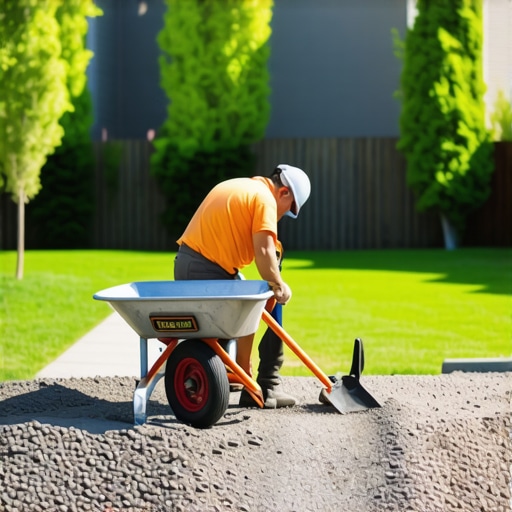
Effective hardscaping requires a 2% slope away from the residential structure to prevent hydrostatic pressure from affecting the basement walls. Use a line level and stakes to ensure the path drops 1/4 inch for every foot of width. Excavate to a depth of 5 inches. This allows for 4 inches of aggregate and 1 inch of reveal for your edging. Don’t just shovel dirt; you need to strip the organic matter. Grass and roots will rot, creating air pockets that lead to settling. It is a structural failure waiting to happen. Use a hand tamper until the ground no longer shows your footprint. If the soil is dry, mist it lightly. Water acts as a lubricant for soil particles, allowing them to slide into a tighter configuration.
- Call 811 before you dig to mark gas and water lines.
- Strip all sod and organic topsoil down to the mineral subsoil.
- Compact the subgrade with a 10-inch hand tamper.
- Lay geotextile fabric, overlapping seams by at least 6 inches.
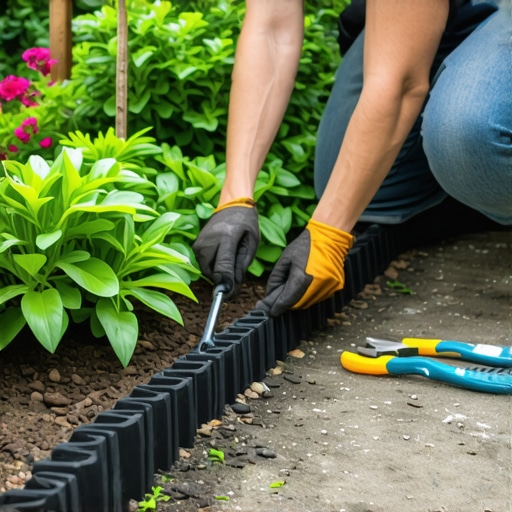
- Install edge restraints using 12-inch galvanized spikes.
- Spread aggregate in 2-inch lifts, compacting between each layer.
“A gravel path’s durability is entirely dependent on the subgrade compaction and the separation of soil from the aggregate layer.” – University of Minnesota Extension Service
What is the best gravel for a low-maintenance path?
In 2026, the gold standard for residential garden design is 3/4-inch minus basalt or granite. The “minus” means it includes the fines—the dust and tiny chips—which lock together under compaction. Unlike pea gravel, which acts like marbles under your feet, crushed stone with fines creates a solid, walkable surface that doesn’t migrate. It stays put. If you want a more modern aesthetic, look for “decomposed granite” or “crushed slate.” These materials offer high friction and excellent drainage while maintaining a sleek, industrial look that fits the 2026 minimalist trend. Avoid rounded river rock for walking surfaces. It’s a trip hazard and a maintenance nightmare.
The Physics of Geotextile Separation
The most common mistake hacks make is skipping the fabric. Without a physical barrier, the heavy gravel will eventually sink into the soft soil. This is known as “migration.” Over time, the soil pumps up into the rocks, and you end up with a muddy mess. You want a non-woven geotextile because it allows water to pass through while keeping the silt out. It acts as a tensile reinforcement layer. Think of it as the skin that holds the skeleton together. When you walk on the path, the fabric distributes your weight across a larger surface area of the subgrade. It prevents ruts. It prevents headaches. It is the only thing standing between your path and the mud.
Long-Term Maintenance and Weed Suppression
A properly built gravel path is not zero-maintenance, but it’s close. Weeds don’t usually grow from the bottom up through the fabric; they grow from the top down when organic debris—leaves, grass clippings, dust—settles in the stone and decomposes. Blow your path off once a week. Keep it clean. If you see a weed, pull it early before the root system anchors into the fabric. Every three to five years, you may need a “top-off” of a half-inch of fresh stone to keep the color crisp and the surface level. This is the reality of lawn care and landscaping: you either spend the time now or the money later. I prefer the former.
![Fixing 2026 Loose Paver Edging [Easy Fix]](https://lawnmajesty.com/wp-content/uploads/2026/09/Fixing-2026-Loose-Paver-Edging-Easy-Fix.jpeg)