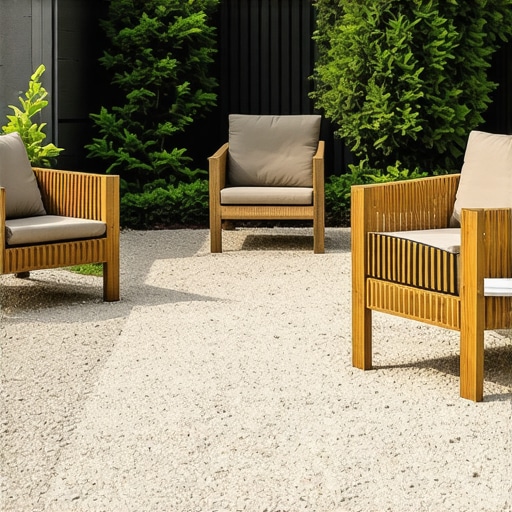
Designing a Gravel Courtyard on a Budget
Why Most Budget Gravel Courtyards Fail Within Two Years
A budget gravel courtyard succeeds only when the installer prioritizes sub-surface engineering and soil compaction over aesthetic stone selection. To build a lasting space, you must excavate to a depth of 4 to 6 inches, install a non-woven geotextile fabric, and use angular crushed stone rather than rounded pebbles to ensure structural interlocking. Skipping the base preparation leads to shifting, weed intrusion, and drainage failure.
I recently got called out to tear up a $30,000 patio that was sinking because the previous contractor thought they could skip the sub-base compaction. It was a disaster. The homeowners saw the beautiful pavers on top, but underneath, the soil was a saturated mess of uncompacted silt. Within one freeze-thaw cycle, the entire surface heaved and cracked. They paid thirty grand for a glorified mud pit. This is why I drill it into my crew: the gravel is the easy part. The dirt underneath determines if you have a courtyard or a maintenance nightmare. If you don’t respect the hydrostatic pressure and the load-bearing capacity of your soil, your investment is just expensive compost. Don’t be that homeowner. Budgeting doesn’t mean cutting corners on the foundation; it means being smart about the finishing materials.
The Engineering of the Base Layer
Before you buy a single bag of stone, you have to look at your soil. Most people assume ‘gravel’ is one thing. It’s not. You need a graded base. In my twenty years of doing this, I’ve seen too many DIYers dump pea gravel directly onto the grass. It will sink. It will rot. You need 21A or 3/4-inch minus crushed stone. This material contains ‘fines’—dust that acts as a binder. When you hit it with a plate compactor, those pieces lock together like a puzzle. This creates a solid, permeable floor. If you use rounded stone like pea gravel for the base, it’s like trying to walk on a bowl of marbles. It has zero shear strength.
“A retaining wall doesn’t fail because of the stone; it fails because of the water trapped behind it.” – Hardscape Engineering Axiom
Water is the enemy. Your courtyard must have a 1-2% slope away from the house. That’s a 1-inch drop for every 8 feet. If you trap water under your gravel, the subgrade will soften. Once the subgrade softens, the gravel gets pushed into the mud. You’ll be weeding out of that mud within a month. Use a transit level. Don’t guess. Your eyes will lie to you, but the physics of water won’t.
Material Comparison: Choosing the Right Aggregate
Designing on a budget means choosing a local stone that doesn’t require high shipping costs. However, the type of stone dictates the longevity of the space.
| Material Type | Best Use Case | Compaction Rating | Cost Factor |
|---|---|---|---|
| Crushed Granite (3/4″) | Structural Base | Excellent | Medium |
| Pea Gravel (Rounded) | Top Decorative Layer | Poor | Low |
| Decomposed Granite (DG) | Walking Paths/European Look | High (When Stabilized) | Medium |
| Crushed Limestone | General Utility Base | Good | Low |
Notice the compaction rating. If you want a courtyard where furniture doesn’t sink, you want high compaction. Decomposed granite is a favorite for budget-conscious but high-end ‘European’ looks. It packs down tight. It feels like a hard surface but drains like a sieve. It’s the sweet spot for budget courtyards.
How much modified gravel do I need for a patio base?
To calculate your gravel volume, multiply the total square footage by the desired depth (usually 0.33 feet for a 4-inch base) and divide by 27 to get cubic yards. For a standard 200-square-foot courtyard, you will need approximately 2.5 to 3 cubic yards of base material to account for 20% compaction loss during the tamping process. Do not underestimate the compaction. When you run that tamper, the stone volume shrinks as the air is pushed out. If you don’t account for this, you’ll run out of stone halfway through the job.
The Importance of Geotextile Fabric
Do not buy the cheap ‘weed barrier’ from a big-box store. That stuff is garbage. You need non-woven geotextile fabric. It serves two purposes: separation and filtration. It keeps the heavy stone from sinking into the soft dirt while allowing water to pass through. Without it, the soil will eventually migrate up into your gravel, creating a perfect seedbed for weeds. You aren’t just stopping weeds from growing up; you’re stopping the earth from swallowing your courtyard. Use 6-inch staples to pin it down. Overlap your seams by at least 12 inches. No exceptions.
Step-by-Step Installation Checklist
- Mark Utilities: Call 811. Do not hit a gas line for a $500 courtyard.
- Excavation: Dig down 5 inches. Clear all organic matter. Roots will rot and cause sinkholes.
- Subgrade Compaction: Run a plate compactor over the bare dirt first. If the dirt is soft, the stone will be soft.
- Fabric Layer: Lay the non-woven geotextile. Overlap the edges.
- Base Install: Add 3 inches of 21A or 3/4-inch minus stone. Grade it for drainage.
- Mechanical Compaction: Rent a power tamper. Hand tamping is a waste of time.
- Top Layer: Add 1.5 to 2 inches of your decorative stone. Any deeper and it becomes hard to walk in.
How do I stop gravel from spreading into my lawn?
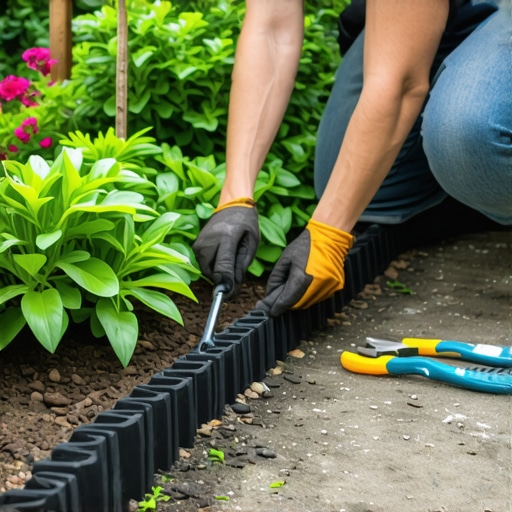
Effective hardscape edging is mandatory for gravel containment. On a budget, heavy-duty plastic edging or pressure-treated 4×4 timbers are the most cost-effective options. The edging must be set slightly higher than the gravel but flush with the lawn to allow for easy mowing. If you don’t edge it, the gravel will migrate into the grass, and your mower will turn into a machine gun, firing rocks through your windows or your neighbor’s shins. Steel edging is the professional gold standard for a reason: it’s invisible and durable, but it costs more. If you use timber, ensure it is rated for ground contact.
“Soil texture and moisture content are the primary variables in determining the California Bearing Ratio (CBR) of a subgrade.” – USDA Soil Engineering Manual
The Realities of Maintenance
A gravel courtyard is low maintenance, not ‘no’ maintenance. You will need to rake it occasionally to keep it level. Leaves must be blown off, not raked, to prevent organic matter from breaking down into the stone. Every 3 to 5 years, you might need a ‘refresh’ layer of half an inch of decorative stone. This keeps the colors sharp and fills in any minor settling. If you see a weed, pull it immediately. Don’t let the roots reach the fabric. Once a root penetrates the geotextile, it’s a permanent resident.
Designing with gravel is a play on textures. Use the crunch of the stone to your advantage. It provides an audible security system and a tactile transition from the house to the garden. But remember: a courtyard is a structural element. Treat it with the same respect you would a concrete slab. If the base is right, the rest is just scenery. If the base is wrong, the rest is a liability. Focus on the inches you can’t see, and the inches you can see will take care of themselves.