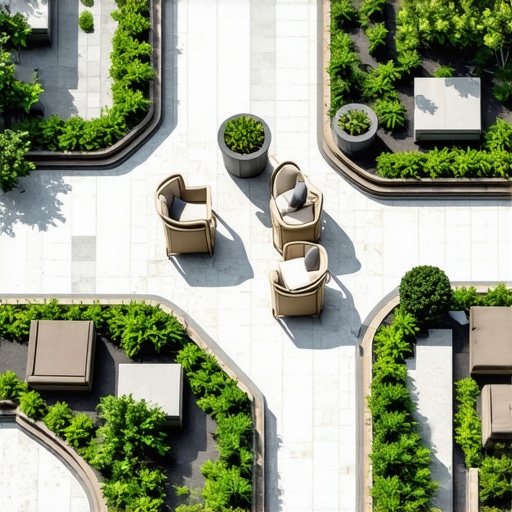
5 2026 Modern Garden Layouts for Small Patios
Modern garden design for small patios in 2026 prioritizes structural integrity and biological resilience over aesthetic fluff. Most homeowners treat a patio as a static surface, but a veteran contractor views it as a management system for hydrostatic pressure and soil microbiology. If you ignore the sub-grade, your investment will fail. This guide breaks down five layouts that utilize advanced hardscaping techniques and horticultural precision to maximize tight footprints.
The Foundation of High-Performance Small Patios
Small patio garden layouts require a focus on vertical drainage, soil compaction ratios, and root zone management to prevent structural shifting and plant death. Successful modern designs integrate permeable pavers or segmental retaining walls with native plantings that can thrive in the restricted micro-climates of urban yards. I recently got called out to tear up a $30,000 patio that was sinking because the previous contractor used a simple sand base over uncompacted clay. The water had no escape route, turned the sub-base into a slurry, and the entire porcelain surface buckled within two years. Don’t let this happen to you. Excavation depth and the quality of your 2A modified stone are non-negotiable.
“A retaining wall doesn’t fail because of the stone; it fails because of the water trapped behind it.” – Hardscape Engineering Axiom
How much modified gravel do I need for a patio base?
To calculate the required base material, multiply the square footage of your patio by the depth of the base (usually 6 inches for foot traffic, 10-12 inches for driveways), then divide by 324 to get the total cubic yardage. Always add a 10% compaction factor to your final order to account for the volume loss during the tamping process. Use a vibratory plate compactor in 2-inch lifts. If you dump 6 inches of gravel and try to compact it all at once, the bottom 3 inches will remain loose. That leads to settling. Settling leads to cracks. Cracks lead to a total loss of your hardscape investment.
1. The Bio-Retention Geometric Grid
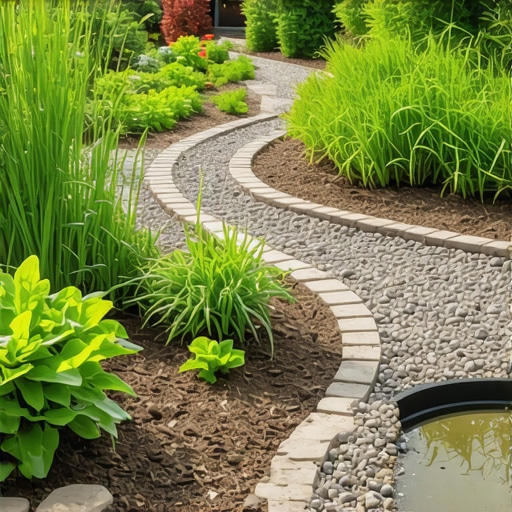
The Bio-Retention Geometric Grid uses a linear hardscape pattern interspersed with groundcover pockets to manage 100% of on-site stormwater runoff while providing a modern visual. This layout replaces the traditional solid concrete slab with large-format 24×24 porcelain pavers separated by 4-inch channels filled with Mexican Beach Pebbles or sedum varieties. Beneath the surface, a 12-inch reservoir layer of #57 clean stone allows water to infiltrate the soil slowly. This prevents the hydrostatic pressure buildup that typically cracks small-scale masonry. Focus on creeping thyme (Thymus serpyllum) for the gaps; it handles light foot traffic and releases a scent that deters pests. Never use standard potting soil in these gaps. Use a 70/30 mix of coarse sand and leaf compost to ensure rapid drainage and prevent root rot.
2. The Multi-Level Permeable Living Room
A Multi-Level Permeable Living Room solves the problem of soil grading on sloped small lots by using modular block walls to create distinct functional zones. By breaking a small yard into two tiers, you effectively double the usable square footage while creating a natural retaining system for the upper garden beds. The lower level should utilize permeable interlocking concrete pavers (PICP). Unlike traditional pavers, these have wider joints filled with small aggregate, allowing water to pass directly through the surface into a geotextile-wrapped drainage bed. This is critical for small patio layouts near house foundations where water pooling can lead to basement leaks.
“Turfgrass health relies on the 25% air and 25% water composition within the soil profile; any reduction in pore space leads to anaerobic rot.” – Penn State Extension
What is the best material for a small patio base?
The gold standard for a 2026 modern patio is a synthetic base or a bituminous set over a crushed stone sub-base. For DIYers or small-crew installs, polymeric sand is essential for the joints to prevent weed growth and insect infestation while remaining flexible enough to handle freeze-thaw cycles. Avoid using
![Build a $100 Modern Rock Garden for 2026 [DIY]](https://lawnmajesty.com/wp-content/uploads/2026/06/Build-a-100-Modern-Rock-Garden-for-2026-DIY.jpeg)