How to Grow Your Own Organic Vegetables in Small Containers
The Blueprint of Small-Scale Organic Production: Planning for Physiological Success
To grow organic vegetables in small containers, you must manage the root zone micro-climate by balancing aeration porosity, water-holding capacity, and nutrient density within a confined volume. Success depends on engineering a potting substrate that mimics high-performance field soil while avoiding the catastrophic compaction risks inherent in containerized systems. Most amateurs treat a pot like a trash can for dirt. They are wrong. A container is a biological reactor. Every cubic inch must be optimized for gas exchange and nutrient mineralization. If you do not account for the physics of the perched water table, your plants will drown in what looks like dry soil. It is biology governed by engineering.
The Apprentice Lesson: Why Your Soil Is Not Just Dirt
I always drill into my new crew members: if you don’t fix the soil grading first, every plant you put in the ground is just expensive compost. I remember an apprentice named Miller who thought he could save time by using native clay from a job site to fill a client’s custom cedar planters. By July, those $150 heirloom tomato starts were yellowing husks. The clay had compacted under the weight of irrigation, shearing the fine root hairs and creating an anaerobic tomb. I made him dig it out by hand. He learned that day that in a container, structure is more important than fertility. Without pore space, the most expensive organic fertilizer in the world is useless because the roots lack the oxygen required for active transport of ions. You cannot skip the engineering. It will fail.
The Anatomy of the Substrate: Cation Exchange and Porosity
The best soil mix for organic container gardening consists of a tri-phasic medium containing sphagnum peat or coco coir for moisture retention, perlite or pumice for aeration, and high-quality compost for biological inoculation. This mixture ensures a high Cation Exchange Capacity (CEC), allowing the media to hold onto essential nutrients like ammonium, potassium, calcium, and magnesium against the leaching force of frequent irrigation.
“Container media must be designed to provide a balance between air-filled porosity and easily available water, typically aiming for 10-20 percent air space after drainage.” – Penn State Agricultural Extension
This balance is critical. If your bulk density is too high, the roots suffocate. If it is too low, the plant tips over and the water runs straight through without hydrating the rhizosphere. I target a bulk density of approximately 0.4 to 0.6 grams per cubic centimeter. Precision matters here.
Selection of the Vessel: Materials and Hydrostatic Realities
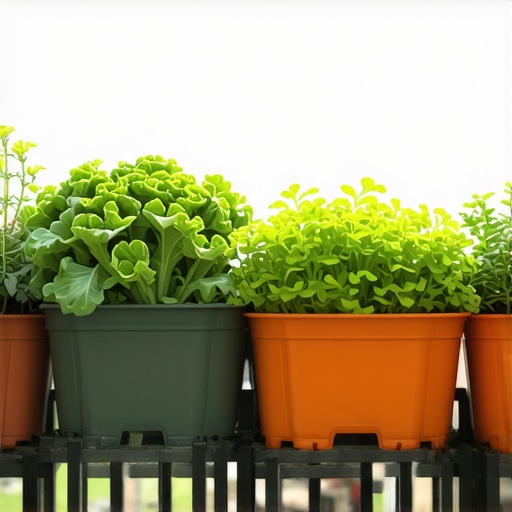
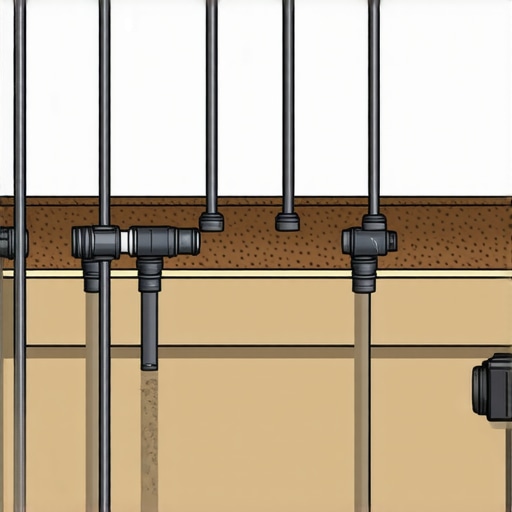
Choosing a container requires analyzing the thermal mass, porosity of the walls, and drainage orifice diameter. For organic vegetables, the vessel must prevent root circling and maintain a stable substrate temperature to protect sensitive beneficial soil microbes from thermal shock. A black plastic pot in a south-facing exposure can reach 120 degrees Fahrenheit. This will cook your nitrogen-fixing bacteria. Use light-colored materials or wood to insulate the root zone. [IMAGE_PLACEHOLDER]
| Container Material | Porosity Level | Thermal Insulation | Drainage Efficiency |
|---|---|---|---|
| Terracotta | High (Breathable) | Moderate | Excellent (Evaporative) |
| UV-Stabilized Plastic | Zero | Low (Heats Fast) | Dependent on Holes |
| Fabric Grow Bags | Extreme | High (Evaporative Cooling) | Superior |
| Cedar / Redwood | Moderate | Highest | Good |
Fabric grow bags are my standard for high-performance organic greens. They facilitate air-pruning, which prevents the dreaded root-bound spiral common in smooth-walled plastic. When a root tip hits the air at the edge of the fabric, it dehydrates and dies, triggering the plant to send out more lateral feeder roots from the center. This creates a dense, fibrous root system that can absorb nutrients far more efficiently. Do not use pots without holes. If there is no exit for water, salts build up and the pH crashes. It is a slow death.
How much modified gravel do I need for a patio base?
While often asked in the context of hardscaping, this engineering principle applies to container placement on patios. For a standard 4-inch deep pedestrian patio base, you need approximately 1 ton of modified gravel for every 50 square feet. For container gardeners, ensure your pots are not sitting directly on the stone. Use “pot feet” to create an air gap. This prevents the pot from creating a suction seal with the patio, which halts drainage and leads to root rot. Airflow under the pot is just as vital as airflow through the leaves.
The Nutritional Cycle: Mineralization in Confined Spaces
Organic nutrition in containers relies on mineralization, the process where soil microbes break down complex organic matter into plant-available ions like NO3- and H2PO4-. Unlike synthetic salts that provide immediate hit, organic amendments like bone meal, kelp meal, and feather meal require a healthy mycorrhizal network to function. I recommend a “low and slow” approach. Over-fertilizing with high-nitrogen organic meals can cause ammonia toxicity in small volumes. Stick to a baseline of 10 percent high-quality vermicompost by volume. This provides the microbial engine needed to drive the cycle. Watering is the most frequent point of failure. You must water until the effluent runs clear from the bottom. This flushes out metabolic byproducts and draws fresh oxygen into the pore spaces as the water moves down. This is the bellows effect. Use it.
How often do you fertilize organic vegetables in pots?
In a container environment, you should apply a liquid organic fertilizer or compost tea every 10 to 14 days during the active growing season. Because containers are open systems that lose nutrients through leaching, a single application of granular fertilizer at planting is rarely sufficient for heavy feeders like tomatoes or peppers. Supplementing with fish emulsion or seaweed extract provides the micronutrients and trace elements that stimulate the plant’s immune system. Don’t overdo it. Look at the leaves. If they are dark green and waxy, you are on point. If they are pale, the nitrogen cycle is lagging. If they are burnt at the edges, you have salt accumulation.
The Critical Checklist for Container Setup
- Verify all containers have at least four 1/2-inch drainage holes.
- Pre-hydrate your potting media in a wheelbarrow before filling pots to avoid dry pockets.
- Incorporate a slow-release organic granular fertilizer into the bottom two-thirds of the pot.
- Position heavy feeders (tomatoes/squash) in the largest possible vessels (minimum 5-10 gallons).
- Install a drip irrigation system with pressure-compensating emitters to ensure consistent moisture.
- Mulch the surface with 1 inch of shredded straw or wood chips to prevent surface crusting.
- Monitor the pH of your irrigation water; organic systems thrive between 6.2 and 6.8.
- Check for pests daily; in small systems, an aphid outbreak can go systemic in 48 hours.
- Elevate pots off the ground to prevent soil-borne pathogen transfer from the garden floor.
- Rotate pots weekly to ensure uniform light distribution and prevent lopsided growth.
“A retaining wall doesn’t fail because of the stone; it fails because of the water trapped behind it.” – Hardscape Engineering Axiom
The same logic applies to your pots. Drainage is your insurance policy. If you see water pooling on the surface for more than 10 seconds after you finish pouring, your media is too dense. Fix it now or watch the plant die in three weeks. Organic gardening is not about being “natural”; it is about being a precise steward of a microscopic ecosystem. You provide the infrastructure; the biology does the heavy lifting. Treat it like an engineering project. Measure your inputs. Watch your drainage. Eat well.
![Build a $40 Raised Garden Bed [Cedar 2026]](https://lawnmajesty.com/wp-content/uploads/2026/06/Build-a-40-Raised-Garden-Bed-Cedar-2026.jpeg)