Stop 2026 Fence Rot with This $20 Wood Sealer
The Engineering Reality of Wood Degradation in Modern Landscapes
To stop fence rot by 2026, you must apply a high-solids paraffin or oil-based penetrating sealer that chemically bonds with the wood lignin to prevent moisture absorption and fungal colonization. This low-cost intervention creates a hydrophobic barrier that stops the capillary action responsible for internal structural failure in landscaping projects and garden design. I recently got called out to tear up a $30,000 patio that was sinking because the previous contractor failed to address the drainage around the adjacent fence line. The fence posts had rotted at the ground level, causing the entire structural perimeter to shift and heave the pavers. It was a classic case of ignoring hydrostatic pressure and wood-soil contact rules. Most homeowners think a fence is a static object. It is not. It is a biological material under constant attack from ultraviolet radiation and moisture. When you see a fence turning grey, you are looking at the photo-oxidation of the wood cells. Once those cells are damaged, they become a sponge for water. That water then invites Coniophora puteana and other wood-decay fungi. If you don’t seal it with a deep-penetrating oil, you are essentially leaving your investment to be consumed by the soil biology.
“Wood rot in external structures is primarily driven by moisture content exceeding 20 percent, which provides the necessary environment for fungal enzymes to break down cellulose.” – USDA Forest Products Laboratory Manual
The Science of Why a $20 Sealer Outperforms Expensive Paints
A $20 penetrating sealer is more effective than expensive film-forming paints because it allows the wood to breathe while preventing liquid water from entering the grain. Film-forming products like latex paints or thick stains create a plastic-like layer that eventually cracks, trapping water against the wood and accelerating lawn care related rot. In the world of hardscaping, we understand that any barrier that traps moisture is a liability. A paraffin-based sealer or a simple linseed oil blend penetrates the tracheids of the wood. This occupies the space where water would normally sit. By keeping the moisture content below the fiber saturation point, you eliminate the threat of rot. Most “mow-and-blow” hacks will tell you to just spray some cheap water-based stain over the top. Don’t listen to them. If the product doesn’t smell like a chemical plant or an oil refinery, it probably isn’t doing the deep-tissue work required for a decade of protection. You need a product that utilizes aliphatic hydrocarbons to carry the protective solids deep into the heartwood.
| Sealer Type | Longevity | Mechanism | Estimated Cost |
|---|---|---|---|
| Film-Forming Latex | 2-3 Years | Surface Barrier | $45 – $70 |
| Water-Based Acrylic | 3-4 Years | Pore Clogging | $30 – $55 |
| Penetrating Oil/Paraffin | 5-7 Years | Cellular Saturation | $20 – $40 |
| Solid Stain | 4-5 Years | Pigment Shield | $50 – $80 |
How much modified gravel do I need for a fence post base?
For a standard 4×4 fence post, you need approximately 0.5 cubic feet of crushed stone or modified gravel to provide a drainage sump below the post. This prevents the end-grain from sitting in a pool of water inside the concrete footing. Never encase the bottom of the post in concrete; leave the bottom open to the gravel to allow for drainage.
The Critical Application Protocol for Maximum Saturation
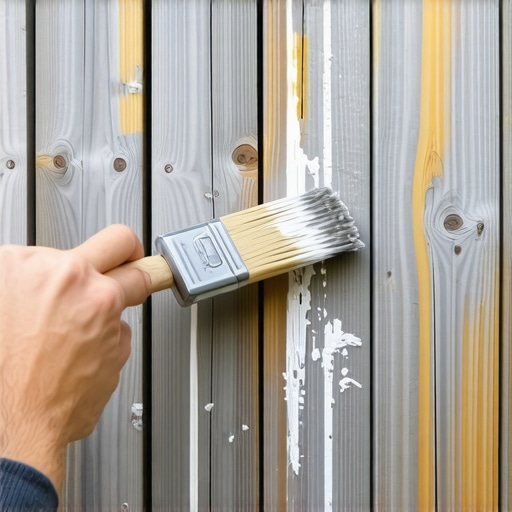
Applying a wood sealer correctly requires a moisture-neutral environment and a surface that is chemically prepared to receive the oil-based carrier. You cannot simply slap sealer onto a dirty fence and expect the garden design to remain intact; you must first clean the tannins and greyed wood fibers using an oxygen bleach solution. Check these steps before you start:
- Measure wood moisture with a pin-meter; it must be below 15% before application.
- Clean the surface with oxygen bleach (sodium percarbonate) to kill fungal spores.
- Avoid application in direct sunlight to prevent the carrier from evaporating too quickly.
- Focus heavily on the end-grain at the top and bottom of the pickets.
- Apply a second coat “wet-on-wet” within 30 minutes for maximum uptake.
It is a common mistake to wait for a new fence to “season” for a year. That is a myth that kills fences. While you should wait for the surface to be dry to the touch, leaving wood exposed to UV for months only damages the lignin you are trying to protect. If you can pour a tablespoon of water on the wood and it soaks in, it is ready for sealer. Don’t wait. Every day of exposure is a day of cell breakdown.
Can I apply sealer to pressure-treated wood immediately?
No, you must wait until the internal moisture from the pressure-treatment process has evaporated. Typically, this takes 3 to 6 weeks depending on the local humidity and heat. Use the water drop test: if the wood beads water, it is too wet to seal. If the water absorbs, the cells are open and ready for the $20 oil-based protector.
“Failure to manage the hydrostatic pressure and moisture wicking at the post-soil interface is the leading cause of premature failure in residential timber fencing.” – International Council for Wood Protection
The Contrarian Truth About Fence Posts
Most contractors will tell you that pressure-treated wood is invincible. It is not. The chemicals (typically ACQ or Copper Azole) only penetrate the outer 0.5 to 0.75 inches of the timber. When you cut a post to length, you expose the untreated heartwood. That heartwood is as vulnerable as a piece of pine from a craft store. You must saturate those cut ends with your sealer or a copper naphthenate solution. If you skip this, the post will rot from the inside out, even if the exterior looks perfect. I’ve seen 6×6 posts snap like twigs because the center was hollowed out by rot while the treated shell remained intact. This is why we focus on the microscopic reality. Landscaping is not about what you see on day one; it is about what is left on day 3,000. Use a high-quality penetrating oil, focus on the joints and end-grains, and you will save yourself thousands in replacement costs.

![Stop 2026 Leaf Wilt on Roses [Soil Fix]](https://lawnmajesty.com/wp-content/uploads/2026/07/Stop-2026-Leaf-Wilt-on-Roses-Soil-Fix.jpeg)