5 Native Shrubs for 2026 Total Privacy [Fast Fix]
The Engineering of a Biological Privacy Barrier
To achieve a total privacy screen by 2026, you must stop viewing plants as decorative objects and start seeing them as high-performance biological machines. Most homeowners fail because they prioritize the green top over the brown bottom. I always drill into my new crew members: if you don’t fix the soil grading first, every plant you put in the ground is just expensive compost. You cannot skip the site assessment. If you have standing water or a pH that’s off the charts, no ‘fast-growing’ shrub will survive the second winter. We build landscapes to last thirty years, not thirty days. This guide focuses on the technical precision required to install native screens that outperform the cheap imports found at big-box retailers.
The Privacy Blueprint: Selecting Native Powerhouses
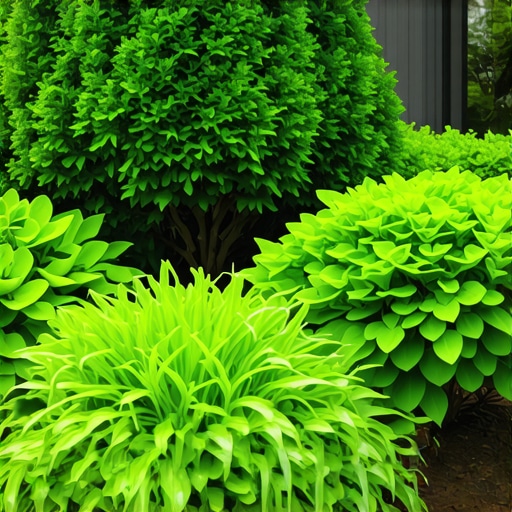
Native shrubs provide privacy by creating a dense, multi-layered biological screen that adapts to local soil chemistry and climate stressors more effectively than non-native species. Selecting species like Juniperus virginiana or Morella cerifera ensures a low-maintenance, fast-growing barrier that resists local pests while establishing deep root systems. Unlike the overused Leyland Cypress, these natives won’t shatter under ice loads or succumb to Seiridium canker in five years. You need plants that evolved to thrive in your specific USDA hardiness zone. We look for vertical density and lateral spread. Every inch of growth must be supported by a robust vascular system. Failure is not an option when the neighbor’s second-story deck overlooks your pool.
“A privacy screen is only as strong as its root system; vertical growth without lateral stability leads to windthrow and structural collapse.” – ISA Arboriculture Manual
How far apart should I plant shrubs for a privacy screen?
To achieve total occlusion by 2026, you must calculate spacing based on the 70% mature width of the species, typically 4 to 6 feet on center for most screening shrubs. Planting closer than 4 feet creates competition for root space and reduces airflow, leading to fungal pathogens like powdery mildew or root rot. We use a staggered double-row pattern—often called a ‘quincunx’—to create immediate visual density without crowding the root flares. This geometry allows each plant to access maximum solar energy while closing the gaps within 18 to 24 months. Precision measurement is mandatory. Don’t eyeball it. Use a transit or a high-visibility string line.
What is the fastest growing native shrub for privacy?
The Wax Myrtle (Morella cerifera) is the undisputed champion of rapid growth, capable of adding 3 to 5 feet of height per season when nitrogen levels are optimized. This evergreen powerhouse fixes its own nitrogen through symbiotic relationships with Frankia bacteria, allowing it to thrive in poor, sandy, or coastal soils where other plants fail. It handles heavy pruning with ease, meaning you can maintain it at a specific height or let it reach its full 20-foot potential. In clay-heavy soils, ensure you’ve addressed the perched water table issues before installation. It needs drainage. It won’t tolerate wet feet for more than 48 hours.
| Eastern Red Cedar | 1.5 – 2 Feet | 30 – 40 Feet | Alkaline/Dry | Full Sun |
| Wax Myrtle | 3 – 5 Feet | 15 – 20 Feet | Acidic/Moist | Sun/Part Shade |
| American Holly | 1 Foot | 25 – 50 Feet | Rich/Loamy | Sun/Shade |
| Arrowwood Viburnum | 2 – 3 Feet | 10 – 15 Feet | Adaptive | Sun/Part Shade |
| Carolina Cherry Laurel | 2 Feet | 15 – 25 Feet | Well-Drained | Full Sun |
The Forensic Installation: Avoiding the Root Flare Death Spiral
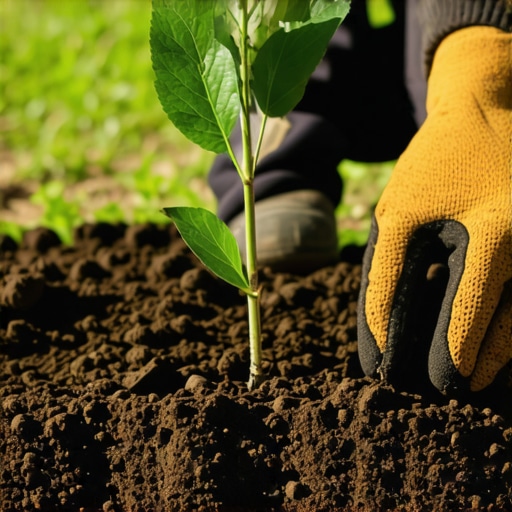
Most ‘pro’ crews plant too deep. I see it every day. They bury the root flare—the point where the trunk widens at the base—under six inches of mulch. This is a death sentence. It suffocates the secondary roots and encourages girdling. When we install a privacy screen, we excavate a hole three times the width of the root ball but no deeper than the root ball itself. The plant sits on undisturbed subgrade to prevent settling. If the plant settles, it drowns. We use a 1-inch layer of aged arborist wood chips, never the dyed junk from the gas station. That dyed mulch is often ground-up pallets containing CCA (Chromated Copper Arsenate) or other toxins that inhibit mycorrhizal activity. Keep mulch three inches away from the trunk. Airflow is life.
“Native plants have evolved symbiotic relationships with local soil microbes that imported nursery stock cannot replicate, provided the soil structure remains uncompacted.” – USDA NRCS Technical Note
Step-By-Step Rapid Establishment Protocol
- Site Analysis: Use a penetrometer to check for soil compaction. If it’s over 300 PSI, you must aerate or incorporate organic matter before planting.
- Utility Marking: Call 811. Do not assume your irrigation lines or gas pipes are deeper than your 24-inch planting hole.
- Hydration: Soak the root ball in a bucket of water mixed with liquid seaweed extract for 20 minutes prior to planting to reduce transplant shock.
- Backfilling: Use the native soil. Do not ‘amend’ the hole with potting soil; this creates a ‘bathtub effect’ where the roots refuse to leave the cozy hole and enter the tough native ground.
- Irrigation: Install a 0.9 GPH (gallons per hour) drip emitter line. Newly planted shrubs need 5 to 10 gallons of water per week during the first two seasons.
The Maintenance Reality: Pruning for Density
You don’t get privacy by letting shrubs grow wild; you get it by strategic heading cuts. For species like Arrowwood Viburnum (Viburnum dentatum), pruning the top 10% in late winter forces lateral bud break. This makes the shrub wider and thicker at the base. A leggy screen is a failed screen. We aim for a ‘wall of green’ from the soil line to the 8-foot mark. Check your NPK ratios in early spring. Use a slow-release organic fertilizer with a 10-4-8 ratio to support leaf production without causing ‘flush growth’ that attracts aphids. If you see suckers at the base, leave them for the first three years to increase low-level opacity. This is biological engineering. Follow the plan, or enjoy watching your neighbors eat dinner.