
5 2026 Fragrant Perennials for Night-Time Patios
I always drill into my new crew members: if you don’t fix the soil grading first, every plant you put in the ground is just expensive compost. Last season, I watched a junior foreman install three dozen high-end perennials into a bed where the patio runoff pooled. Two weeks later, we were digging up rotted, anaerobic root balls that smelled like a swamp. It was a $1,200 mistake that could have been avoided with a simple clinometer and a shovel. If you are planning a night-time garden for 2026, understand that the biology of the plant is inextricably linked to the engineering of the hardscape. You cannot have one without the other.
The Biology of the Midnight Garden and Scent Production
Night-fragrant perennials utilize specialized chemical compounds known as volatiles to attract nocturnal pollinators like hawk moths and lacewings. These plants typically feature white or pale blooms that reflect moonlight, combined with a metabolic process that peaks scent production during evening hours when temperatures drop and atmospheric pressure shifts. Understanding this biological clock is essential for placement.
“Proper soil physical properties are the foundation of any successful landscape; compacted soils lack the pore space necessary for gas exchange and root penetration, leading to stunted growth and reduced floral VOC emissions.” – Penn State Extension Horticultural Manual
When selecting plants for a 2026 project, look for cultivars bred for increased linalool and methyl benzoate production. These are the primary molecules responsible for that heavy, sweet scent that hangs in the evening air. Placement is everything. You want these plants upwind of your seating area, but not so close to the fire pit that the heat dries out their stomata.
Engineering the Hardscape-Softscape Interface
Landscaping for night-time patios requires managing the thermal mass of pavers and ensuring that the sub-grade drainage does not saturate the root zones of adjacent plant beds. Proper excavation and the use of geo-textiles prevent the migration of fines from the soil into your modified gravel base. This is where most hacks fail. They ignore the hydrostatic pressure.
“Effective drainage systems must be integrated into hardscape design to prevent hydrostatic pressure from destabilizing retaining walls and saturating adjacent planting zones.” – ICPI Tech Spec No. 2
The pavers you choose act as a heat sink. During the day, they absorb solar radiation. At night, they release it. This micro-climate can be a blessing or a curse. It allows you to push the zone limits for some fragrant plants, but it also increases the transpiration rate. You need a drip irrigation system with a smart controller that accounts for this localized heat. Don’t rely on the weather man; rely on a soil moisture sensor buried four inches deep.
Top 5 Fragrant Perennials for 2026 Night Patios
The following list represents the gold standard for performance, scent intensity, and architectural form in professional landscape design for the upcoming seasons.
1. Nicotiana alata (Flowering Tobacco)
While often treated as an annual in northern climates, newer 2026 cultivars are showing incredible resilience. Its scent is a heavy jasmine-like aroma that peaks at 9:00 PM. It requires well-drained soil with a pH between 6.1 and 7.0. If your soil is heavy clay, you must amend it with expanded shale or coarse organic matter to ensure capillary action remains functional.
2. Hosta plantaginea (August Lily)
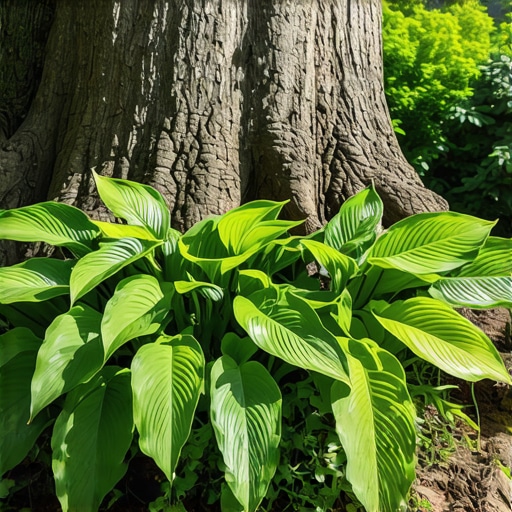
This is not your average shade hosta. It is one of the few in the genus with massive, waxy white flowers that bloom in late summer. The fragrance is reminiscent of orange blossoms. It needs filtered shade and consistent moisture. In a hardscape environment, ensure the crown is slightly elevated to prevent rot during heavy spring rains.
3. Phlox paniculata ‘Jeana’
Known for its superior mildew resistance, ‘Jeana’ is a powerhouse. While many Phlox varieties lose their scent in the heat, this cultivar maintains a subtle, honey-sweet perfume well into the night. It acts as a structural anchor in the garden, reaching heights of four feet. This provides the verticality needed to catch evening breezes and move the scent across the patio.
4. Oenothera caespitosa (Tufted Evening Primrose)
This is the workhorse for dry, rocky sites. If you have a raised stone planter or a rock garden adjacent to your patio, this is the plant. The large white flowers pop open at dusk with a dramatic snap. It is drought-tolerant and thrives in low-nitrogen environments where other plants would fail. Do not over-fertilize this plant or you will get all leaves and no flowers.
5. Zaluzianskya capensis (Midnight Candy)
The name is literal. This plant smells like a mixture of vanilla and cake frosting once the sun goes down. It is a lower-profile plant, making it perfect for the front of the border or in decorative pots placed directly on the patio surface. It requires grit-heavy soil. If you use standard potting mix, it will rot. Mix in 30 percent perlite or crushed granite.
Comparison of 2026 Night-Fragrant Perennials
| Plant Name | USDA Zone | Primary Scent Note | Water Need | Soil Requirement |
|---|---|---|---|---|
| Nicotiana alata | 10-11 (Annual elsewhere) | Jasmine/Lily | Medium | Loamy/Well-drained |
| Hosta plantaginea | 3-9 | Orange Blossom | High | Rich/Humus |
| Phlox ‘Jeana’ | 4-8 | Honey/Clover | Medium | Neutral pH/Moist |
| Oenothera caespitosa | 4-7 | Lemon/Floral | Low | Gravelly/Dry |
| Zaluzianskya capensis | 9-11 | Vanilla/Sugar | Medium | High Drainage/Grit |
How much modified gravel do I need for a patio base?
Calculate your patio square footage and multiply by the depth of the base (usually 4 to 6 inches for walkways, 8 to 12 inches for driveways) then divide by 324 to get the cubic yards. Always add a 20 percent compaction factor. If you don’t compact in 2-inch lifts, your patio will settle, and your planting beds will flood.
What are the best smelling plants for a patio at night?
The best smelling plants for a patio at night are those that produce high levels of floral volatiles like Nicotiana, Evening Primrose, and Night Phlox. These species have evolved to release their fragrance specifically when their pollinators are active, providing maximum olfactory impact for evening relaxation.
The Professional Installation Checklist
- Test soil pH and Cation Exchange Capacity (CEC) before buying plants.
- Call 811 to mark underground utilities before any excavation.
- Grade the sub-soil at a 2 percent slope away from the patio and house.
- Install a 4-inch perforated HDPE pipe for drainage if the site is flat.
- Scarify the sides of the planting holes to prevent root girdling in clay soil.
- Apply a 2-inch layer of double-shredded hardwood mulch, keeping it away from the plant crowns.
Landscape design is a game of inches. You measure the slope, you measure the pH, and you measure the compaction. If you skip the technical steps, your 2026 garden will be a memory by 2027. Do it right. Build the base. Amend the soil. Then enjoy the scent.
![4 Shade-Loving Groundcovers for 2026 Clay Soil [Fast]](https://lawnmajesty.com/wp-content/uploads/2026/05/4-Shade-Loving-Groundcovers-for-2026-Clay-Soil-Fast.jpeg)