Why Your New 2026 Grass is Dying in the Shade
The Forensic Autopsy of a Dying Shaded Lawn
Shade-related turf failure is rarely a single event but rather a slow structural collapse caused by photosynthetic starvation, poor gas exchange, and pathogen-friendly microclimates. When homeowners see their new 2026 grass thinning, they usually respond by dumping more water and nitrogen on it, which is the botanical equivalent of pouring gasoline on a grease fire. I always drill into my new crew members: if you do not fix the soil grading and light penetration first, every plant you put in the ground is just expensive compost. I have seen too many rookies install premium ‘shade mix’ sod over compacted clay, only to watch it rot from the bottom up within six months. It will rot. Don’t skip the site prep. I recently stood on a $15,000 lawn that felt like walking on a wet sponge. The customer was baffled. I took a soil probe and showed him the truth: 2 inches of thatch and zero root penetration. The grass was literally drowning in its own lack of oxygen.
“A lawn in the shade is in a state of constant physiological stress; its ability to recover from traffic or disease is reduced by 50% or more compared to full-sun turf.” – Agricultural Extension Agronomy Manual
The Photosynthetic Budget: Why Your Grass is Starving
Turfgrass in shade requires a specific amount of Photosynthetically Active Radiation (PAR) to maintain cellular respiration and structural integrity. In 2026, even with advanced cultivars, the biology of the plant remains unchanged: if the energy consumed via respiration exceeds the energy produced via photosynthesis, the plant will exhaust its carbohydrate reserves and die. Most people think shade is just ‘less sun.’ It is more complex. Tree canopies act as biological filters, stripping away the red and blue wavelengths that grass needs for growth. What is left is far-red light, which triggers a response called etiolation. The grass blades grow long, thin, and spindly as they ‘reach’ for light. This thins the cell walls. Thin cell walls are easily punctured by fungi. This is why shaded grass feels ‘greasy’ or ‘slick’ when it starts to fail. It is literally dissolving.
How much sunlight does ‘shade-tolerant’ grass actually need?
To survive long-term, shade-tolerant grass varieties like Fine Fescue or St. Augustine typically require a minimum of four to six hours of filtered sunlight or at least four hours of direct, unobstructed sun. Use a light meter to measure PAR levels at the soil surface, not just what you see with the naked eye. Human eyes are terrible at judging light intensity because our pupils dilate to compensate. A yard that looks ‘bright’ to you might be a dark void to a blade of grass. If you are below that four-hour threshold, you are not growing a lawn; you are managing a slow-motion funeral.
The Chemical Nightmare: Why Fertilizer Is Not the Answer
A homeowner called me in a panic after they completely torched their front lawn by applying a high-nitrogen ‘turf builder’ to a shaded area. They thought the yellowing meant the grass was hungry. In reality, the grass was dormant to protect its remaining sugars. When they hit it with 32-0-4 fertilizer, they forced the plant into a massive growth spurt it couldn’t support. The nitrogen pushed top growth at the expense of the roots. The roots shriveled, the soil salt levels spiked, and the lawn turned into a brown mat within ten days. Soil burn in the shade is permanent until you excavate. In shaded environments, you must use slow-release, low-nitrogen formulas. You are looking for a 1-0-1 or 2-0-2 ratio, just enough to sustain the plant without forcing it to over-extend its metabolic budget.
| Grass Type | Minimum Light (Hours) | Mowing Height (Inches) | Drought Tolerance |
|---|---|---|---|
| Fine Fescue | 4-5 | 3.5 – 4.0 | High |
| Tall Fescue | 6+ | 3.5 – 4.0 | Medium |
| St. Augustine | 4-5 | 3.0 – 4.0 | Medium |
| Kentucky Bluegrass | 8+ | 2.5 – 3.0 | Low |
Soil Microbiology in the Dark: The pH and Fungus Factor
Soil pH levels in shaded areas under large hardwoods or evergreens are often significantly more acidic due to leaf litter decomposition and root exudates. When pH drops below 6.0, nutrient lockout occurs, meaning the nitrogen and phosphorus you apply are chemically bound to the soil and unavailable to the grass. You must test the soil. Don’t guess. If your pH is at 5.2, you can dump all the fertilizer in the world on that lawn and the grass will still starve. Furthermore, the lack of UV light means the soil surface stays damp longer. This creates a petri dish for Rhizoctonia solani (Brown Patch). In my firm, we treat shade zones as high-risk fungal areas. We reduce irrigation frequency but increase the depth of each watering. We want the top inch of soil to dry out to kill surface fungi while keeping the deep roots hydrated.
“Managing shade is 20% about the grass and 80% about the environment; without thinning the canopy or improving drainage, no cultivar will persist.” – Hardscape and Turf Engineering Standards
Why Your New 2026 Grass is Dying: The Maintenance Checklist
To keep grass alive in the shade, you must move away from standard ‘mow-and-blow’ tactics. The following checklist is non-negotiable for low-light survival:
- Increase Mowing Height: Set your deck to 4 inches. More leaf surface equals more photosynthesis. Never scalp shaded grass.
- Selective Pruning: Remove the lowest 20% of tree limbs. This allows ‘dappled light’ to reach the ground even during the hottest parts of the day.
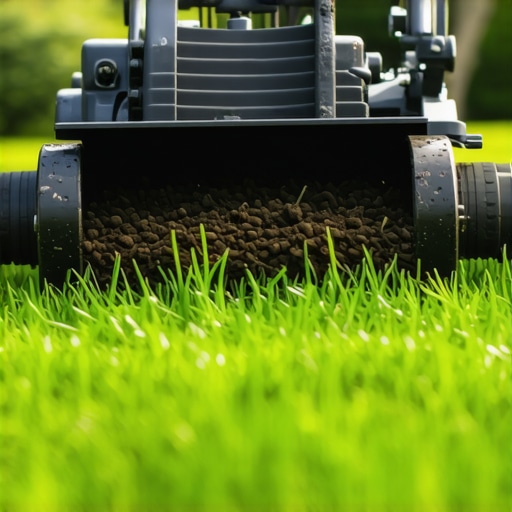
- Core Aeration: Do this twice a year in shade zones. Compacted soil has no pore space for oxygen. Without oxygen, root respiration stops.
- Irrigation Control: Shaded areas need roughly 50% less water than sunny areas. If you run the same zone timing for both, you are drowning the shade.
- Leaf Management: In autumn, a layer of leaves left for just three days can smother a shaded lawn. Use a blower, do not rake, to avoid tearing the weak root systems.
How much modified gravel do I need for a patio base?
While we are talking about shade and drainage, many people try to replace their dead grass with a patio. If you go this route, remember that hydrostatic pressure in shaded, damp areas is higher. You need at least 6 inches of compacted 2A modified gravel as a base. Do not use pea gravel; it doesn’t compact. If your base isn’t solid, your pavers will shift as the wet soil underneath heaves. We use a plate compactor until the tamper literally bounces off the surface. That is the only way to ensure the ground won’t settle when the spring rains come.
The Restoration Process: A Step-by-Step Remediation
If your lawn is already 70% dead, you cannot save it with a ‘quick fix.’ You need a total forensic reset. First, remove the dead organic matter. This is called dethatching. Second, apply calcitic lime to bring the pH back to 6.5. Third, over-seed with a monostand of Hard Fescue or a high-quality shade blend. Avoid the cheap bags at big-box stores; they are filled with ‘annual ryegrass’ that looks green for two weeks and then dies in the heat. Fourth, top-dress with 1/8 inch of compost or peat moss to retain moisture during germination. Finally, stay off it. Shaded seedlings are fragile. One heavy footfall can crush the crown of the plant. Give it a full season to establish. It is a slow process, but physics and biology do not negotiate. Follow the numbers, or the shade will win every time.
![5 2026 Drought-Proof Grass Alternatives [Tested]](https://lawnmajesty.com/wp-content/uploads/2026/06/5-2026-Drought-Proof-Grass-Alternatives-Tested.jpeg)