5 Native 2026 Grasses to Replace Your Dead Lawn
The Failure of Traditional Turf and the 2026 Shift to Native Ecology
Selecting the right native grass species for 2026 requires understanding soil texture, hydrological patterns, and mycorrhizal networks. Traditional turf often fails due to shallow root systems and high nitrogen dependence, whereas native options like Buffalo grass offer superior drought resistance and carbon sequestration benefits. Most homeowners are stuck in a cycle of chemical dependency because they treat their yard like a plastic carpet rather than a biological system. If you are staring at a brown, dormant patch of Kentucky Bluegrass, it is not just a lack of water; it is a structural failure of the soil biome. We are seeing a massive shift in garden design toward species that actually belong in the local geography.
The Apprentice Lesson: Why Grading and Soil Science Dictate Success
I always drill into my new crew members: if you don’t fix the soil grading first, every plant you put in the ground is just expensive compost. I remember a job back in ’08 where a client insisted on installing $15,000 worth of premium sod over a site that had been compacted by heavy machinery during a home remodel. The bulk density of that soil was so high it was basically concrete. Three months later, the entire lawn was a swampy mess of fungal pathogens. They didn’t have a grass problem; they had a drainage and compaction problem. We had to rip the whole thing out, bring in a subsoiler to break the hardpan at 12 inches, and re-grade the entire lot to a 2 percent slope away from the foundation. This is the reality of professional landscaping: the work you don’t see is what makes the work you do see possible.
“Turfgrass performance is inextricably linked to soil physical properties, specifically bulk density and pore space distribution.” – Penn State Center for Turfgrass Science
Top 5 Native 2026 Grass Cultivars for High-Performance Landscapes
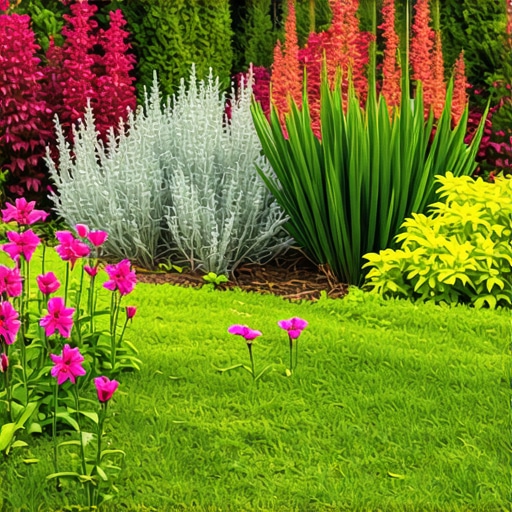
The 2026 selection focuses on drought-tolerant cultivars and low-maintenance varieties that reduce the need for synthetic fertilizers and excessive irrigation. These species are selected for their rhizomatous growth habits and ability to thrive in specific USDA hardiness zones while maintaining soil stability. [IMAGE_PLACEHOLDER]
1. Bouteloua dactyloides (Buffalo Grass ‘Sundancer’)
This is the workhorse of the modern native lawn. Unlike the old, shaggy varieties, ‘Sundancer’ is bred for higher density and a faster establishment rate. It is a warm-season grass that thrives in clay soils. Its root system can penetrate up to 8 feet deep, which is why it laughs at a three-week drought. If you are in a region with heavy red clay, this is your primary candidate.
2. Bouteloua gracilis (Blue Grama ‘Hachita’)
Often used in combination with Buffalo grass, ‘Hachita’ Blue Grama is prized for its extreme cold hardiness and low water requirements. It produces unique seed heads that resemble eyelashes, adding a distinct texture to garden design. It handles high-pH alkaline soils that would kill off most commercial seed mixes. It is a bunchgrass, so you need to seed it at a higher rate to achieve a lawn-like appearance.
3. Danthonia spicata (Poverty Oatgrass)
Don’t let the name fool you. This grass is a specialist for the worst sites. If you have acidic, rocky, or nutrient-depleted soil where nothing else grows, Danthonia spicata is the answer. It stays low to the ground and requires almost zero mowing. It is the ultimate ‘set it and forget it’ species for the perimeter of your property where hardscaping meets the wild edge.
4. Buchloe dactyloides (Legacy Buffalo Grass)
This is a female-only clone, meaning it produces no pollen and no messy seed heads. It creates a thick, soft mat that feels better underfoot than most fescues. Because it spreads via stolons, it can heal itself from foot traffic or minor pet damage. However, it requires a minimum of 6 hours of direct sunlight. Do not plant this under a heavy oak canopy.
5. Schizachyrium scoparium (Little Bluestem ‘Standing Ovation’)
While often used as an ornamental, dwarf versions of Little Bluestem are being integrated into ‘meadow lawns’ for 2026. This grass provides vertical interest and deep blue-green summer color that turns to a striking bronze in the fall. It is highly resistant to lodging (falling over) and provides critical habitat for local pollinators.
| Grass Species | Drought Tolerance (PSI Stress) | Ideal Soil pH | Root Depth (Inches) | Mowing Frequency |
|---|---|---|---|---|
| Buffalo Grass | Extreme | 6.5 – 8.0 | 60-96 | 2x per year |
| Blue Grama | High | 6.0 – 8.5 | 48-72 | 1x per month |
| Poverty Oatgrass | Very High | 4.5 – 6.5 | 12-24 | Never |
| Legacy Buffalo | Extreme | 6.5 – 7.5 | 72-90 | 1x per month |
| Little Bluestem | High | 5.5 – 7.0 | 50-80 | 1x per year |
How much modified gravel do I need for a patio base?
To calculate base material requirements for hardscaping, multiply the total square footage by the compacted depth (usually 4-6 inches) and divide by 27 to find cubic yards. Always factor in a 20 percent compaction rate for 21A or 3/4-inch modified stone to ensure structural integrity and proper drainage. Most DIYers fail because they don’t use enough base, leading to settling and paver failure within two seasons.
What is the best native grass for high traffic areas?
The best native grass for foot traffic is Buffalo grass ‘Legacy’ because of its stoloniferous growth habit which allows it to rapidly fill in bare spots. While most native grasses are bunchgrasses that do not handle traffic well, Buffalo grass creates a durable sod mat that can withstand children and pets if the soil is not overly saturated.
The Engineering of a Successful Lawn Replacement
You cannot just throw seed on top of dead grass and expect a result. You are fighting the seed bank of every weed that has inhabited that dirt for the last decade. The process begins with a total kill of the existing vegetation, followed by a detailed analysis of your soil’s Cation Exchange Capacity (CEC). This measurement tells me how well your soil holds onto nutrients. If your CEC is below 10, you are working with sand and need organic matter. If it is over 25, you are dealing with heavy clay that needs aeration.
Professional Installation Checklist
- Soil Test: Obtain a laboratory analysis of N-P-K levels, pH, and organic matter percentage.
- Mechanical Aeration: Use a core aerator to pull 3-inch plugs, reducing bulk density and increasing oxygen exchange.
- Grading: Ensure a minimum 2 percent slope away from all hardscape structures and foundations to prevent hydrostatic pressure buildup.
- Seed-to-Soil Contact: Use a slit-seeder or a weighted roller to ensure the seed is pressed firmly into the earth.
- Initial Hydration: Water for 10 minutes, three times a day for the first 21 days to keep the surface moist but not saturated.
“A retaining wall doesn’t fail because of the stone; it fails because of the water trapped behind it.” – Hardscape Engineering Axiom
The same logic applies to your lawn. If your soil is saturated, the roots will stay near the surface where the oxygen is. This makes the grass weak and susceptible to heat stress. You want to force those roots down. Once the native grass is established, you should switch to deep, infrequent watering. Give it one inch of water once a week. This mimics the natural rainfall patterns these species evolved to survive. It will not look like a golf course in August, but it will be alive and healthy while your neighbors’ lawns are turning to dust.
Hardscaping also plays a role here. When we design a yard, we look at where the water goes. We often install French drains or dry creek beds using river rock to manage runoff from the roof. This protects the lawn from being washed out and prevents water from pooling against the edge of a patio, which causes the polymeric sand to wash out. Every element of the landscape is connected. If you change the grass, you change the way the entire system handles water and nutrients.