5 2026 Best Trees for High Privacy in Zone 8
2026 Top Privacy Trees for Zone 8
Choosing the right privacy trees for Zone 8 involves analyzing soil percolation, USDA hardiness 8a/8b, and root system architecture. Effective 2026 garden design prioritizes evergreen conifers and broadleaf hollies that reach 15 to 30 feet to block sightlines while resisting local heat stress and humidity cycles. Most residential clients fail because they focus on the foliage rather than the biology beneath the surface.
I always drill into my new crew members: if you do not fix the soil grading first, every plant you put in the ground is just expensive compost. Last season, we pulled twelve dead Green Giants from a site in Zone 8b because the installer ignored a 3 percent grade slope. Water pooled at the base, the soil turned anaerobic, and $4,000 worth of nursery stock literally drowned in its own root ball. We spent three days excavating the site, installing a 4-inch perforated French drain, and amending the heavy clay with expanded slate. It is not about the tree; it is about the site prep. If the soil is compacted to more than 200 PSI, those roots are not going anywhere. You are essentially planting in a concrete bucket. We use a penetrometer to test compaction before a single shovel hits the dirt.
How much space should I leave between privacy trees?
Spacing is determined by the mature width of the species and the desired speed of closure for the screen. For Nellie R. Stevens Hollies, a 5-foot on-center spacing provides a tight wall within three years, whereas Green Giant Arborvitae require at least 6 to 8 feet to prevent internal needle drop from lack of airflow. Proper spacing prevents fungal pathogens like Cercospora leaf spot, which thrives in the stagnant, humid air of a crowded Zone 8 garden. Crowding also leads to root competition where the most aggressive specimen starves its neighbors of nitrogen and potassium.
“Soil compaction is the primary reason for the failure of landscape trees in urban environments, as it limits oxygen availability to the root system and prevents water infiltration.” – Texas A&M AgriLife Extension
1. Nellie R. Stevens Holly (Ilex x ‘Nellie R. Stevens’)
The Nellie R. Stevens is the gold standard for Zone 8 privacy. This is a broadleaf evergreen that can handle the 100-degree Texas heat and the 90 percent Georgia humidity without flinching. It reaches a mature height of 20 to 30 feet with a 10 to 12-foot spread. It is parthenocarpic, meaning it produces those iconic red berries without needing a male pollinator. We specify these for clients who want a formal look that requires minimal pruning. The wax-coated leaves are a biological defense against transpiration, keeping the tree hydrated when the municipal water bans kick in during July. Do not plant these in standing water. They need a soil pH between 5.0 and 6.5 for optimal iron uptake.
2. Green Giant Arborvitae (Thuja standishii x plicata)
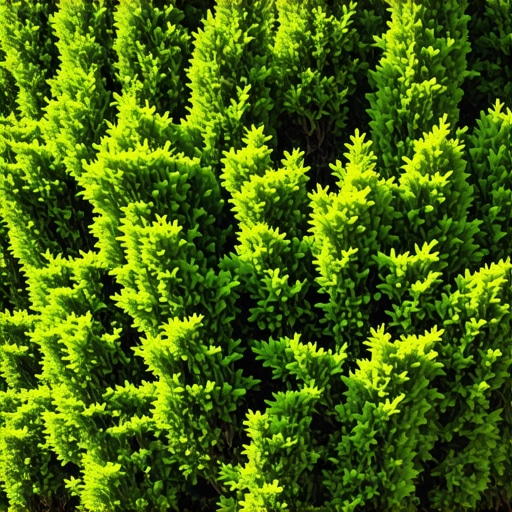
If you need height fast, the Green Giant is your primary tool. In Zone 8, these can put on 3 feet of vertical growth per year once established. They are resistant to bagworms, which destroy the common Leyland Cypress. However, they are heavy drinkers. If you do not have a dedicated drip irrigation system delivering at least 5 gallons of water per week during the establishment phase, they will brown out. We install two 2-GPH (gallons per hour) emitters per tree, buried 2 inches below the mulch to prevent evaporation. This ensures the water reaches the root flare directly.
| Tree Species | Annual Growth Rate | Mature Height | Drought Tolerance |
| Nellie R. Stevens Holly | 12 to 18 inches | 25 feet | High |
| Green Giant Arborvitae | 36 inches | 40 feet | Moderate |
| Taylor Juniper | 12 inches | 15 feet | Excellent |
| Yoshino Japanese Cedar | 24 inches | 30 feet | Moderate |
| Wax Myrtle | 24 to 36 inches | 20 feet | High |
3. Taylor Juniper (Juniperus virginiana ‘Taylor’)
For tight spaces where a wide tree would encroach on hardscaping or utility lines, the Taylor Juniper is the engineering solution. It grows in a narrow, columnar shape, staying roughly 3 feet wide while reaching 15 to 20 feet in height. It is a cultivar of the native Eastern Red Cedar, meaning it has a high tolerance for the alkaline soils (high pH) found in the limestone-heavy regions of Zone 8. It resists cedar-apple rust better than the wild species. This is the tree for the homeowner who wants a Mediterranean look without the fragility of an Italian Cypress.
4. Yoshino Japanese Cedar (Cryptomeria japonica ‘Yoshino’)
The Yoshino is the choice for a softer, more feathered aesthetic. It reaches about 30 feet and provides a dense screen that filters wind and noise. One technical note: in the winter, the foliage can turn a bronze or reddish-brown color. Homeowners often panic and think it is dying. It is not. This is a natural reaction to cold temperatures. Once the ground thaws and the spring sap flows, it returns to a deep forest green. It prefers slightly acidic, well-drained soil. If you have heavy red clay, you must mounded these 6 inches above the natural grade to ensure the root flare stays dry.
5. Wax Myrtle (Morella cerifera)
The Wax Myrtle is the workhorse of the Southeast. It is a native broadleaf evergreen that grows as a multi-trunked small tree or a large shrub. It is especially useful in coastal Zone 8 because of its high salt spray tolerance. It features nitrogen-fixing nodules on its roots, allowing it to thrive in the nutrient-poor, sandy soils of the coastal plain. If you are dealing with a property that has poor soil and you do not want to spend a fortune on synthetic fertilizers, this is your plant. It also provides high wildlife value, hosting several species of native butterflies.
How deep should I dig for a 15-gallon privacy tree?
The hole should be no deeper than the root ball itself but twice as wide. Digging too deep causes the tree to settle over time, burying the root flare. When the flare is buried, the bark stays moist, inviting fungal rot and boring insects. Use a shovel handle to check the depth. The flare (where the trunk widens at the base) should be 1 inch above the surrounding soil grade. This allows for settling and ensures oxygen can reach the critical root zone. We do not use peat moss or bagged soil in the hole; we backfill with the native soil we dug out. This forces the roots to adapt to the local environment immediately.
“A retaining wall doesn’t fail because of the stone; it fails because of the water trapped behind it.” – Hardscape Engineering Axiom
The Professional Installation Checklist
- Call 811: Locate all underground utility lines before excavating.
- Percolation Test: Dig a 12-inch hole, fill it with water, and ensure it drains within 12 hours.
- Root Flare Exposure: Remove the top layer of nursery soil from the root ball to find the true flare.
- No Mulch Volcanoes: Keep mulch 3 inches away from the trunk.
- Staking: Only stake if the site is high-wind. Use flexible ties and remove after 12 months.
Landscaping in Zone 8 is a game of water management and heat mitigation. You cannot treat a yard in 2026 like a static painting. It is a biological system. If you skip the soil test or the irrigation plan, you are wasting your money. High-privacy screens require a foundation of engineering. You need to understand the Cation Exchange Capacity of your clay and the compaction limits of your subgrade. Only then will your screen survive the first decade. Maintenance is not an option; it is a requirement. Monitor for spider mites during the dry August heat and apply a 3-inch layer of organic arborist wood chips annually to maintain soil biology. Stop buying the cheap stuff at big-box stores. Go to a dedicated wholesale nursery where the stock is hardened to the local climate. Your privacy depends on it.