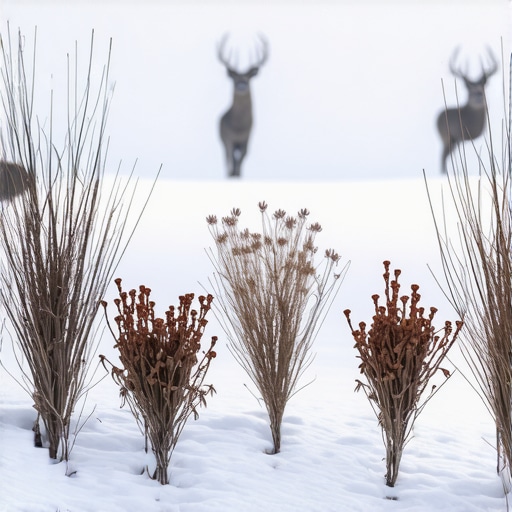
7 Deer-Proof Plants That Actually Survive the Winter
7 Deer-Proof Plants That Actually Survive the Winter: A Professional Guide to Winter Hardiness and Herbivore Resistance
I always drill into my new crew members: if you don’t fix the soil grading first, every plant you put in the ground is just expensive compost. It is the same with plant selection. Most homeowners go to a big-box store in May, buy whatever looks pretty, and act shocked when the local deer herd treats their $4,000 landscape like a midnight buffet in January. Survival in a winter landscape requires a dual-threat defense: the plant must possess the cellular biology to withstand sub-zero temperatures and the chemical or physical deterrents to stop a hungry 150-pound herbivore. I have spent 20 years digging in frozen clay, and I can tell you that hope is not a strategy. Only science-backed selection works. Stop buying soft, sugary plants and expecting the deer to have manners.
The Biology of Winter Survival and Herbivore Pressure
To successfully grow deer-proof plants that survive winter, you must prioritize species with high alkaloid content or tough textures like Buxus or Pieris japonica, while ensuring soil drainage is optimized to prevent ice-heaving. Winter desiccation is the real killer. When the ground freezes, roots cannot uptake water, but the wind continues to pull moisture from the leaves. If a deer comes along and nibbles the terminal buds, the plant loses its growth points and its ability to regulate moisture. It is a death sentence. We look for plants with a high ‘unpalatability rating’ from agricultural extensions. We also look for plants that can handle the hydrostatic pressure of frozen soil. If your soil is saturated when it freezes, it expands with enough force to snap a young root system like a toothpick. It will rot. Don’t skip the drainage check.
“Plants that are truly deer-resistant usually contain secondary metabolites—phenols, alkaloids, or terpenoids—that are either toxic or highly unpalatable to ruminants during periods of nutritional stress.” – USDA Horticultural Research Manual
Selection 1: Buxus (Boxwood) ‘Green Mountain’
Boxwoods provide a year-round structural foundation because their leaves contain alkaloids that are toxic to deer, making them one of the most reliable evergreen choices for winter landscaping. We use the ‘Green Mountain’ cultivar specifically for its upright, pyramidal habit. It reaches 5 feet tall, making it a perfect hedge. The key is the smell. To a human, it’s a faint, clean scent. To a deer, it’s a warning sign. When planting these, you must ensure the root flare is visible. Most hacks bury them 4 inches too deep, which suffocates the phloem and leads to Boxwood Blight. Use a 2-inch layer of hardwood mulch, but keep it away from the trunk. No mulch volcanoes. I have seen more boxwoods killed by bad mulching than by any cold snap.
Selection 2: Helleborus orientalis (Lenten Rose)
The Helleborus orientalis is a hardy perennial that blooms in late winter, featuring leathery evergreen foliage that deer find physically difficult to chew and chemically repulsive. These plants are tough as nails. They don’t just survive winter; they thrive in it. While other plants are dormant, Hellebores are pushing flowers through the snow. They prefer a soil pH between 6.0 and 7.0. If your soil is too acidic, they will fail to thrive. We always test the soil with a digital meter before installation. If the pH is off, we amend with pelletized lime. It’s a simple fix that prevents a $30 plant from looking like a weed. Don’t guess. Test.
Selection 3: Pieris japonica (Japanese Andromeda)
Pieris japonica is an acid-loving evergreen shrub that offers deer resistance through its toxic foliage and provides winter interest with bead-like flower buds that persist through the frost. This is a staple in high-end design. It needs a low pH—somewhere in the 4.5 to 5.5 range. If you put this in heavy limestone-based soil, the leaves will turn yellow from chlorosis within a season. We often install these near the foundation of the house, but we ensure the drainage is sloped away at a 2% grade to prevent water from pooling around the root ball. If the roots sit in water during a freeze-thaw cycle, the plant is toast. Water expands by 9% when it freezes. That expansion in a saturated root zone will crush the fine feeder roots. Keep it drained.
How do I stop deer from eating my bushes in winter?
The most effective way to stop winter deer damage is to plant unpalatable species like Siberian Cypress or Spruce and apply a sulfur-based repellent before the first hard freeze. Physical barriers like burlap wraps also help, but they look like trash. I prefer to use biology. If the plant tastes like bitter medicine, the deer will move to your neighbor’s yard. That is the goal. Landscaping is a competition for resources. Make your yard the least attractive target on the block.
| Plant Species | USDA Hardiness Zone | Soil pH Requirement | Primary Defense Mechanism |
|---|---|---|---|
| Buxus (Boxwood) | 4 – 9 | 6.5 – 7.5 | Toxic Alkaloids / Scent |
| Helleborus | 4 – 9 | 6.0 – 7.0 | Leathery Texture / Toxicity |
| Pieris japonica | 5 – 8 | 4.5 – 5.5 | Chemical Unpalatability |
| Siberian Cypress | 2 – 7 | 5.5 – 7.0 | Drought/Cold Tolerance |
| Bird’s Nest Spruce | 3 – 7 | 5.5 – 7.0 | Prickly Needles |
| Winter Heath | 5 – 7 | 4.5 – 5.5 | High Tannin Content |
| American Holly | 5 – 9 | 5.0 – 6.5 | Physical Spines |
Selection 4: Microbiota decussata (Siberian Carpet Cypress)
The Microbiota decussata is an ultra-hardy groundcover evergreen that turns a bronze-purple hue in winter and is ignored by deer due to its coniferous resins. This plant comes from the mountains of Siberia. It laughs at Zone 3 temperatures. If you have a slope that is eroding, this is your solution. It spreads wide and deep, locking the soil in place. We use it for erosion control on grades where turf grass would fail. It doesn’t need much fertilizer. Too much nitrogen will actually make the growth leggy and weak. Give it lean soil and good drainage. It will grow.
Selection 5: Picea abies ‘Nidiformis’ (Bird’s Nest Spruce)
The Bird’s Nest Spruce is a slow-growing dwarf conifer that is highly deer-resistant because of its stiff, prickly needles and dense growth habit that survives heavy snow loads. Deer hate the physical sensation of spruce needles on their tongues. This plant stays low and wide, mimicking a bird’s nest. It is a workhorse for the front of the border. We often pair this with hardscaping projects, like near a natural stone retaining wall. The contrast between the gray stone and the deep green needles is classic. Just make sure you don’t plant it too deep. The root flare must be at the surface. I’ve seen crews bury these like fence posts. They die every time. Roots need oxygen. Soil compaction is the enemy.
“Soil compaction levels exceeding 300 PSI will effectively terminate root elongation in most ornamental conifers, leading to secondary stress and increased pest susceptibility.” – ICPI Technical Bulletin
Selection 6: Erica carnea (Winter Heath)
Erica carnea is a low-growing shrub that provides winter forage for early bees while remaining deer-proof due to its needle-like foliage and high tannin content. Most people think nothing blooms in February. They are wrong. Winter Heath will push pink and white bells through a layer of frost. It needs well-drained, acidic soil. We often amend the planting hole with peat moss and coarse sand to ensure the drainage is fast. It won’t tolerate wet feet. If you see it turning brown in the center, you have a drainage problem. Fix it or watch it die.
Selection 7: Ilex opaca (American Holly)
The American Holly is a native evergreen tree with spined leaves that act as a physical deterrent to deer, providing critical winter shelter for native birds. This is the king of the winter garden. The leaves are like glass shards. Deer will not touch them unless they are literally starving to death. Because it is a native, it has a deep symbiotic relationship with the local biome. It can handle our clay soils better than most exotic species. We use it as a screen to block out the neighbors. It’s better than a fence. It’s living engineering. It needs male and female plants to produce berries, so check your cultivars before you buy.
What is the most deer-resistant evergreen?
The most deer-resistant evergreen is the Buxus (Boxwood) or Picea abies (Spruce) because they offer both chemical toxicity and physical discomfort, ensuring survival in high-pressure deer zones. While no plant is 100% deer-proof if the animal is starving, these are the closest you will get. They are the industry standard for a reason. They work. Everything else is a gamble.
The Engineering Checklist for Winter Planting
- Verify USDA Hardiness Zone (Don’t buy Zone 7 plants for a Zone 5 garden).
- Check soil pH with a calibrated meter before digging.
- Ensure a 2% minimum grade away from the plant’s crown.
- Excavate the planting hole to 2x the width of the root ball, but no deeper.
- Locate the root flare and ensure it sits 1 inch above the finished grade.
- Apply a 2-inch layer of organic mulch, leaving a 3-inch gap around the trunk.
- Water deeply once before the first hard freeze to prevent desiccation.
Landscape design is not about picking pretty colors; it is about site-specific engineering. If you ignore the soil structure or the local wildlife patterns, you are wasting your money. My crew knows that we don’t just plant shrubs; we build ecosystems. We use the right plants, the right soil amendments, and the right grading techniques. That is how you get a garden that looks just as good in January as it does in June. If you want a ‘pretty’ yard, go to the florist. If you want a landscape that lasts twenty years, follow the science. It won’t fail you. Now, get out there and check your drainage. Winter is coming.