Stop 2026 Grass Growth in Your Paver Patios
The Forensic Autopsy of a Sinking Patio
To fix a sinking patio, you must diagnose base-layer failure caused by poor compaction or improper aggregate selection. Most failures stem from hydrostatic pressure and the use of stone dust or fines that trap water, leading to the heave-thaw cycles that displace pavers and allow grass to take root. I recently got called out to tear up a $30,000 patio that was sinking because the previous contractor used stone dust as a base instead of a properly graded 2A modified crushed stone. The homeowner was basically looking at a very expensive swamp. Within two years, the stone dust had turned into a silty mud that held moisture against the bottom of the pavers, inviting every weed seed in the county to take up residence. This is a common failure. It is preventable. If you do not understand the sieve analysis of your base material, you are not building a patio; you are making a graveyard for stone.
“A retaining wall doesn’t fail because of the stone; it fails because of the water trapped behind it.” – Hardscape Engineering Axiom
Why Your Patio Grows More Grass Than Your Lawn
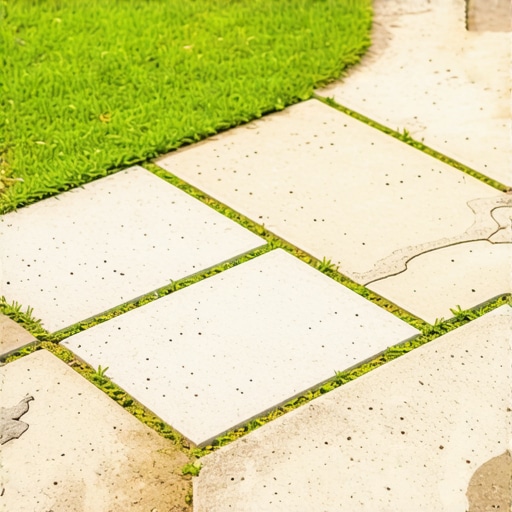
Patios grow grass when windblown seeds find a foothold in the decomposing organic matter trapped in failed or eroded paver joints. Unlike your lawn, which has a competitive root system, eroded joints offer a protected, high-moisture environment where weeds can thrive without competition from established turf grass. Most homeowners think the weeds are coming from the dirt underneath the patio. They are usually wrong. Unless you used a recycled concrete base full of organic debris, those weeds are coming from the top down. Seeds from your lawn, carried by the wind or your lawnmower, land in the cracks. If your jointing sand has washed away or cracked, it provides the perfect nursery. Stop blaming the soil and start looking at the integrity of your polymer bonds.
The Science of Polymeric Sand Activation
Proper polymeric sand activation requires a three-stage misting process that triggers a chemical cross-linking reaction within the polymers. This creates a flexible, water-resistant seal that prevents seed migration while allowing the patio to shift slightly without cracking the structural bond. The biggest mistake I see crews make is over-watering during the activation phase. If you flood the joints, you wash the polymers out of the sand and onto the surface of the stone. This results in a weak joint that will crumble in six months and a white haze on your pavers that is a nightmare to remove. You need to mist it until the sand is saturated but not floating. It is a delicate balance. High-performance sands like G2 use specialized surfactants that allow for faster activation, but the physics of the bond remains the same. You need that polymer to wrap around every grain of sand to create a solid, impenetrable matrix.
How much modified gravel do I need for a patio base?
You need a minimum of 4 to 6 inches of 2A modified gravel for a standard walkway or patio, compacted in 2-inch lifts to ensure structural stability. For driveways or areas with heavy clay soil, this depth must increase to 8 or 12 inches to ensure structural load distribution and prevent the sub-grade from deforming under weight. If you skip the compaction of the sub-grade itself before adding the gravel, the whole system will eventually fail. I use a plate compactor that delivers at least 4,000 pounds of centrifugal force. Anything less is just playing in the dirt.
How do I kill grass in pavers permanently?
Permanent grass removal requires the mechanical extraction of the existing joint material and a full replacement with high-performance polymeric sand. Chemical treatments like glyphosate or vinegar are temporary fixes that do nothing to address the voids in the hardscape where new seeds will eventually land and germinate. You have to get the old, contaminated sand out. This usually means a pressure washer with a turbo nozzle, but you have to be careful not to blow out the bedding sand underneath the pavers. Once it is clean and bone dry, you sweep in the new sand, vibrate it into the joints to eliminate air pockets, and activate it properly.
Material Comparison: The Truth About Joint Fillers
The material you choose for your joints determines how many weekends you will spend pulling weeds. Most big-box stores sell a cheap ‘polymeric sand’ that is mostly masonry sand and a tiny bit of glue. It will rot. You need a professional-grade product with a high polymer-to-sand ratio. Professional grade sands are specifically engineered to remain flexible. If the joint is too rigid, it will crack when the ground moves. Once you have a crack, you have a home for a weed.
| Material Type | Expected Lifespan | Weed Resistance Rating | Primary Failure Mode |
|---|---|---|---|
| Professional Polymeric Sand | 5 to 10 Years | 9/10 | Surface Erosion |
| Economy Polymeric Sand | 1 to 2 Years | 4/10 | Polymer Leaching |
| Traditional Mason Sand | < 6 Months | 1/10 | Total Washout |
| Stone Dust | < 1 Year | 2/10 | Compaction/Siltation |
The 2026 Prevention Protocol Checklist
If you want a patio that stays clean through 2026, you follow this list. No shortcuts. No ‘good enough’ moments. Physics does not care about your schedule. You either do it right or you do it twice.
- Deep Clean: Use a 3000 PSI pressure washer to remove all organic matter from joints.
- Dry Time: Wait at least 48 hours of zero rain. The pavers must be dry to the touch and the joints must be dry at least 1 inch deep.
- Sand Choice: Buy sand that meets ASTM C144 standards for gradation.
- Overfill and Sweep: Fill the joints to the top, then sweep the excess. Leave the sand 1/8 inch below the chamfer edge of the paver.
- Mechanical Compaction: Use a vibratory plate compactor with a protective mat. This settles the sand and removes air gaps. If you don’t compact, the sand will settle after the first rain and leave a void for seeds.
- Activation: Mist the patio in sections. Do not let the water pool.
“Many weed seeds can remain viable in the soil for decades, waiting for the precise combination of light and moisture to trigger germination.” – Agronomy Extension Manual
The Problem with DIY Chemical ‘Solutions’
I hear it all the time: ‘Just pour vinegar on it.’ Or ‘Use salt.’ Don’t. Salt will ruin the finish of your pavers and kill the soil chemistry of the surrounding lawn for years. Vinegar is an acid. It will eat the calcium carbonate in your concrete pavers or natural stone. It weakens the surface and makes it more porous, which actually makes it easier for moss and algae to grow in the future. You are trading a weed problem for a crumbling stone problem. The only real solution is mechanical. You have to create a physical barrier that seeds cannot penetrate. That is what polymeric sand is for. It is an engineering solution to a biological problem. Stick to the science and leave the kitchen pantry items for your salad.
The Role of Geotextile Fabrics
If you are building a new patio, the geotextile fabric is your last line of defense. It separates the sub-grade soil from your clean gravel base. Without it, the soil will eventually migrate up into the gravel, clogging the drainage and providing a nutrient-rich medium for roots to grow. I use a non-woven needle-punched fabric with a high flow rate. This keeps the base ‘clean.’ A clean base stays dry. A dry base does not grow grass. It is that simple. If your contractor tells you that fabric is optional, fire them. They are trying to save two hundred dollars on a project that costs thousands, and they are compromising the entire structural integrity of the build to do it. Drainage is the only law in hardscaping. Respect it.